Wednesday, June 6, 2012

Rough illustration #6

Well, don't you just hate it when you're happy with one section but not with another and because you've done it in pen and ink there's no going back, just starting again...

Sigh, this one might get reworked.

Allergy free pancake recipe


So fluffy.

Ingredients
  • 2 cups Orgran self-raising flour
  • Pinch of salt
  • 2 cups goat’s milk
  • 1/2 tsp vanilla essence
  • 2 tsp Orgran No Egg whisked with 60mls water until thick
  • 60g Nuttlex, melted
  • Extra melted Nuttlex to grease

Method
  • Sift the flour and salt into a large bowl.
  • Make a well in the centre.
  • Whisk together the goat’s milk, vanilla essence and No Egg mixture in a large jug.
  • Add the goat’s milk mixture to the flour mixture, whisking constantly until a smooth batter forms.
  • Stir in the melted Nuttlex.
  • Heat a large non-stick frying pan over medium heat.
  • Brush with the extra melted Nuttlex to lightly grease.
  • Pour 1/3-1/2 cup of the batter into the pan to form a pancake.
  • Cook for 2-3 minutes or until bubbles appear on the surface and the pancake is golden underneath.
  • Turn and cook for a further 1-2 minutes or until golden.
  • Transfer to a plate and cover with a clean tea towel to keep warm.
  • Repeat, adding more Nuttlex to grease the pan when needed.

Note
  • Makes 10 so divide and multiply as needed.

Tuesday, June 5, 2012

Allergy free Caribbean banana cake recipe


Ingredients
  • ½ cup Nuttlex
  • 1 cup sugar
  • ½ cup brown sugar
  • 3 ripe bananas
  • 3 tsp Orgran No Egg whisked with 90mls water until thick
  • 1 tbsp vanilla essence
  • 2 cups Orgran All Purpose flour
  • 1 tsp baking soda
  • 1 tsp cornflour
  • ½ tsp salt
  • ½ cup half and half plain goat’s cheese and goat’s milk, beaten
  • 2 tbsp icing sugar for dusting (optional)

Method
  • Preheat the oven to 180°C.
  • Grease and flour a medium sized square cake tin.
  • Cream the Nuttlex and the sugar together.
  • Add the bananas, Orgran No Egg mixture, vanilla essence and beat well by hand.
  • Sift the All Purpose flour, baking soda, cornflour, salt into a separate bowl.
  • Slowly add the flour mixture to the banana mixture until combined.
  • Fold in the half and half.
  • Pour the mixture into the cake tin and bake for 1 hour or until a skewer comes away clean.
  • Cool about 10 minutes before turning it out of the cake tin.
  • Dust with icing sugar when cool.

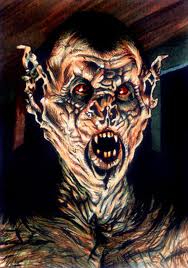
Rough illustration #5

Well... Can you tell what's going on? That's the important question. I suppose you'll get all the answers when you read the book but still, I'd like the picture to make sense by itself anyway. That I wrote it and edited it and reedited it on and on to the point where I can't tell you the answer to such a question just annoys me.

Monday, June 4, 2012

The early reading habits of a night owl


In my natural state I'm a night owl but years of working odd hours and now setting my sights on a dream - meaning working from morning to midnight straight nearly every day a week - has thrown my sleeping and reading habits out of whack. As a result the hours I'd put into reading at night are no-longer available and I'm not quite so capable of working through the night as I once was. Not without a fair amount of retraining, that is, oh and some incentive.

But back in the day, when I was a child, or should that be in the good old days, I was definitely a night owl addicted to reading. We'd all be sent to bed and given a bit of time before Mum checked that we'd all gone to sleep. How she'd generally check was mostly by seeing if the light was off under the door or calling out that it was time to sleep, which gave me the opportunity to sneak past the check.

What I'd do was switch of the light if I heard footsteps and if needed call out my answer. Mum didn't go to bed immediately of course, being an adult and all. And she could often hear light switches flicking back on. So that left me with finding another solution to the problem of a light source. Now, you would think finding a torch would be a good idea. Most of you probably did if you read at night. A torch and the blankets for cover is generally the way to go. But no, not me. With no torch to take that wouldn't be noticed as missing and no money to buy one, as our 20c-50c pocket money was generally spent on more important things like carob buds and apricot balls, I settled on reading by the only other light source available. The digital clock.


The clock only lit up a few lines at a time and in red. My eyes did get a little strained too. But I could read without getting caught. And I did every night because I wasn't to be heard or seen doing so while Mum was awake and I just waited until I heard her head of to bed and then turned my light back on. And so I'd keep on reading.

Until Dad came home from work. Now this was the tricky bit. Dad came home at irregular times usually running from midnight onwards. And as you probably know all too well, by the time you hit midnight while reading you are well and truly in the zone. The imaginary world is big and large and the real world fairly insignificant. You want to keep on reading and you lose track of time almost completely. So usually I was woken from my reading trance with a start only by the sound of Dad's car drawing close and pulling into the drive.

Dad changed cars a few times in the early years (still does really) as he drives long distances rather frequently and thrashes the gear boxes until they're fairly begging for mercy. The changes in the car engine sounds threw me only a few times with each change but generally speaking I had the sound of Dad's car engine memories and could tell it was him before he was close enough to the house to see my light was on (I had the front room and the light shone through the curtains, giving me away.).

Nevertheless, as fast as I was sometimes at clicking that light off I was also sometimes too slow and caught. The first few times of being caught Dad would call out "Turn your light off" as he walked in the door. I never got in trouble but for some reason, after those first few times, it ended up almost like playing a game of tag. I'd still work at pretending I wasn't reading and if caught Dad would always call out with what sounded like a smothered laugh. 

For years I'd jump to switch off the light in time, though as I grew older there was less need to be told off as, well, I was becoming an adult and adults are on their own when ruling bedtimes now aren't they. Gradually the game of tag ceased though, as studies took over my time and jobs followed. At night though, the battles continued but not over reading hours. The battles were over who owned my pillow - me or Claude the cat. Claude was one sharp clawed, cranky and bullish cat whom I loved but wouldn't give my pillow to without a fight. 

Those nights of reading were ones I was sad to see fade away to be replaced with reading on trains and busses or while walking the streets. Sometimes I wish I could go back to being able to freely read like that but I don't have the freedom to keep the light on however long I like anymore.

Oh well, now I'm on to writing my stories instead. It is equally fun.

Allergy free pikelet recipe


Ingredients
  • 1 cup Orgran self raising flour
  • 1 tbs caster sugar
  • Pinch of salt
  • ¾ cup goat’s milk
  • ½ tsp vanilla essence
  • 1 tsp Orgran No Egg whisked with 30mls water until thick
  • Nuttlex, melted, to grease the pan


Method
  • Sift the flour and sugar together into a bowl with a pinch of salt.
  • Whisk the goat’s milk, vanilla essence and Orgran No Egg mixture together.
  • Then add the wet ingredients to the dry ingredients, whisking until smooth.
  • Heat a non-stick frypan over medium heat and brush with a little melted Nuttlex. 
  • Drop level tablespoons of the pikelet mixture into the pan and cook for half a minute or until bubbles appear on the surface.
  • Turn over and cook other side for 1 minute until golden.
  • Serve with Nuttlex, jam, sugar and citrus juice or maple syrup.

Sunday, June 3, 2012

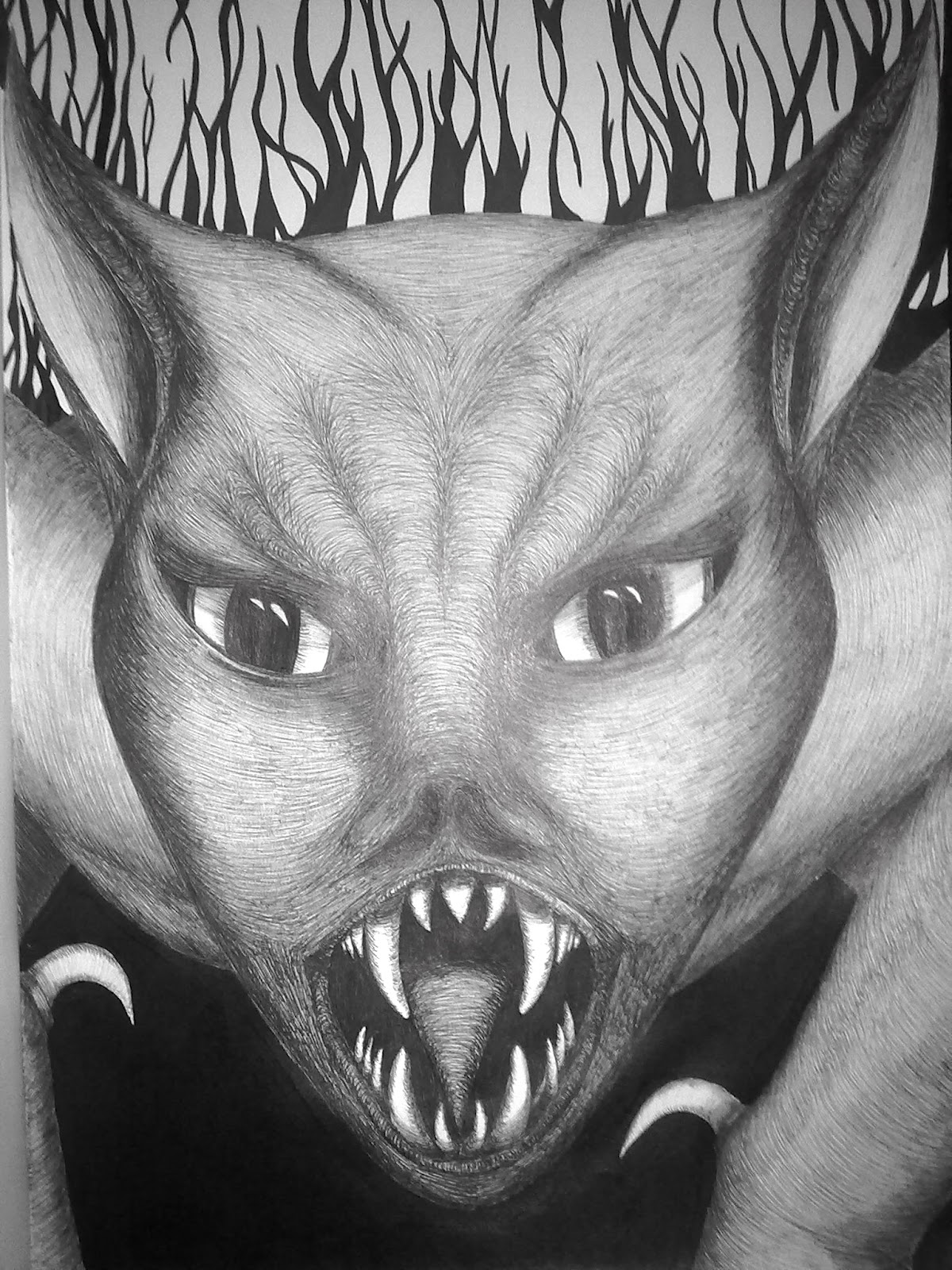
Rough illustration #4

I'll likely tinker on this for a fair while but I'm stopping today as life has dissolved into a series of accidents, largely revolving around ink. This is not a good thing when you're working on illustrations...

Best flying characters in fiction

For this I didn't just want to touch on those who can fly under their own steam. I also wanted to list the best of flying fictional characters that have had an impact on our perceptions of flight.

Mary Poppins with the help of an umbrella

Carl Fredricksen and Russell from Up with the help of a house

Peter Pan

Superman

Human Torch

Iron Man with the help of a suit

Astro Boy

Mars Attacks aliens

Dumbo

Winnie the Pooh with the help of a balloon

Aladdin with the help of a carpet

Falkor the white luckdragon from the Never Ending Story

David Freeman from Flight of the Navigator with the help of an alien ship

Wicked Witch of the West from The Wizard of Oz with the help of a broom

Dracula when he changes into a bat

Luke Skywalker from Star Wars with the help of a X-wing space ship

Han Solo from Star Wars with the help of The Millenium Falcon

The raven from Edgar Allen Poe's The Raven


Zaphod Beeblebrox and Arthur Dent from Hitchhikers Guide To The Galaxy with the help of the infinite improbability drive.

Doctor Who with the help of a TARDIS

The Master from Doctor Who with the help of a TARDIS

Predators with the help of spaceships


Hal 9000 from 2001: A Space  Odyssey

Note: Finding non-Disney pictures of some old classics is surprisingly hard. I'm actually quite alarmed by just how much Disney has taken over some of our good old stories.

Saturday, June 2, 2012

Allergy free chicken, leek and potato pie recipe


Ingredients
Pastry
  • 1 packet Orgran Pastry Mix
  • 2 tbsp chia seeds
  • ½  cup flaxseed
  • ½ cup Orgran Gluten Substitute
  • 1 tsp salt
  • 65gms caster sugar
  • pepper to taste
  • 125gms Nuttlex
  • 5 tbsp iced water (may need more)
Filling
  • 2 tablespoons olive oil
  • 2 leeks, trimmed, halved, washed, sliced
  • ¼ cup plain flour
  • 1 ½ cups chicken stock or 1/2 a chicken stock cube dissolved in 1 ½ cups warm water
  • 1 double breast of chicken, cubed
  • ½ cup goat’s milk
Top
  • 2-3 medium sized potatoes, peeled and sliced into 5mm slices
  • Pepper
  • Spay oil

Method
Pastry
  • In a bowl, add ½ the Orgran pastry mix, chia seeds, sugar, flaxseed, pepper, salt and Orgran Gluten Substitute.
  • Rub in 125gms Nuttlex until ‘crumbs’ form.
  • Add iced water and combine.
  • Add other ½ pastry mix and combine until sticky to the touch but appearing like dough.
  • Use dusted flour to handle and roll.
  • Roll out to slightly larger than your greased pie dish. If the dough cracks too much remix with more water. If the dough sticks too much and doesn’t roll easily then remix with more flour.
  • Shape pastry into the pie dish and remove the excess with a knife.
  • Cook for 10 minutes at 180°C then remove from the oven.

Filling
  • Heat oil in a large saucepan over medium heat.
  • Add leek.
  • Cook, stirring, for 3 minutes or until leeks are tender but not coloured.
  • Sprinkle over the flour.
  • Cook, stirring, for 1 minute.
  • Remove from heat and gradually add stock, stirring.
  • Return to medium heat.
  • Cook for 3-5 minutes or until mixture comes to the boil.
  • Add chicken and goat’s milk. Cook until the mixture is thick and the chicken white.
  • Season with salt and cracked black pepper. Be careful with adding salt as there is plenty in stock.
  • Spoon chicken mixture into the pastry shell. Reserve excess sauce if there is too much.

Top
  • Layer the top of the pie with sliced potato.
  • Sprinkle with pepper.
  • Spray with olive oil.
  • Bake in the oven at 220°C.
  • Bake for 15-20 minutes or until the potatoes are cooked and golden.

Collectors, cover art and fiction series


There is something to be said about writing a series when it comes to sales. Each successive book not only provides additional profits for the author of that particular title but also adds to the sales made of previous books and lines up a greater audience for the next - as long as you don't write a complete dud or bump off all the best characters in belittling ways that make an avid reader terribly upset. The reason for this is just your average reader's need to continue or finish the story.


But there are those who take the following of a story or several stories to new levels. They collect and not just for stories but also for aesthetics. Their books are maintained in perfect or near perfect condition. Sometimes two copies are bought, as done with comics. One copy is for reading while the other is for the collection. There are those obsessed with colours, sizing, correct covers all from the same printing (the covers in America often differ from those printed in Australia or England etc.). Mismatched books within a series can drive a collector batty. There are even those who'll go so far as to collect not just an author's works but a publisher's, particularly if the publisher distinctly brands all their books a certain way. (You may doubt this but I have seen a quite large Mills and Boon collection amongst others.)


In fact, if you work in cover design for a publisher or are a self-publisher looking at having artwork created for your series then you could encourage such obsessive collecting by doing a few simple things.


  • Add numbers to the bottom of the spine that indicate the number in the series.
  • Have matching spine design. 
  • Make sure the books are all printed in the same format or size.
  • Make sure the book length is roughly similar per book.
  • Spread a single image over the spines of several books so that when shelved correctly and in full they make up the picture.
  • Ensure the cover designs use similar colours or follow a pattern of colour gradations.
  • Change the publishing Logo colour (where possible) to match the colour scheme of the books.
  • Ensure the front and back cover designs follow a similar pattern even if different images are used.

  • Weave the front and back covers into the spine design so that the images don't immediately cut off. This may be done simply with grading colour.
  • Create a 'logo' or symbol that goes with that series alone and stamp it on the spine, number possibly included.
  • Ensure that block pictures under titles all line up as staggered pictures are aesthetically unpleasing. Even if the bottom of the title is lower don't lower the picture. This may require some careful consideration and manipulation of details.
  • Inserting special sections on either the author, the writing process, the character profiles, interviews etc can increase interest and mark each book. These sections work best when they are focused on the series, only occasionally referencing another work by the same author. Sections on other authors by the same publisher help in increasing the publisher's sales but not the author's so choose according to need.
  • And for the absolutely fanatical collectors of ultra-popular works there is an opportunity to print special or limited editions complete with a different design and extra information. You could even make them personally signed by the author (I suggest this for limited copies only unless you want the author's hand to fall off).
  • For the ultra-clever, design the front covers so they click together to make a full image.

By doing these things you will ensure that the avid collector will be compelled to buy a specific set of books as soon as they buy the first. Sometimes story degradation will actually be disregarded in favour of completing the set and this can only help with sales.

This may all seem quite cutthroat but business is business on the publisher's side and the author does need to survive. Also, if a collector wishes to buy in such ways then why not provide for them? It won't decrease sales to any other audience so there isn't really a downside to providing a collector with what s/he needs. You are actually more likely to lose some sales by not creating a look for your series due to the lack of the collector's attention as well as the average reader's inability to instantly recognise the associated story (not everyone remembers who the author or publisher are for a particular story as the story is all).

Friday, June 1, 2012

Rough illustration #3

Ah, this one gave me a headache...

On constructing a fictional language


This is by no means a comprehensive guide on how to construct a language, rather it is a guide on picking your language styles and using it in a manner appropriate for your story.

To add a touch of other language to your work you can use a few words and phrases of your construction 

Choosing phrases and the odd word for usage: 

  • Choose amongst the phrases commonly used when people are emotional and convert them. If people are emotional they tend to switch to their native languages when speaking. 
  • Definitely convert swear words as these are generally uttered in the native language and will by conversion you take the edge off the 'bad word' or 'lower language' stigma while creating a word or two that people would like to memorise.
  • Choose phrases or words used as honorifics and make your own class and/or command structures.
  • Choose phrases that refer to basic functions or needs living beings have.
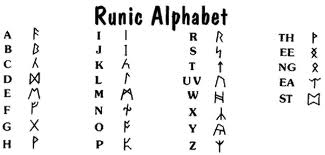
  • To save time and effort, base the words and phrases on an alphabet currently or previously in use which has been altered. Use the base guides for alternate alphabets construction in creating your words and phrases.
  • Record your phrases and words for later reference as you'll likely reuse them.
Sometimes though, there are times in writing fiction when use of a fictional language is required. Most of us make do with the odd word or phrase peppered throughout to give a little bit of otherness to the mix. But sometimes just a few words or phrases isn't enough to lend authenticity to your language or world. A greater use of a fictional language is often needed if your work is of epic proportions or revolves around cultural clashes between totally foreign civilisations.

There are a few options for when necessity dictates a new language be added to your work. One is to alter a language currently in use and the other is to make an entirely new one up. There are advantages and disadvantages to both though the first option is by far the most popular.


To change a language currently or previously in use:

  • To construct a fictional language then changing an alphabet currently in use is the easiest approach. The author is familiar with how to manipulate the language from the very beginning, writing it as though it were just their language in code.
  • Changing an alphabet from a base set like the English/Latin alphabet or the Greek will only get you so far in making a language truly other. This method is quicker and easier but it lacks a certain authenticity when used regularly. The reader or viewer will pick up that the language isn't all that foreign sooner or later and the worst of the critics and most avid of fans will then tear your work apart for it because they're the most likely to look so closely at your work.
  • Altering an alphabet that hasn't been in common use in centuries will add a little more authenticity but if the alphabet still mostly resembles the ancient one then it may be recognised, as happens with Norse or Egyptian. If it is recognised then there is cause for the audience to believe there was once a meeting of cultures or a diaspora or peoples.
  • If you use an ancient alphabet you can intentionally point to or suggest a common point of evolution or of historical contact between cultures. In this way you can use your fictional language as a plot device as well as a method of adding otherness and civilisation creation to your writing.
  • For irregular usage, though more than the general phrase, and for quick writing this method is the best one to take, especially if your fictional civilisation is not reliant on being completely separated from human culture and contact.
  • Some attention must be paid to how the language sounds when constructing these languages but not nearly as much as when constructing a language from scratch. If you are using an altered alphabet then the words and flow of the language, in essence the beat of the music, will sound very much the sake as the original language. What will change is the particular notes or sounds made.
  • Making new sounds to go with the new letters will take some time and I suggest using a recorder when doing so, particularly if you are intending these languages to go beyond print. Even in print you may need to reference how the language sounds; guttural or lyrical etc, so that the audience can imagine or 'hear' it properly. If your characters have a different tongue and throat structure then there will be different vocalisation methods and thus different sounds being used as language. To find these you may have to completely depart from any know language to fund your sounds.
  • From an altered alphabet most words will still be similar, as will the phrases but there are options of making the words used refer to different objects, concepts, relationships etc. Even with the limited play available through an altered alphabet you can use the language rather effectively when creating a different culture. Throughout our world the alphabets and languages used vary widely but what is being referred to is the same. With this similarity in objects referenced it can be said that we have a global language despite the different tongues we speak it in. How we reference changes through the fashions of slang, which may or may not permanently enter the base language structures. If you are constructing a fictional language with the same alphabet base then do the opposite of what is done on our planet. Make the words and phrases used refer to something completely alien to our world. This will add a layer of complexity.


To create a fictional language from scratch (almost never done except in part):

  • For use when entire worlds revolve around the language or a civilisation completely separate from humanity. Most of the guides on altered alphabet construction come into play but there are some important differences.
  • Time consuming and incredibly difficult as you are effectively doing what thousands upon thousands of people would have done over centuries. The end product is worth of a book or two by itself.
  • To create and use an alphabet that is completely new will indicate the absolute foreignness of your characters to human civilisation. This is great for use in space dramas but not entirely necessary for any civilisation living alongside humanity on Earth. That isn't to say that you shouldn't but that you might not have to expend so much energy on language construction if you allow some early interaction between the cultures and civilisations.
  • Great attention has to be paid to making the language structure different, the beat and flow of the language as well as the sounds used different. The sounds will need to be unusual and their combination has to sound consistently fluent or guttural or singsong.
  • The phrases commonly used, slang in particular, will inevitably need to be new and this will require you to think carefully on alternate grammar and sentence construction. This will likely require you to study languages other than your native one just so you can get enough of a grasp on how different languages work that you can use this information to form your own language and put it to fluent use.
  • You will need to make excessive notes and record all the sounds used wherever possible, enough to make a dictionary of your own. You may even want to create your own writing styles so that you aren't just printing every line.
  • You will have to construct new words to go with your new alphabet, requiring you to find different ways to refer to the same objects or words and concepts or to refer to new objects and concepts as yet unknown to us.
  • Great authenticity comes as a result of this hard labour and if your work is published your language will likely be immortalised simply because of its existence, popularity disregarded.

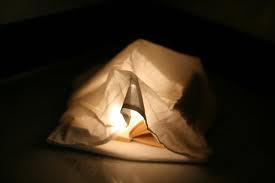
Rough illustration #2

I'll update again with a better photo. Or maybe a scan when I get those done...