Showing posts with label Imaginary. Show all posts

Tuesday, January 15, 2013

Types of fictional elephants

For this list I have included physical and skill differences as the range of physical differences isn't very wide. Given that the list still remains rather short, I'd say there is plenty of room for imagination when it comes to creating an elephant character.
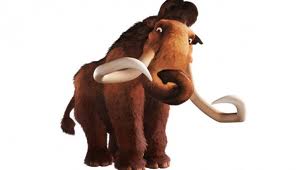

Woolly Mammoths like Mr. Snuffleupagus from Sesame Street and Manny from Ice Age.

Flying elephants, where the ears act as wings, such as Dumbo.

Upright walking elephants, which are also anthropomorphic in personality, such as Babar the Elephant.

Helpful elephants, such as found in the Aesop's Fable The Elephant And The Ant.

Clumsy elephants such as Bump.

War elephants or war mammoths in more texts and games and movies than I can count. The above is from the Lord Of The Rings movies. Frequently war elephants and mammoths are depicted as large or giant versions of elephants and mammoths.


The Elephant Man Joseph Carey Merrick was a man described as an elephant due to the visible symptoms of an illness. He has been depicted as an historical figure, a mythological figure and even a super-villain by DC Comics. In the DC Comic version he is a powerful giant with a thick hide and terrible attitude, nothing like the real Joseph Carey Merrick.
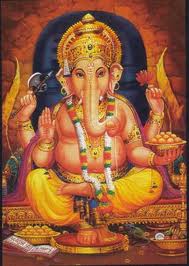
The Elephant God Ganesha  from Indian mythology, who has a human body, four arms and an elephant's head, appears in multiple fictional stories.

Elephant/human hybrids. The above is a piece of art produced by Fortunio Liceti for his 1665  book De Monstris and it shows just one example of a hybrid. Others can be a mix of human and elephant features over the face (eyes forward, big cheeks etc) or features over the body.

Patchwork coloured elephants such as Elmer the Patchwork Elephant by the British author David McKee.

Painted elephants such as that from The Party (though inelegantly so).

Egg laying or roosting elephants, courtesy of Dr Seuss's Horton.

Ballet dancing elephants such as those that appear in Fantasia.

Miniature elephants (not just babies).
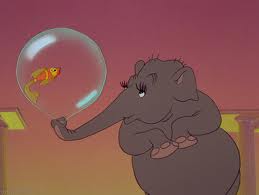
Bubble blowing elephants.

Monday, September 24, 2012

Types of fictional horses


  • Talking horses - Mr Ed being one and Xanthus, an immortal horse with the power of speech, is another
  • Unicorns
  • Cartazonon - an orange horse with a lionish mane and a single horn growing from its forehead
  • Pegasii
  • Immortal horses - ridden by various gods
  • Horses as appearances of gods and goddesses
  • Ceffyl-Dwr - a flying water horse related to fairies
  • Hippogriff - it has the head and front legs of an eagle while the rest of its body is that of a horse
  • Fire breathing horses - typically warhorses or horses related to the underworld
  • Fire horses - are either made up of fire or can control fire
  • Demon horses or mules
  • Ichthyocentaur - has the upper body of a human, the forelegs of a horse or lion and the tail of a dolphin
  • Seahorses - they are often linked to land bound horses in fiction and mythology despite the lack of relation.
  • Kelpie - Celtic mythological water horses
  • Noggle - a small grey Celtic horse with supernatural powers
  • Human eating horses named Mares of Diomedes as well as the Karkadann, which is a carnivorous unicorn
  • Odin's eight legged horse
  • The Trojan Horse - horse shaped at least
  • Nix - a shapeshifter that can appear as a human, horse, snake, fish or mermaid and who is either gentle and sexy or a murderous temptress
  • Centaurs or Sileni - horse from the shoulders/waist down, human from the waist/shoulders up.
  • Ipotanes - a being resembling a human with the ears, tail and legs of a horse
  • Golden horses - gold hair and hooves: namely Miramis from Astrid Lindgren's Mio, my Mio
  • Each Uisge - a water horse that feeds on human flesh
  • The intelligent and cultured Houyhnhnms - a race of horses in Jonathan Swift's Gulliver's Travels
  • Mutant horses - the "great horses" affected by radiation fallout in John Wyndham's The Chrysalids
  • Horses made of wind or storms - Riders on the Storm riders ride these horses
  • Horses with winged hooves - related to pegasii
  • Companions - human spirits reincarnated in the form of white horses in Mercedes Lackey's Valdemar series. Reincarnation as a horse also happens to Oliver Hardy in Flying Deuces.
  • Skeleton horses - related to demon horses as they belong to the world of the dead
  • Concorde - technically a page banging coconuts in Monty Python and the Holy Grail but why not add him here
  • Unipeg - a winged horse with a single spiral horn growing from its forehead. Combine the names unicorn and pegasus and you get unipeg.
  • Phooka - a pitch black horse with glowing red eyes. It can also take on the shape of a dog or giant bird.
  • Hippocampus - it has an upper body that resembles a horse and a dolphin-like lower body

Thursday, May 24, 2012

On writing alien foods


Writing alien foods is an exercise in mild horror or body horror writing as well as shock creation. In fact, the best alien foods often resemble the things we'd never eat without desperate cause. Then again, also of the best are foods we've never thought of as they just plain don't exist in any form in the real world.

Writing alien foods isn't only about the actual food though, it is about how it is eaten. This is where body horror can truly come into play.  Misplaced orifices usually make people do the double take but a much subtler form can be the use of different eating utensils. As you know, body horror can be used to create black humour and so different eating utensils can be used to create slapstick comedy.

The reason for this is that alien food is seen to obviously be different from what we eat and given that we eat almost anything that tastes good, morals sometimes taken into account and sometimes not, then what doesn't taste good or is unappealing in appearance is likely to be what an alien would eat. Never mind that there are opportunities to write delicious alien foods, most are written to horrify or amuse.

I guess that does present you, the writer, with an option to break the trend. Surprise us.

Red Dwarf has many good examples of body horror and slapstick comedy with regards to alien foods. There are mutating foods, wrong orifices and odd utensils like anti-matter chopsticks.


So what sorts of things can be used as the base for creating the worst body horror reactions when it comes to alien foods?
  • Excretion based foods from those animals not normally accepted. Also Excretion based foods from our own or the host's bodies.
  • Insect or arachnid based foods.
  • Worm like creatures in place of noodles or stir fries.
  • Emphasise the squishiness - crunchy is one of the most appealing food words so aim for the opposite.
  • Reproductory organs based foods - no matter the creature they're from but the closer to home it gets the more horror is invoked.
  • Unappealing colours and smells - tend towards greys, blacks, off-greens, yellows and off-oranges. Red, blue and green are appealing to the eye for most things but blue can be a bit disconcerting in food. RBG in food should be Red, Brown, Green but I'd also include bright oranges, purples and yellows in the mix.
  • Fungal based foods - neither here nor there it is often seen as the most unappealing of foods by children. This impression generally remains for anything not a mushroom.
  • Rats, mice or anything deemed to be disease infested - alien versions included. To willingly expose oneself to disease or imagined disease will elicit body horror in most.
  • Brains based foods - any will do but the closer to home the more squeamish the audience will become, particularly if the brain is still in the skull (or original casing, whatever you make it out to be).
  • Fetuses and larvae - the eating of any of these will bring about intense body horror in those who don't eat such things already (there are those who eat such things as cooked eggs with almost grown chicks boiled in them as a delicacy or as street food). But pretty much everyone will recoil from the eating of your own species young.
  • Natural drugs such as licking toads and willingly being bitten by snakes will make many draw back in fear as well as horror.
  • Tentacle based foods - unless the tentacle is recognised as one commonly eaten the idea of eating tentacles is quite off-putting.
  • Cannibalism. Need I say more.
  • Reversing the order of the orifices or at least misplacing them.
  • Eating far, far too much.
  • The alien eating us.

How do you create slapstick or humorous moments using alternate eating methods?
  • Rely on the awkwardness created from using utensils not fitting your appendages.
  • Cultural awkwardness of having to be adept without learning - use the class system alongside the above point and you have a tricky situation and slapstick moment blended together. Such moments can make for humour and cringe-worthy moments.
  • Reverse the order and try to teach the alien to use your utensils.
  • Create utensils similar too but not the same enough to those the audience will be familiar with but place them in extraordinary situations.
  • Create utensils extremely different from those the audience will be familiar with.
  • Use antiquated or uncouth methods of eating - straight off the knife or the equivalent of.
  • Use no utensils at all and have the characters face-plant into the food.

Note
Science-based food can appear alien but is born more of chemical formulas, test tubes and an eye towards purity in flavour. Science-based food is a topic for another day.