Showing posts with label Plot Generator. Show all posts

Wednesday, November 14, 2012

Types of fictional islands

Floating or flying islands
Literally uprooted from the earth, they are often made from mountain tops, flat land or actual islands. Their direction can be governed.

Lost in space-time islands
These islands can be standard islands otherwise or appear as one of the other types: floating, space craft or planetary.

Space craft islands
The space craft is like a slab of land, with people or aliens living upon it rather than contained within. The island can be island shaped or even a great loop, as long as those living on it are contained only by whatever encapsulates the atmosphere.

Prehistoric islands in modern times
Often previously uncharted, they are often populated by dinosaurs or ancient tribes.

Enclosed islands containing mythological beings
Similar to prehistoric islands, these islands are the home of mythological beings powerful enough to hide the island from humans. Inhabitants range from fairies to angels and demons.

Prison islands
Islands often left uncharted or made restricted, they home the worst of the worst.

Treasure islands

Lost islands holding pirate treasure or the lost treasure of gold ships from an empire.

Uncharted islands
These are often included into stories so that a character can become a castaway for an extended period of time. Also they provide good places for those in the know to hide.

Bermuda islands
Ruled by the mysteries of the Bermuda, meaning they could be lost in space-time as well as being the home of those lost within the Bermuda.
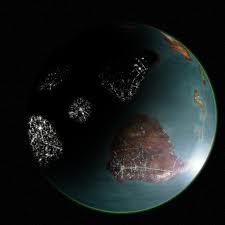
Planet islands
They are islands rather than planets when considered as a small or isolated section of land within a solar system or galaxy.

Non-existent islands
These are fantasies built on myths or Chinese whisperers within the story structure and can be essential to plot development.

Reef islands made entirely of coral
These provide a touch of magic or mystique to a tropics based story. If there's no magic system within the story these islands provide the same impression of wonder.

Private islands of evil villains or mad doctors
Myths are spread about these to warn off visitors. They're guarded by personal armies and contain weapons stashes if the villain is connected but if the person is just a mad scientist then the island could otherwise be uncharted or private.

Devil's island
An island where Hell or the underworld is accessible or where devils can congregate on earth.

Secluded islands where the rules of civilisation are discarded
People battle people or creatures, murders are arranged, drugs are produced, slavery trade conducted.

Artificial or man-made islands
Created for many of the above nefarious purposes or as private kingdoms/countries.
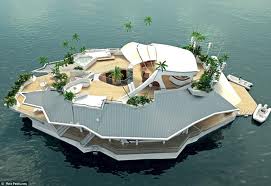
Boat islands (think larger)
It is hard to tell if they're boats or islands at times but essentially the island can move over the oceans with the use of engines. They can be part of steam punk stories or mad industrial magnate stories.

Sentient islands
These islands are like small Gaias, having minds of their own and systems to protect themselves when needed. They can control the environment of the island.

Utopian islands
These islands contain everything we dream of, from food to wealth to peace. They can be used to show just how incapable we are of accepting such bounty peacefully.

Hoax island
Doesn't actually exist but its 'existence' is part of the story. It is very much like the non-existent island but this time it is built on lies rather than myths or Chinese whispers. The lie is constructed for the sake of a shady deal or escaping trouble (such as treasure hunters etc.).

River islands
Appearing within the world's largest rivers they offer a small patch of sanctuary if a character is on the run, a hindrance to an adventure that must be overcome, a place for a character to hide from society while remaining within reach of it.

Enchanted islands
Magic rules apply to the island when they don't to any other part of the world or at least to most other places.

Cloud islands
It is hard to tell whether they're islands or clouds sometimes but the clouds can be walked upon, built upon and plants can be grown on them. They float like floating islands but this time they are completely directionless. Alternatively, they are only in one place at a certain time so their properties are tied to something other than the particular cloud.

Wednesday, August 15, 2012

On the pros and cons of story idea generators


There are such things as story idea generators for first time writers or even experienced writers to use to help them come up with a story. But with any such programme there are several pros and cons that need to be looked at carefully before carrying through with any idea generated or even before using or buying the programme. I thought I'd list a few to help a writer or hopeful make the decision on their own rather than preaching this or that to them.

Also, I should mention that there are plot and character generators out there as well but no matter the type of generator the below should be applicable.

Pros

  • A quick solution can be found when you're struggling for an idea.
  • The most common or famed themes and issues that sell well will be accessed to produce the idea.
  • The most common or famed characters and events will be accessed to produce the idea.
  • No need to worry about writer's block (or so a lull in the imagination is called).
  • They provide ideas for practice writing much like exam questions.
  • Come up with ideas you're unlikely to have thought of.
  • They help you learn what you have to consider while initially structuring a book.
  • You can create a list of ideas and pick the best.
  • They help you analyse your writing.
  • They may help you start writing even if you don't follow the idea or plot given to the letter.
  • Its easier to write when you don't have to do half the work.
  • For writers so far unsuccessful in creating complex plots or characters these give some assistance when it comes to writing a potentially publishable piece.
  • If you have most of the story together but are missing a character or an event then these might provide the missing information.


Cons


  • The idea is touted to be perfect, usually meaning artistically or with regards to publication opportunities, but perfect is rarely found in the publishing world and usually has to do with the originality matching with marketability and writing skills. Writing works very similar to old classics or best sellers or even ones full of stereotypes or predictable events won't generally impress an agent or publisher. Such works can also be too close to plagiarism to be publishable.
  • Much like exam questions, they can leave you feeling blank and uninspired and because of that, stupid. This is not a good emotion for a writer as writers have to at least suspend most of their self-criticism until the first draft is done.
  • Idea generators come up with ideas you're unlikely to have thought of which are sometimes fine and sometimes not. If you are unlikely to have thought of the idea or character you'll likely find it much harder to write on the subject or about the character's motivations, thoughts and emotions. Without such inspiration the story will almost certainly read as flat and lifeless. That's if you manage to write the complete story in the first place as without inspiration it is rather difficult to write at length.
  • There are much better and more appropriate ways of learning how to structure books, many of which are free. Joining a writer's group will always help. Picking up a book on editing and publishing will show you the other side of the industry. Talking to book sellers and keeping an eye on the latest publications in your chosen genre also gives you an idea of genre trends. And above all, reading other people's works gives you information on structure, writing styles, genre trends, book length, characterisation etc (free if you have a library card).
  • A list of ideas that aren't your own is no more useful that a single idea not your own. Inspiration often comes from your own thoughts, feelings and experiences on events and issues related to you. Even if you are gleaning a story from a newspaper article, the reason for your inspiration is your empathy, sympathy, shock, awe etc.
  • Analyse your writing against a particular model and adjusting accordingly only gets you closer to a bland but mass marketable read. I say mass marketable as it could be sold pretty much anywhere but without that spark the bland book likely won't sell as well as expected.
  • Relying on other people's work, which culminates in a programme, instead of your own imagination can lead to lesser ideas being worked on.
  • Compromising on a piece of writing can leave you feeling empty when most writers end up feeling like they've written down a little bit of their heart and soul.

There are likely more points to be added but after this you can see where I stand. If you aren't extremely stuck then search out your own inspiration and draw on your own knowledge. That's what reader's are often interested in, even if it is reformatted into fiction. Actually, especially so for fiction lovers as not everyone's biography will be interesting but their thoughts, impressions and life lessons might well be. But all this isn't to say that you can't take a little boost in your writing abilities from an idea generator. If you're starting out or a little stuck filling in the gaps in your story they might help but I believe the best approach if you are going to use one is to mix a little of your own ideas and a little of theirs. Don't let the programme write everything for you or you'll just be writing a boring essay.