Tuesday, July 3, 2012

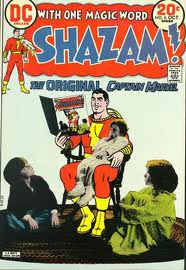
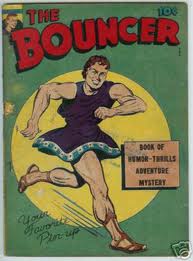
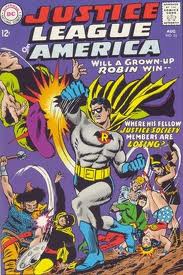
Bad comic covers

Because of google issues and my own fatigue I bring you a late laugh or two.


And, from bad to worse...


There is one interesting thing about this for me and that is they never mentioned comics in history class, just the movies and other propaganda methods like radio, leaflets, recruitment from the streets, rallies etc. But no comics. I can't see a date on this so I have no idea if it was  made during the war or after. The curious history nut in me is partially revived by this.

Writing fiction while fatigued

You can't. 
Don't bother trying.
Go to sleep.

Rough illustration #10

Not the best of all photos but apparently my hands aren't steady enough today for that. Also, lesson learnt on not touching anything with inky fingers...

Monday, July 2, 2012

Allergy free chicken sausage rolls recipe

This is using the allergy free potato based pastry.

Ingredients
Pastry
Filling
  • 450g chicken mince
  • 1 tsp Orgran No Egg whisked with 30mls water until thick
  • 1 small carrot, grated fine
  • 1 small onion, halved, thinly sliced
  • 2 green onions, thinly sliced
  • 1 tbsp tomato paste
  • 1 tbsp chilli sauce
  • 1 tbsp parsley leaves, chopped fresh or dried flakes but fresh is best
  • Salt & freshly ground pepper

Method

Pastry
  • Prepare the pastry you prefer.
Filling
  • Preheat oven to 180°C fan-forced.
  • Line a large baking tray with baking paper.
  • Combine the mince, No Egg mixture, tomato paste, chilli sauce, onion, carrot, green onions, parsley and seasoning in a bowl.
  • Dust a 40cm-long piece baking paper with flour.
  • Place the pastry on the baking paper.
  • Roll out the dough to a 1cm thick, 22cm x 30cm rectangle.
  • Cut the pastry into three 10cm wide strips.
  • Shape one-third of the mince mixture into a 22cm long sausage.
  • Place the mince along one long side of a pastry strip.
  • Roll the pastry up to enclose the mince.
  • Carefully cut to the lengths you'd like.
  • Transfer the sausage rolls to a prepared tray.
  • Repeat twice with the remaining pastry strips and mince mixture.
  • Brush the goat’s milk over the sausage rolls.
  • Prick each sausage roll three times to let the steam out.
  • Bake the sausage rolls for 30 minutes or until golden.

Note
  • Any leftover mince mixture can be made into rissoles or meat patties. These can be eaten in the pita bread if made to the right size.

Allergy free potato pastry recipe

Lovely to make on a winter's night as the mash is warm.

Ingredients
Pastry
  • 450g warm mashed potato
  • 1 ¼ cups Orgran all purpose flour
  • ½ cup cornflour
  • 1/3 cup Orgran gluten free gluten
  • 1 tsp salt
  • 100g Nuttelex spread
  • 1 tsp Orgran No Egg whisked with 30mls water until thick
  • 1 tbsp goat’s milk for browning

Method
  • Once the potato is cooked and mashed blend in the Nuttlex until smooth.
  • In a large bowl combine the flour, cornflour, gluten free gluten and salt.
  • Add the mashed potato mixture.
  • Add the No Egg mixture.
  • Using a flat-bladed knife, stir until dough forms.
  • Dust a work surface with flour.
  • Knead the dough for 3 minutes or until smooth. It starts out very sticky but quickly gains form and stops sticking.
  • Wrap dough in cling wrap and set aside for 30 minutes to rest.
  • Just before cooking brush with the goat's milk so that the crust turns golden.

Note
  • If you think you've made too much mash and will struggle to make the pastry dry enough, just put the Orgran No Egg powder into the mix and leave out the 30mls water. You can also add in a little more plain flour until you find the right balance.

Best fictional doctors

There are so very many doctors in fiction not only because doctors are needed regularly in our everyday lives and therefore not only deserve but require representation but also because they represent an opportunity for the writer. Such opportunities can be to explore the mad, bad, latest scientific discoveries or nightmares, good, gentle, intelligent, dotty, cranky, rebellious, supportive, caring, lost, long suffering, doomed, self-obsessed, competitive, over-eager, childish, accident-prone, guilty, insightful, arrogant, disillusioned, depressed, detail-minded, adventurous and obsessed in us all. In fiction they represent the best and the worst and also run into more folly than most.

So here is the best of many. From here it is personal choice, I believe, as even I'll have to pick out of at least 20 (maybe more) before I find my favourite.

Dr. Henry Frankenstein from Frankenstein by Mary Shelley

Dr. "Doc" Daneeka from Catch 22 by Joseph Heller

Dr. Gregory House from House as played by Hugh Laurie

Dr. Abraham Van Helsing from Dracula by Bram Stoker

Dr. Herbert West from Herbert West–Reanimator by H. P. Lovecraft

Dr. Moreau from The Island of Dr. Moreau by H G Wells

Dr. Hannibal Lecter from The Silence of the Lambs by Thomas Harris as played by Anthony Hopkins

Dr. John Dolittle from The Story of Doctor Dolittle: Being the History of His Peculiar Life at Home and Astonishing Adventures in Foreign Parts Never Before Printed by Hugh Lofting

Dr. Henry Jekyll from The Strange Case of Dr. Jekyll and Mr. Hyde by Robert Louis Stevenson

Dr. John H. Watson (left) from the Sherlock Holmes stories by Arthur Conan Doyle

Dr. Faustus from The Tragical History of Doctor Faustus by Christopher Marlowe

Dr. Anton Phibes from The Abominable Dr. Phibes and Dr. Phibes Rises Again as played by Vincent Price

Dr. Emmett Brown from Back To The Future as played by Christopher Lloyd

Dr. Strangelove from Dr. Strangelove or: How I Learned to Stop Worrying and Love the Bomb as played by Peter Sellers

Dr. Who from Dr. Who

Dr. Elizabeth "Liz" Wilson from Garflied

Dr. Egon Spengler from Ghostbusters as played by Harold Ramis

Dr. Raymond Stantz from Ghostbusters as played by Dan Aykroyd

Dr. Jack Griffin from The Invisible Man by H G Wells

Dr. C. A. Rotwang from Metropolis as played by Rudolf Klein-Rogge

Dr. Henry "Indiana" Jones, Jr. and Dr. Henry Jones, Sr.  from the Indiana Jones series as played by Harrison Ford and Sean Connery


Dr. Leonard McCoy from the Star Trek film series as played by DeForest Kelley

Dr. Sheldon Cooper from The Big Bang Theory as played by Jim Parsons

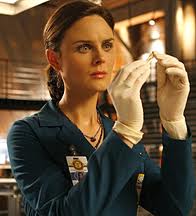
Dr. Temperance Brennan from  the Temperance Brennan novels by author Kathy Reichs and Bones as played by Emily Deschanel

Dr. Martin Ellingham from Doc Martin as played by Martin Clunes

Dr. Simon Tam from Firefly as played by Sean Maher

CPT Benjamin Franklin "Hawkeye" Pierce and CPT "Trapper" John Francis Xavier McIntyre from M.A.S.H. as played by Alan Alda and Wayne Rogers


Dr. Cal Lightman from Lie To Me as played by Time Roth

 Dr. Frasier Crane from Frasier as played by Kelsey Grammer

Dr. Helen Magnus from Sanctuary as played by Amanda Tapping

Dr. Hubert J. Farnsworth from Futurama

Dr. John Zoidberg from Futurama

Dr. Julius Hibbert from the Simpsons

Dr. Ogden Wernstrom from Futurama

Dr. Perry Cox from Scrubs as played by John C. McGinley

 Dr. Rockso, the Rock N Roll Clown from Metalocalypse

Dr. Samantha Carter from Stargate SG-1 as played by Amanda Tapping

Dr. Tom Jackman from Jekyll as played by James Nesbitt

Dr. Walter Bishop from Fringe as played by John Noble

Sunday, July 1, 2012

Allergy free chicken, leek and mushroom casserole recipe

Steamy...

Ingredients
  • 50g Nuttlex
  • 2 leeks, pale section only, halved and sliced
  • 2 garlic cloves, finely chopped
  • ½ tsp dried thyme
  • 2 dried bay leaves
  • 700-1500g chicken breast, sliced into large pieces
  • 2 tbs Orgran all purpose flour
  • 2 tbsp white vinegar
  • 1 cup water
  • 1 ½ cups chicken stock made from a Massel ultracube
  • 300g button mushrooms, stems trimmed
  • 60mls goat’s milk
  • Salt and freshly ground black pepper to taste

Method
  • Preheat oven to 160°C.
  • Melt half the Nuttlex in a pan over low heat.
  • Add the leek, garlic, thyme and bay leaves and cook, uncovered, stirring occasionally, for 10 minutes or until the leeks are tender.
  • Once cooked, transfer to a plate and set aside.
  • Place the chicken pieces in a large bowl and sprinkle them with flour, tossing to coat.
  • Melt half the remaining Nuttlex in the pan over medium-high heat.
  • Add half the chicken pieces and cook for 2 minutes each side or until golden. Transfer to a plate and set aside.
  • Repeat with the remaining Nuttlex and chicken.
  • Add the vinegar and water to the pan and bring to the boil over medium-high heat.
  • Cook, using a flat-bottomed wooden spoon to scrape the base of the pan to dislodge any bits that have cooked onto it, for 1 minute.
  • If there are any burnt bits in the liquid then strain it and return it to the pan.
  • Return the leek mixture and chicken pieces to the pan.
  • Add the chicken stock and mushrooms, and stir gently to distribute the ingredients evenly.
  • Season with salt and pepper, being aware the stock already contains some salt.
  • Find and remove the bay leaves.
  • Transfer the all the ingredients to a casserole dish, reserving any excess liquid if using a small amount of chicken (transferring with a slatted spoon makes this easy).
  • Cover and cook in a preheated oven for 1 hour or until the chicken is very tender. Remove the casserole dish from the oven and use a large metal spoon to skim any excess fat from the surface.
  • Stir in the goat’s milk.

The impact of The Tell-Tale Heart


The impact of Edgar Allan Poe's works within the world of fiction cannot be underestimated and it doesn't matter what genre we're talking about. All fiction was affected by his works in some way shape or form, purely because he described and revealed a whole section of humanity's core being. He didn't focus on the individual so much as the deeper psychology of all humans.


But in amongst all his works in one piece that's impact has echoed in the strangest of ways for a written work. And that is The Tell-Tale Heart. The central focus of the story is the fear induced by the imagined sound of a heart beating. Guilt and despair plague the murderer even as he fails to escape his own mind's imaginings.


But it wasn't the exploration of the guilt a murderer might feel that stayed with us and impacted upon fiction the most. No, it was the sound of the tell-tale heart itself. That thumping echo of something horrible that happened and it is sometimes used to indicate guilt or horror but also to sound a death knell, to echo into the underworld as a sign of passing or to distill a life into a moment. The sound itself became something completely that exists outside of the written world and now has conventions all its own. 


The sound of the tell-tale heart has become a convention used in the movie making industry but one almost exclusively utilised by sound producers. The sound itself is no-longer the sound of a heart but rather the sound of something significant and dreadful happening over and over again. Anything from the smack of a shovel over a person's head, the steady sound of water dripping in a water torture scene through to the thumping of a hanged man's feet against a wall. Ghostly noises gain more impact if they reflect the manner of the person's death and sound at the same time during the day or night (usually night) that the death occurred. The ever-repeating echo of an event is what the sound of the tell-tale heart has become.

A person no-longer needs to be guilty, a murderer or even related to the original incident at all to hear this sound. They need only be in the wrong place at the wrong time.


Horror, of course, has been the genre most affected by the sound of the tell-tale heart but it does appear in many other genres as it in now a convention all of its own, and an extremely powerful one at that. Just hearing any sound that is related to this convention pinpoints it and the incident it is related to as the central point or thesis of the story.


Anyone viewing a movie nowadays is either completely aware of such a convention or unconsciously responds to it. It is the unconscious response that is so interesting though. The reason for such a response is the recognition that the event is important through the sheer shock of its occurrence. As, even if guilt is no-longer directly related to the sound of the tell-tale heart shock and fear still are. The use of the repeated sound highlights and lengthens the moment of shock into one of significance. Even as it repeats we recognise and re-recognise the sound and the moment it is related to.


This recognition can be used in reverse though as a way of building the tension brought on by encountering the unknown or hearing something (often spooky) without being able to identify what it is. The flip side of fearing what you know but can't believe to be true is to fear the unknown but to know it is happening despite your efforts to negate it. Both apply when it comes to the use of the tell-tale heart sound. In fact, many of the most spooky ghost movies use this but such a usage does occur as the scratching of an unknown creature, for instance.


No matter how it is used though, the sound of the tell-tale heart is here to stay and there are few conventions in sound production to rival with it. All from a short story written in 1843. Now that's powerful writing.

Allergy free chocolate banana cake recipe

We chose to eat ours warm rather than with icing as it is rather cold today.

Ingredients
  • 2 ¼ cups Orgran self-raising flour
  • 2/3 cup cocoa powder
  • ½  tsp bicarb soda
  • 1 cup caster sugar
  • 2 tsp Orgran No Egg whisked with 60mls water until thick
  • 2 large or 1 cup, over-ripe bananas, mashed
  • ¾ cup goat’s milk
  • ½ cup olive oil
Icing (Optional)
  • 1 ½  cups icing sugar
  • 1 tbsp cocoa powder
  • 2-3 tbsp goat’s milk

  • Method
  • Preheat oven to 180°C.
  • Lightly grease a medium to large fluted ring tin.
  • Sift the flour, cocoa and bicarb soda into a bowl.
  • Add the sugar and stir to combine.
  • Make a well in the centre.
  • Combine No Egg mixture, banana, goat’s milk and oil in a jug.
  • Pour the banana mixture into the well and gently stir to combine.
  • Spoon the cake mixture into the prepared tin and smooth the surface.
  • Bake for 40-45 minutes or until a skewer inserted into the centre comes out clean.
  • Stand the cake for 5 minutes in the tin then turn out onto a wire rack to cool.
Icing
  • Sift the icing sugar and cocoa into a bowl.
  • Add the goat’s milk and mix until smooth.
  • Pour the icing over the cooled cake.
  • Using a flat-bladed knife, spread the icing over the top.
  • Allow the icing to run down the cake’s sides.
  • Stand for 20 minutes or until icing sets.