Showing posts with label Science. Show all posts

Tuesday, November 27, 2012

Rosy's Christmas fiction gift recommendations

Here are some new, some old, some series, some stand alones and some untested but interesting looking for Christmas gift ideas and Boxing Day shopping madness.

Fiction
Moral Life of Soldiers by Jerome Gold

Live By Night by Dennis Lehanne

Man in the Empty Suit by Sean Ferrell

Romance
Karen Chance's Cassandra Palmer series

Nalini Singh's Psy-Changelings series

Ilona Andrew's Kate Daniels series

Detective
Kerry Greenwood's Phryne Fisher series

The Complete Sherlock Holmes by Sir Arthur Conan Doyle

JD Robb's Eve Dallas series

Science Fiction
Fahrenheit 451 by Ray Bradbury

The Eternal Flame by Greg Egan

The Aylesford Skull by James P. Blaylock


Fantasy
Eileen Wilks Lupi series

Gail Carriger's Parasol Protectorate series

Jonathan L Howard's Johannes Cabal series

Horror
The Complete Works Of H.P. Lovecraft

World War Z by Max Brooks

Miss Peregrine's Home for Peculiar Children by Ransom Riggs

Classics
The Phantom of the Opera by Gaston Leroux

Catch 22 by Joseph Heller

A Clockwork Orange by Anthony Burgess

Kids
Doctor Who: Where's the Doctor? of the Dr. Who series

Eoin Colfer's Artemis Fowl series

Jasper Fforde's The Last Dragonslayer

Sunday, April 1, 2012

Remote controlled human


Now you may wonder why I've put this up but there are two very good reasons. Actually, three.

1. The one remote controlling a man in the photo is known to me as Dad. He likes to experiment on people in order to figure out what makes them tick and yes this experimentation has included electrocution (mild of course) and purposely throwing people off balance to see if they can recover or will fall. There are other disorienting experiments but those were fun enough for the tales to be told to me.

2. This is pure science fiction come to life. Or magic if the article can be taken as read (I haven't read Harry Potter - don't start, I read enough books on such plots when I was a kid and don't need a kid-teen version added to the mental mix). Remote controlling a person? Bet you never thought that could really be done. The only thing that annoys me about this is I haven't yet been remote controlled about. Where are the perks? 

3. He's just been working on a project straight out of popular science fiction: helping code and construct a robot and by robot I mean a humanoid robot. I have to say that what I'm hearing of this robot has left me gobsmacked but I'll only blog what I know when the time comes as there are intellectual property rights and competition and all sorts of other legal issues that I don't want to encounter, even if I probably wouldn't.


Blindfolded humans steered by remote control

Artificial electric currents guide walkers round obstacles.
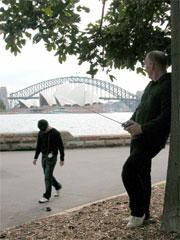
Researcher Richard Fitzpatrick steers a blindfolded subject.Researcher Richard Fitzpatrick steers a blindfolded subject.Credit Richard Fitzpatrick
It sounds like the stuff of magic — or a Harry Potter Imperius curse. But scientists have announced that they can guide your movements by remote control. They've steered blindfolded humans around the paths of a botanical garden in Sydney, Australia, using electric currents applied just behind the walkers' ears to affect their balance and navigation. The same technique, they say, might be used in virtual-reality simulations, or to cure motion sickness.
When we walk, the researchers explain, we must both balance our body upright and steer in a given direction. To do this our brain takes in information from our eyes, ears and many other cues. The way all these work together is extremely complicated. But with a blindfold on (or when walking at night, for example), the ears are the main sensors used for balance and navigation. It's these sensors that the scientists disrupt.
The remote-control technique, called 'galvanic vestibular stimulation' (GVS), uses electrodes placed on the skin behind the ear. These stimulate our inner ear's balance (or vestibular) system, including the semicircular canals. These fluid-filled tubes sense our head moving and respond with electrical impulses to the brain, explains Stefan Glasauer, a neurologist from Ludwig-Maximilians University in Munich, Germany. Artificial electric signals created by GVS give us illusions about our head's movement.
Remote-controlled walking by GVS is not in itself new, says study co-author Richard Fitzpatrick of the Prince of Wales Medical Research Institute in Sydney. It was first demonstrated in 1999, and other researchers have studied it since. But in these earlier studies, Fitzpatrick says, "we didn't really know what was going on — the walking didn't look normal." People's balance was affected by the electrical impulses in their ears; they stumbled and stuck out their feet to save themselves from falling.
Now the researchers can steer people smoothly without making them lose their balance. There's just one snag. If you want to be guided blindfolded round obstacles by someone holding a remote control, you'll have to tilt your head back or forward. If your head is upright, the same electrical stimulus will simply make you fall over.

Side to side

This, the researchers explain, is because their electrical signals have the net virtual effect of rotating the head around an axis running from the back of the head through the nose. When one stands upright, the stimulation makes it feel as though one's head is swaying to one side or the other, as if the ears are moving towards the shoulders. The body then sways to one side to compensate, and the subject loses balance.
But when you tilt your head backwards or forwards, that rotation axis (from the back of the head through the nose) becomes vertical to the floor. Now stimulation makes it feel as though the head is rotated to point to the left or the right, and in turn the participant may feel as if they are accidentally swerving to walk in this direction. To compensate, they start to walk in a curve in the opposite direction.
This clever mechanism means the scientists can control your navigation or your balance — depending on how you tilt your head. But that dependency also limits any potential applications. As Glasauer points out, a medical patient with impaired balance might have their head in any position at any time, hampering efforts to help them with GVS. The researchers are working on changing the electric signals to remove the technique's dependency on head tilt.

Balance implants

Daniel Merfeld, of the Harvard-MIT Division of Health Sciences and Technology, is also sceptical about the practical benefits of GVS. His team is working instead on implanting electrodes inside the ear, to directly replace the semicircular canals. This would remove any confusion caused by electrical stimulation of other parts of the vestibular system, and so help the brain to properly interpret signals coming from each individual part of the ear's balance controls.
They're making progress with the system in guinea pigs. "The first human experiments are ready now in principle, though we'd need to find an appropriate subject," says Merfeld.
Fitzpatrick is confident that with a bit more work, GVS could be used for flight simulation and virtual-reality games, especially with goggles creating false images for the eyes. He also suggests that the technique might be applied to cure motion sickness. "In a car, the vehicle motion could be fed back as a stimulus to cancel the vestibular signal, much in the way that noise-cancelling headphones work." At the moment, he admits, the electrical stimulation can only cause motion sickness, not cure it.

Thursday, March 22, 2012

Time travel in fiction: structure and function

Time travel in fiction is often used as a plot device for discovering what would happen if a particular issue in society, technology or otherwise went unaddressed. If not used for this purpose then time travel is used to take the reader to another time and space where more opportunities are afforded the writer to weave the tale they want.

Suspension of disbelief is needed in any writing of time travel simple because it isn't (as yet - hopefully) possible to travel in time. First you have to suspend your disbelief while read of the time machine's structure. As we can't travel through time and have no real technology for it, any technology portrayed in fiction will be fantastical.

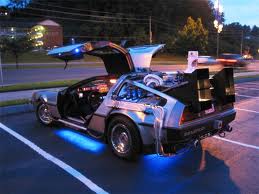
From: forevergeek.com

From: 10yl.blogspot.com

From: alienhippy.wordpress.com

Then, as a reader, you need to suspend your disbelief concerning the makeup of the world you are taken to in order to focus on the issue at hand; what the protagonist, the world and the antagonist will reveal as issues to address in our current society or our own hearts.

But what you need to develop the most in reading or writing time travel literature is not your imagination or your ability to suspend your disbelief. What is needed is the ability to think logically about the structure of time. Without this, the story unravels for writer and reader alike. 

And by that I don't mean the way scientists analyse time, using relativity, quantum fluctuations, the expanding universe, the deconstruction of what is 'now', the hypothesis that there is no past or future but rather just now, the uncertainty principle or any other theory related to time and space's structure (which is all related to gravity and energy and takes far more time and mathematical ability to explain than I have).

I mean that a writer must choose whether the past can or can't be changed and what overall structure time has.

Time structures:
  • Time runs in a single stream and no matter what you do nothing will change. Time travel to the past is impossible but travelling to the future is possible. This is a little problematic if you consider that the future's past can't be changed either so all actions taken will be tied down as the final act. Using this structure would allow a writer to move in leaps forward in time but otherwise all other actions are as grounded as in normal fiction. Travelling back from the future is impossible. Perfect for Robinson Crusoe type books, where the protagonist is stranded in a new land.
  • Time runs in a single stream but you can travel to the past and future and change events but the past will remain as it is currently structured as any actions taken were always going to be taken. (Futurama is a perfect example.) The writer is tied down a little with regards to the story's own internal structure but there is plenty of room for the imagination to fly. The time stream remains a single stream but loops form in it as time is travelled. What always bugs me about this structure is that when time loops it has to re-join in the past and split when reaching the present (one stream looping back and the other moving forward). The loop is both separate and connected at once and although the stories created using this structure are often pleasing, I just can't stand that last little quandary.
  • Time runs in a single stream up until the point of time travel. The past and future can be changed and any changes made can be changed back by travelling further back and preventing the initial change. Even with these travels time remains a single stream so there is no way of moving from one time to another without altering events. This is where the 'don't step on anything' comes in as the changes can be unpredictable. In fact, making changes is unavoidable so limiting them is the perfect plan for the survival of the present and future.
  • Time runs in a single stream up until the point of time travel. The past and future can be changed but by changing the past you create a new time line separate from the previous. This will allow the protagonist to travel across times as one would parallel universes but by either travelling back to a particular event and then forward again or by leaping across the 'gap' or 'void' between times. To construct worlds using this requires more suspension of disbelief than any other as the structure of time itself is moving away from the understandable. While everyone is becoming quite used to the idea of parallel universes, parallel times is still a little hard to understand as they aren't that different to parallel universes but they can be changed by time travel where the universes usually aren't (unless the writer is using both parallel universes and time travel in the structure of their book, thereby melting the brain of all their readers).
  • All times appear together as a result of time breaking down. The structure is a flat time-space inclusive of remnants of all times and spaces. The structure is simple in that there is one time yet complex in that all times are now included and must be represented. This is where equal amounts of creative play and science blend.
So before you start out writing a book including time travel, make sure to pick the structure that suits your story the most. If you choose a very complex structure of time you will have to plot out all the ramifications of each action and stick by them closely as a reader will become incredibly lost if you step outside the structure of time in your book to write whatever you want to happen, disregarding what should happen.


Just a note: Editing time travel books is taxing on the brain. Good luck if you are. I mean it.