Rosalie Fitzpatrick on fiction and cooking without allergens: writing, editing, best of lists, reading recommendations, books, mangas, movies, TV shows, comics, quotes and recipes. All recipes focus on allergen free cooking suitable for endometriosis and pregnancy: wheat, egg, cow's milk, rye, oats, soy, almonds, peanuts, red meat and gluten free. Also, most are seafood, alcohol, yeast and nut free. All other allergen exclusions vary per recipe.
Showing posts with label Selling A Book. Show all posts
Wednesday, April 17, 2013
Selling me a book: buying habits and issues
1. The money issue
This is the mental lie I tell myself as I do have a bit but I know I shouldn't spend it. So I do the rounding down and say I have none. There are times though, when I'll cheat and spend that little bit because some book is cheap but of quality, looks intriguing for someone else or snatches at my nerdy enthusiasm. This means that, whether your a new or old author, I'll be reading the blurb of any book that falls within the suitable price range and I will purchase the one/s that sound the most interesting and unique. This also means that certain topics do attract my attention and those within non-fiction usually fall within the realm of new discoveries, new interpretations, information on topics a child or teen would be enthusiastic about (knights, pirates, explosions etc). Other than that the choices are too personal to be of help so I'll leave this point here. Of note though, if I really can't afford anything I'll simply avoid a store.
When I have lots of money then I'll catch up on series, search for new authors and generally buy up the store one or more series at a time. This flush times are rare though as life expenses usually rise when available money rises.
2. The Known Author
The latest title of a known and loved author is of course a priority when it comes to purchasing. As is the works of one who has been referred to me by a friend. Of course, reputation goes a little way when it comes to reading catalogues and whatnot but a personal, enthusiastic reference wins. Either that or simply finding a complete or near complete series on a friend's shelf. Because of this I'd recommend that good old sales method or WOM (word of mouth) but also covers that match and look worthy enough to be a feature on a bookshelf. This may sound silly but when one is at home with their own collection, the favourites and more publicly respectable (visitors do inspect collections) books are shown while others are stacked behind.
3. Catalogues
I actually like a few catalogues that arrive at my door or I pick up but the ones I like best contain written summaries that have been created by those in store salespeople who are book enthusiasts at heart. I don't mind the short sales pitch of the publisher either though they do lack a personal touch. Catalogues that annoy me offer brilliant colour pictures on glossy paper but contain no choice, no long list of new titles from unknown authors and have minuscule discounts on overly sold books. Catalogues that focus simply on what's currently being touted as brilliant or a must read by the media irritate me as I don't like having my reading habits governed by someone else. This might seem a rare opinion, considering the sales figures of these mass media promoted books, but if you remember your reaction to reading material given to you for study you'll realise it is far from a unique viewpoint. So, if possible, get listed in a good catalogue and have your work read and reviewed by one of the floor staff of a store. Their views mean a lot as most put up with the highly political book store world purely for the love of books.
4. The Classics
These include both some of my most loved and most avoided books, depending on the author and the topic (often governed by the era it was written). For the most loved books I will sometimes go out of my way to buy illustrated hardback copies, these usually having some sort of meaning to me. There are particular authors that almost require such treatment because they have produced mainstays of entire genres: Lewis Carroll and H. P. Lovecraft, for example. These I will collect for myself and for others. The works of authors who produced classics that aren't so essential to genres (not in the reading, however) are bought for format as I like a little space between the lines and for price. A balance will be found between the two, with the ugliest of covers discarded as they can make picking up good books a chore (a residual reaction of those study days).
5. The Internet
Now, this is a tricky one. Buying from the Internet is almost like buying from a store with regards to my pre-decided purchases but my buying habits are otherwise remarkably altered. I find it much harder to browse online for several reasons. Searching online stores is tedious. It can be exciting enough for the first five or ten minutes of flicking through pages but after that there are simply too many hidden choices with too little concept of just how many books I've left to search through. Unfortunately, most search mechanisms do not cater for new and not yet popular authors, or at least not in any meaningful way. One of the reasons a particular online store is my favourite is that it will allow me to quickly reach new release lists. Otherwise, money matters apply.
6. The Store
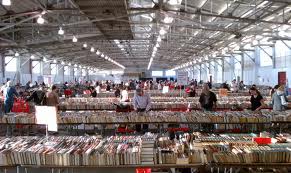
The store can be a boon and a bane to the book selling world. To me, bookstores that offer little room to stand and make two people squeeze to move past each other are impossible to stay in for too long. Stacking books in ways where I can't easily pick up a copy and hold it makes buying for content and the unknown near impossible. Bad lighting makes it hard to read and colours on the brighter, warmer end of the scale make it hard to stay in place for long (look into fast food restaurant colouring to understand the effects of colours on consumption). Also, while sales bins are a pull to the wanderer on the street, creating too many stacks where not all titles are visible at once is a bad idea. They require a lot of work to keep organised and they make potential readers who aren't overly enthusiastic frustrated before they find a book worth buying.
Alternatively, stores that offer open caves that match genres or offer the option of staying and exploring at leisure encourage book purchasing. Books should be easy to reach, stacked neatly, arranged properly and arranged in a way to encourage readers of one genre to wander into the sections of related genres. Lighting should be good and seating offered. But best of all, a comprehensive collection expanding over several or all genres is required.
7. The Unknown Author
These authors could be well known to others or could be new authors. Unknown but otherwise popular authors tend to have a formula for getting readers already sorted out. So I'll mainly write what attracts me to new authors. What attracts me to a new author's work is an intriguing blurb, a new take on the topic or genre, a neat cut to the book (the printer's job), a well designed cover and a bit of personality that lends authenticity. Being found is usually a matter of being in a new release list, having a review written, hearing word of it from someone I know or a store I like. The book being bought immediately will depend on its cost and my available money. Cheaper isn't always better as cheapness combined with a dull blurb or cover is deadly to sales. A price that matches expectations rather than undercutting or exceeding it is just right. A sale on top of that is simply icing. The price may seem hard to decide upon but an honest judgement of the competition and their sales records may help.
Thursday, May 3, 2012
The art of sales for writers
Prepare
Before you begin selling make sure you have researched the
market and your audience thoroughly. Understand what appeals to them and why.
Figure out what other writers, publishers and agents have done to promote
similar books and whether the techniques they used worked for them. If you are
dealing with specific people or groups research them and find out what would be
the best way to approach them.
Preparing to sell is much like preparing for a job
interview, arduous and painful but well worth it in the end if only for the
sake of not embarrassing yourself and alienating others.
That old thing... Do we have to, again? Yes.
People skills
Many people find socialising easy. It comes naturally to
them and so they don’t bother fretting about half the things an anti-social
person would. But others find it difficult but if they wish to personally sell
their work they will have to learn and overcome their nervousness.
Remember that if you are selling your book personally,
whether face-to-face or via the Internet, then you and your behaviour are the face
and personality of your work.
If you are truly, and you believe irredeemably anti-social,
there are many courses available that can help you develop your people skills
and cover many aspects such as questioning and listening skills, giving and
receiving criticism and praise and using assertive behaviour.
But if you are anti-social by preference rather than
necessity (you will understand me if you are anti-social by necessity) then
take the time to gradually build your network of peers, ease into conversations
with strangers and realise than not everyone is out to get you from the get go.
Above all, remember that politeness is absolutely essential
as is the ability to take the answer “no”. You’ve probably all experienced
pushy sales people and have likely wished they’d just go the f away or drop off
a cliff. Just remember that if you are promoting your own work then you are a
salesperson and if you’re too pushy and objectionable then the person or people
you’re trying to sell to will think a lot of mean and violent thoughts about
you, not recommend you to their friends and family and give you that “no”
answer.
Developing people skills is often difficult for the anti-social but try anyway.
First impressions
really count
If you are having your first book club meeting, press
conference, book signing, radio show, interview, Internet chat or anything else
then remember that first impressions are really important.
The majority of people make their first impression within 15
seconds of meeting you and as you know from judging covers, that impression can
make or break a sale. Dress respectably (semi-formal to formal), act politely,
show your personality but not in an aggressive manner, directly acknowledge
those seeking your attention in a friendly manner and if the ice hasn’t broken
by then show some of your likable inner drive and enthusiasm for either books
or writing (without over expounding on how great your own work is so it should
be bought – no one likes an egoist for their ego).
You never would have thought...
Starting a
relationship
Once you've successfully made the first contact you need to
build on the relationship you have with your customers, promoters and
enthusiasts. They may all be strangers to you now but soon you’ll find many of
them talking to you on a regular basis, if you allow it. And it is advisable
that you do talk, listen and understand their needs even if you can still be
labelled somewhat reclusive. Responding promptly or regularly, making
appearances, recognising and valuing feedback and the nature of those who are
fans is essential to maintaining the good accord you established during your
first meeting. None of this has to be pushed or forced on your part, in fact
the more naturally friendly you are the better.
Yes, there may be the occasionally over-zealous fan or odd
question you can’t answer, there may come a time when there’s too much to respond
to and so you’ll have to pick and choose but there are ways of dealing with
such situations. Formatting the meeting, limiting the number of questions asked
by assigning a time slot, finishing time or a number can all work but make sure
the instructions are worded as an opportunity not as a warning.
Why you want to build a relationship with so many people is
because they are the ones helping make that living you are after. Without them
your work would just gather dust, be forgotten and then be mulched. Also, once
you've developed a friendly relationship, shown that you understand and have
earned their trust you are on the right track to making them a regular
customer. In other words, loyal fans nearly always buy the next book you write.
There is more to it than just what's on the Internet but this should help you get started. Oh, and don't forget that last bit - treat yourself.
Relationship building
and maintenance
To build on the relationship you have with your fans and
supporters it is important to maintain regular contact through meetings,
appearances and the Internet. If you don't have any presence at all then your
fans and supporters will dwindle away either because they are moving on to read
other books and find more exciting interactions or they have become embittered
by your lack of response, supposed arrogance and aloofness and your inability
to show you valued them.
Make sure your direct supporters know that they can contact
you on your email, work number and mobile while your fans can contact you at
meetings or through an Internet site or social page. If every one of the people
you’ve built a relationship with, no matter how close of distant, believes they
can reach out to you if they wanted then you would remain in their thoughts and
esteem.
As the anti-social amongst you know all too well, silence
can be read many different negative ways and only one of them is likely to be
correct.
It takes many working as a team.
Listening to your
fans and supporters
Your fans and supporters might mention a problem that they
are currently experiencing either in relation to your work, with the content of
your work, how your work is being promoted or anything else. Don’t just ignore
their words or think they have no right to say such things because they do.
What they don’t have a right to is changing your actions for you. It is up to
you to listen and change, if you want, on your own.
If you can solve whatever the problem is then don't be afraid
to give them your advice, provide the solution or make the necessary change. If
you want to. If you don’t then all the consequences, good and bad, are for you
to deal with. No everything will be a crisis but listening and changing little
things along the way will help a great deal with your lack of change when a
crisis hits. People will be more likely to listen to why you are against
changing if they believe you don’t take such a stance just because.
Even if no one asks for your help, if you see a problem then
work to fix it. Be confident and helpful.
The hungry hordes must be fed.
Sell the benefits
Sell the benefits of your work aren’t just in the sales.
Remember that your book is providing entertainment or information to your fans
and supporters. The benefits of reading your work, new and old, are in the
content for all your fans. There is no benefit for them in simply buying your
work and not reading it so sell the content. Appeal by writing great content (I
don’t mean content writing I mean what’s between the covers – not sheets either)
and promoting your strong characters or message.
Readers have their own worlds. Provide them a world.
Don't rush the sale
Never let a potential fan or an ardent fan feel like they
are being rushed or pressured into a sale. This can make or break a
relationship, as mentioned with regards to the pushy salesman. Slow down and
tease people into being interested in your work. Don’t shove it in their faces.
The most sales will be gained by getting a message of presence out there so
that they’re aware of your work existing but having that message free of any
demands or expectations of your audience acting to buy. Everyone likes to feel
like their free will is respected so respect their choice to buy or not to buy.
There is no question here.
Do! It! Or else.
Remember a promise is
a promise
If you promise to do anything, whether it is a favour
relating to your book or an appearance at a fan meeting, then make sure you keep
that promise. Broken promises without an “I’m on my deathbed” notice will not
be regarded with sympathy. You will loose fans and supporters by behaving badly
and disrespectfully. So no matter how much you don’t want to put your game face
on and get out there.
If there is a deadline with your supporters, be it the
publisher or your agent or editor, make sure to provide whatever is needed at
least a day before. This isn’t a case where a teacher can grudgingly sign off a
late essay. This is a business relationship and you must always remember that
whomever you’re working for is also working for someone else and needs to keep
up a reputation of his or her own. Your lateness is their lateness and a risk
to their livelihood so they will hate you for it.
If you're forced by unforeseen and irreversible
circumstances to extend the deadline then contact whoever needed straight away
and let them know. That way they can pass on the deadline change to their
superiors in time and escape the falling guillotine. Your notice shows
consideration and consideration goes a long way towards maintaining good
relationships.
Pinky swears can't be broken.
You're the expert
Never forget that you're the expert of your work. Make sure your
fans and supporters know that they can turn to you for answers with regards to
content, direction, changes, problems and promotions.
Even if you aren’t managing the sales personally be aware
and conscious of what is needed by your sales manager and support the sales
however you can without stepping on toes. Smile when ordered because they won’t
order lightly. You and your work are the focus of attention. So make it work for
you even if you feel like you’re a puppet on a string.
By this point you understand the industry your in and have
the knowledge to provide advice and share good practice with either your peers
or those who wish to become writers. Share and support, don’t hog, as this way
you will gain a reputation for caring and being approachable.
Subscribe to:
Posts (Atom)


