Showing posts with label Children's Books. Show all posts

Tuesday, May 14, 2013

10 unusually strong female figures in kid's and young adult's fiction

There has been a great influx of strong female characters into fiction over the last few decades but it has taken a while for them to be main characters and free from stereotyping. I made the below list to show that strength can be found in different ways, but mostly through force of character. This force of character alone is what allows them to be centre stage or important to any story.
The below is just the beginning and a good place to start when searching for strong female characters to act as role models for young minds.


Alice from Alice in Wonderland

Dorothy from The Wizard Of Oz

Harriet from Harriet The Spy


Hermione Granger from the Harry Potter series

Lyra Silvertongue from His Dark Materials trilogy

Jennifer Strange from The Last Dragonslayer series

Coraline from Coraline

Matilda Wormwood from Matilda

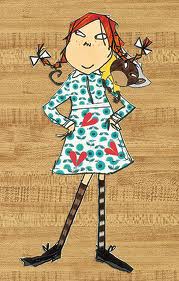
Pippi Longstocking from the Pippi Longstocking series

Madeleine from the Madeleine series

Tuesday, December 4, 2012

Fun, powerful and beautiful Christmas stories to read to children

There are many Christmas stories to choose from, some more religious than others. Many of you will choose stories that will educate as well as entertain. The below list, however, has been constructed purely of books that will inspire awe and engross children, encouraging them to believe in the magic of Christmas. As it happens, many of these stories include baddies, morals and religious teachings and so they educate as well.

The Night Before Christmas by Clement Moore

How The Grinch Stole Christmas by Dr Seuss

A Visit from St. Nicholas by Clement Moore

A Christmas Carol by Charles Dickens

The Elves and the Shoemaker by Brothers Grimm

The Snowman by Raymond Briggs

Rudolph the Red Nosed Reindeer by Robert L. May

A Kidnapped Santa Claus by L. Frank Baum

The Nutcracker and The Mouse King by E.T.A Hoffman

The Polar Express by Chris Van Allsburg

The Little Drummer Boy by Katherine Kennicott Davis (with music)

The Life and Adventures of Santa Claus by L Frank Baum

Letters From Father Christmas by J R R Tolkien

The Tailor of Gloucester by Beatrix Potter


For Aussies

An Aussie Night Before Christmas, adapted by Yvonne Morrison

A Bush Christmas by C. J. Dennis


And are two pieces to inspire you in writing your own Christmas story or letter:


A Letter from Santa Claus by Mark Twain

Palace of Saint Nicholas in the Moon
Christmas Morning


My Dear Susy Clemens,

I have received and read all the letters which you and your little
sister have written me . . . . I can read your and your baby
sister's jagged and fantastic marks without any trouble at all. But
I had trouble with those letters which you dictated through your
mother and the nurses, for I am a foreigner and cannot read English
writing well. You will find that I made no mistakes about the things
which you and the baby ordered in your own letters--I went down your
chimney at midnight when you were asleep and delivered them all
myself--and kissed both of you, too . . . . But . . . there
were . . . one or two small orders which I could not fill because we
ran out of stock . . . .

There was a word or two in your mama's letter which . . . I took to
be "a trunk full of doll's clothes." Is that it? I will call at your
kitchen door about nine o'clock this morning to inquire. But I must
not see anybody and I must not speak to anybody but you. When the
kitchen doorbell rings, George must be blindfolded and sent to the
door. You must tell George he must walk on tiptoe and not speak--
otherwise he will die someday. Then you must go up to the nursery
and stand on a chair or the nurse's bed and put your ear to the
speaking tube that leads down to the kitchen and when I whistle
through it you must speak in the tube and say, "Welcome, Santa
Claus!" Then I will ask whether it was a trunk you ordered or not.
If you say it was, I shall ask you what color you want the trunk to
be . . . and then you must tell me every single thing in detail
which you want the trunk to contain. Then when I say "Good-by and a
merry Christmas to my little Susy Clemens," you must say "Good-by,
good old Santa Claus, I thank you very much." Then you must go down
into the library and make George close all the doors that open into
the main hall, and everybody must keep still for a little while. I
will go to the moon and get those things and in a few minutes I will
come down the chimney that belongs to the fireplace that is in the
hall--if it is a trunk you want--because I couldn't get such a thing
as a trunk down the nursery chimney, you know . . . .If I should
leave any snow in the hall, you must tell George to sweep it into
the fireplace, for I haven't time to do such things. George must not
use a broom, but a rag--else he will die someday . . . . If my boot
should leave a stain on the marble, George must not holystone it
away. Leave it there always in memory of my visit; and whenever you
look at it or show it to anybody you must let it remind you to be a
good little girl. Whenever you are naughty and someone points to
that mark which your good old Santa Claus's boot made on the marble,
what will you say, little sweetheart?

Good-by for a few minutes, till I come down to the world and ring the kitchen doorbell.
Your loving Santa Claus
Whom people sometimes call
"The Man in the Moon"


Yes, Virginia, there is a Santa Claus by Francis Pharcellus Church

Editorial reply to Virginia's letter to the editor of New York's Sun.
Printed as an unsigned editorial Sept. 21, 1897. 


"DEAR EDITOR: I am 8 years old. 
"Some of my little friends say there is no Santa Claus. 
"Papa says, 'If you see it in THE SUN it's so.' 
"Please tell me the truth; is there a Santa Claus?

"VIRGINIA O'HANLON.
"115 WEST NINETY-FIFTH STREET."

VIRGINIA, your little friends are wrong. They have been affected by the skepticism of a skeptical age. They do not believe except they see. They think that nothing can be which is not comprehensible by their little minds. All minds, Virginia, whether they be men's or children's, are little. In this great universe of ours man is a mere insect, an ant, in his intellect, as compared with the boundless world about him, as measured by the intelligence capable of grasping the whole of truth and knowledge.

Yes, VIRGINIA, there is a Santa Claus. He exists as certainly as love and generosity and devotion exist, and you know that they abound and give to your life its highest beauty and joy. Alas! how dreary would be the world if there were no Santa Claus. It would be as dreary as if there were no VIRGINIAS. There would be no childlike faith then, no poetry, no romance to make tolerable this existence. We should have no enjoyment, except in sense and sight. The eternal light with which childhood fills the world would be extinguished.

Not believe in Santa Claus! You might as well not believe in fairies! You might get your papa to hire men to watch in all the chimneys on Christmas Eve to catch Santa Claus, but even if they did not see Santa Claus coming down, what would that prove? Nobody sees Santa Claus, but that is no sign that there is no Santa Claus. The most real things in the world are those that neither children nor men can see. Did you ever see fairies dancing on the lawn? Of course not, but that's no proof that they are not there. Nobody can conceive or imagine all the wonders there are unseen and unseeable in the world.

You may tear apart the baby's rattle and see what makes the noise inside, but there is a veil covering the unseen world which not the strongest man, nor even the united strength of all the strongest men that ever lived, could tear apart. Only faith, fancy, poetry, love, romance, can push aside that curtain and view and picture the supernal beauty and glory beyond. Is it all real? Ah, VIRGINIA, in all this world there is nothing else real and abiding. 

No Santa Claus! Thank God! he lives, and he lives forever. A thousand years from now, Virginia, nay, ten times ten thousand years from now, he will continue to make glad the heart of childhood.

Wednesday, May 9, 2012

Overcoming the troubles of teaching children to read


There's a lot of concern of late (maybe not just of late but my memory or such concerns in parents don't extend that far) that children won't engage in reading for fun. I thought I'd just put down a few of the experiences I remember from being an unwilling reader when I was a child and a few of the things I've learnt along the way from listening to people try to solve this problem. It can only help.

Every child has a different experience when reading for the first time and that experience deeply impacts how they perceive reading from that point on. But, if the experience was a bad or boring one, just know that the impression left on a child can be changed. Children, by their nature, change faster than anyone else so if they're shown something in a positive light more often than in a negative one, they'll eventually learn to love the experience.

So here's a little slice of what it was like to be an unwilling child reader. My memories of my early years are actually quite good so this is fairly accurate as how I experienced it (some details may be different from other tellers - particularly if they were older). There may be some variations in the exact timing of events in the year 1-2 stage (whether the end of my anti-reading movement was at the beginning of the year or towards the middle) but it makes little difference with regards to my reading skills or what changed them.

So here goes:

In kindergarten I was in a pretty room with a nice young teacher who couldn't spell balloon and because of that I too for many years couldn't decide it it was spelt baloon or balloon. But that was neither here nor there really, other than to point out that the teacher, while lovely and friendly, was a little flighty and not quite with it. As a child my impressions of her weren't so much in those words but the impression was about the same anyhow. She seemed more like one of us than any of the other teachers, particularly a few of the scarier teachers teaching years 1 through 3. (I will not name names but those names and a fear of being the last in line still remain. Dear god, one teacher terrified everyone! The rapid pulses in the throats!)

I was always a reserved child, quieter than most though I held (and still do) my opinions and stuck to my guns far more than others. Stubborn, opinionated and because I was quiet about it until challenged, most thought I was a lovely, dear child - "conscientious" if they knew nothing of me - until there was a *cough* clash of minds. Then I wasn't so lovely... Luckily, in kindergarten most of those clashes were yet to come so I quietly got along with my 30 or so classmates, did my finger painting and read the lines of text written on the board. We even had some challenges like making our own books and stories. I still remember constructing it, paint flying everywhere, but to this day am always surprised at how well I could construct a sentence even then. Only a few mistakes. Yes, the story was all of one or two sentences (depending on how you read it).

So my first experiences at group reading and writing weren't bad. The structure of learning to read and write wasn't yet there properly as they were more concerned with alphabets and single words. Looking back, my being able to construct a fluent 1-2 sentence story by then might have been a leap ahead. 

It didn't stay that way. Mostly because of that opinionated streak I was telling you about.

In year 1 I had a similar sized class in a boring classroom with more structure. Books, underlining, a faceless teacher who wasn't particularly outgoing, no really special projects other than Easter Hat day and the like. I think by then they were trying to curb the rowdiness and get us to start learning. Being quiet, I began to sink into the background because the teacher was more concerned with the day to day grind of teaching everyone than with engaging. Fair enough. I understand now but at the time I was just bored, a little shy and embarrassed by incidents that were out of my control. I was also becoming aware of how others would see me. Only a little. Not that heavy awareness we have now but I remember worrying a bit about the others in the class. Because of that I didn't engage so much. I'm a think before I leap kind of person, always have been, and at the time that thinking became more a pause in action that stood in my way.

So in year 1 came the structure learning to read process. We had a big filing system of Mr Men, Spot the Dog, Clifford the Big Red Dog and such like. The filing system was set like a table, with the spines of each book upwards in the box. No covers showing. It was graded according to reading levels. So we were all given a card with reading levels written on it and spaces to fill in the titles of the books we'd read and a place for the parents to sign them off. This was supposed to ensure that we'd actually read the books.

Hahahhahaha!

Never underestimate a bored child. My conscious life of crime began about this time. Oh, I was well aware that what I was doing was wrong but like any child, that self-serving nature wins out over guilt nine times out of ten. What happened was this. After reading the first few books the stories all began to look the same to me. Just pictures of dogs and Mr Men, simple lines of what they did that day or what they liked. My brain just went "Argh! Bored Now! I don't want to do this anymore but I have to. How do I make this stop?" I still had to hand in the card. I still had to get it signed. So I still had to read. Or so you would think. Nope. 

Looking back, it was actually quite crafty of me to do this but what I did was to feign picking out books in front of the teacher, write up the titles and in an appropriate amount of time (I don't know how I gaged it anymore) I'd hand in a signed card. Signed by me. Using my mother's signature. (ehehehe)

My talent of forging signatures remained for quite a while and has been useful since. No, I've never done it in a criminal capacity, just a few self-serving times to escape homework and the like and once as something nice for someone who could no-longer write his own.

But the upshot of this clever little trick, my boredom with structured, impersonal reading and my falling into the background in class was that the teacher didn't notice there was something wrong at all and I fell behind on my reading abilities. So went year 1.

Surprisingly, because of my quietness and ability to do sneaky things, I managed to pass through most of year 2 without having my lack of reading skills being picked up. There were naughtier children in line. Both fortunately and unfortunately I got the scariest teacher in all of early school life that there was to be had. She swished her cane, lined all the naughty children up, yelled at each and every one, tore the heads off dolls, scared the bejesus out of anyone last in line, occasionally shook a child in front of the entire class and basically sent those pulses racing (the memory is clear and burnt into my mind - the realisation that fear means a heightened thumping pulse came early for me).

I read and loved Matilda later. Ms Trunchball rang true and for some strange reason I liked her because of that.

The teacher was SCARY. I sat in the front row and watched the line of kids get chewed up.

Being the quite child has its place. I survived far better than some of the others but I didn't escape my reckoning.

Somehow or another it was discovered just how bad I'd become at reading and the teacher demanded that I stay back after school for a lesson. I don't know if she told my mother or not but I certainly didn't. Nor did I turn up.

Oh man, if I could have run from her you would have seen me running. As it was I sank into that pit non-existence quite happily and snuck out of school as soon as the bell went, not even considering confronting her to make my excuses.

Suffice it to say, my life of crime and bad reading skills were soon over. My mother heard of my lack of ability to read, was promptly angry at my year 1 teacher and I remember her storming up the stairs to the year 1 classroom and having an argument with the teacher. For the duration of which I was to stand at the bottom of the stairs. No entertainment for me but then I wasn't feeling too happy at the time so entertaining it wasn't.

Mum was also angry at me but she didn't go to far with that. Instead, she must have taken a deep breath because she quickly came up with a plan on how to get me to learn to read. I was also miraculously excused from after class lessons with my teacher so I assume Mum cleared that mess up for me too. Seriously SCARY teacher... but through her scariness she did the trick. Just as through Mum's deep breath past the forgery (she did say a word or too but that was it) she also did the trick.

Mum got out The Hobbit. Apparently it was one of her favourites at one point, The Lord Of The Rings particularly so. This copy of The Hobbit was particularly pretty. It had intricate drawings of strange characters, mountains, gold and a dragon throughout. I fell in love with the picture of the dragon and have since loved all things fantasy, particularly if there's a good dragon tale about. As you know though, the first chapter or two of The Hobbit are particularly slow and can be annoying to read, the text isn't simple, the lines are squashed together for teens and adults and the print is small.


For a child that's a few leaps to take at once. But this was the deal that Mum made to get me over these problems. And it is a very personal one. The deal was that Mum would read it out loud and if I wanted to take over I got to punch her. Hahaha! I didn't mention my mother had trained as a psychologist. Anyway, of course a child will take any chance they can freely get to punch their mother in the arm without being scolded for it.

Do you have any idea how much pent up frustration a child has at always having to do what their mother tells them? Or father? For years? Have you forgotten potty training, first days of school, being forced to get along with your siblings, not getting the seat you want, having to tag along when you didn't want to, stop playing when you wanted to run around, eating peas when you hated them?

Oh course I hit my mother. Multiple times. I was also frustrated about the whole learning to read thing, that I was being forced to sit there and read when I really didn't want to. But every time I did I had to start reading aloud from where Mum left off. So I ended up reading quite a bit. After a while though a few things became obvious.

I needed a slight alteration to my sight for reading so reading glasses were needed. (Unfortunately that think before I leap becoming a pause in action thing meant that I paused too long in responding to the optometrist and ended up getting glasses a grade stronger than needed, thus getting glasses that gave me headaches.) 

Another thing that became apparent was that I struggled to shift my eyes from one line to the next and distinguish the difference. I'd read the same line over and over. A ruler helped then. I just placed it under the line I was reading and shifted it down as I went. Gradually I learned to shift my eyes downwards without it.

The intricate story was soon more important than punching my mother. It didn't take the whole book for me to stop. And let me tell you, by the end of the book my reading skills had definitely improved because I was very interested in what was going on in the story. There was a dragon! Stuff dogs. Dragons rule. There was also Gollum and gold and a giant adventure in caves. Sure beat chasing bright coloured bouncing balls, Mr Funny or whatever being "funny". (Sorry to everyone who loves/d those children's books. I hated them but that just shows that each child has a distinctive taste in books from the start because it is all about the content and how that content matches interests, personality and experiences.)

After reading The Hobbit there was no turning back. I was into fantasy in a big way, particularly ones with monsters included so horror was also a favourite. Not long after I bought my first book for 20 cents, second hand from the library. 


This is the first book I ever bought. It is still in about the same condition despite how often I read it. Sorry for the bad photo but it has a plastic cover that will reflect any light. 

Now, from this book I learnt in one fell stroke about many classic horror authors like Ambrose Pierce, Bram Stoker and Edgar Allan Poe. I learnt about classic horror films like Dracula and the Wolf Man. I also learnt about where these stories came from, the influences of the authors such as plague and live burials as well as the real horror stories of Rasputin, the wolf child, Jack the Ripper, Countess Bathory, Ivan the Terrible and so on. I even learnt about the history of zombie mythology and the Egyptian curse.


As you can probably tell, that talk on death wasn't needed. But then, one of my other early memories was going into the UNSW pathology centre for a party some medical group was holding that my father was invited to and there at the entrance was a severed arm in a box. Quite pale was my only real shocked impression. An arm in a box was otherwise an arm in a box, interesting for being an arm in a box rather than an arm on a person. There was also a partial skeleton about that I was quite interested in...

Anyway, by the time I bought this book lighthearted stories only viewing the positive didn't ring true for me and weren't interesting. Particularly after the SCARY teacher. I was instead fascinated by anything that had more intrigue and gruesomeness about it because that's what I could see and no one else wanted to point out. That's just children for you - inquisitive. None of it was traumatic or caused me to become one to act it all out. But that's another topic on censorship.

So I learnt to read through my own scheming and violent tendencies, the scariness of a teacher and the manipulation of my mother. We each had our own intentions and they were mostly harmless all round (even if one lady was SCARY). I also learnt a bit from each of them: this impact of scariness, how to read, how to manipulate, that I could be manipulated openly, that things like forgery really should be kept secret, that glasses suck, that I could run  from a scary person quite happily, that sticking to my guns might not always be a good thing (although I still generally stick to my guns I will hear what others have to say and decide accordingly - unfortunately that think before I leap bit usually means I've already thought over the opposing opinions so many a person still just calls me too stubborn).

Thus ends the tale of an unwilling early reader becoming a fanatic.

So here's some tips of getting a child interested or over the hurdles, some from the tale and some learnt otherwise: 

  • Check their vision
  • Check their eye coordination
  • Discover their interests and find a book that matches
  • Aim up in skills not down
  • Manipulate if you have to
  • Accept pain and torture
  • Keep track of their progress and interest in learning and in class situations
  • Read aloud
  • Act it out
  • Role play or play dress up
  • Sing the stories
  • Have reading time as one on one bonding time
  • Let the child pick their own books freely
  • Find books with interesting illustrations full of details - particularly good ones include shiny things
  • Don't restrict the topics or content to realistic ones
  • Don't be afraid to reveal monsters and death to a child in ways that don't include the death of a pet or family member - a child being fascinated by these topics does not mean the child will be twisted
  • Turn off the television and computer - they cannot be on if you want a child to read. In fact, try not to expose your child to these too much until they've learnt to read. Television and computers provide much instant gratification and create addiction. They can be great obstacles to learning just as they can be great tools for learning. Choose the exposure level wisely.
  • Set aside a specific reading time as though it were an event not a chore
  • provide encouragements or inducements
  • Laugh and have fun or allow the child to release tension and express any emotions (many read for the freedom of mind it allows and that freedom can be tasted early on)
  • Don't openly censor until the child is capable of understanding why. If the child picks something too terrible just gently nudge them a little bit back into the more acceptable rather than expressing negative views on what they chose. They won't know why it's wrong until later so you'll just come across as domineering and reading is a horrible task.
  • If the first experience is bad and the child is then against reading just keep whittling away at the bad attitude by providing various types of reading material in positive ways: try limericks, silly jokes, naughty jokes they won't entirely get but think they do, monsters, choose your own adventures, magical stories, stories on their favourite animals, stories with characters who share the same name, adventure and crime solving stories, short plays, comics etc. Anything goes in getting them engaged. As soon as you do they begin to read on their own.
  • Don't act like reading is a pain to you
  • Have a collection of books at home they can riffle through at their own leisure, advanced books included
  • Have your own collections available (non-acceptable ones hidden of course) so that they can see classic titles, reference your favourites and know what you're interested in. This allows a child seeking a connection to make one with you.
  • If the child is unable to focus due to excess energy then a play/read option might work, particularly if some violence is allowed. You might need to join in the play and engage in their way of doing things in order to get them to read rather than the other way round but you can still get them to read. Just remember your own inner child and let loose. Use the books as references for building toys or get them to read the instructions of games. Anything goes and anything is a foothold in getting a child interested.

Wednesday, April 4, 2012

Monsters: monstrous, sexy, appealing and cuddly

A question that has been rattling around in the back of my head is this: Why do we keep altering our traditional monsters to make them cuddly or sexy?


Weren't they good enough as monsters to terrify us? By changing them are we removing our fear? Or are we expanding upon the mythologies, warning on a greater scale not to trust the beautiful and the appealing just because they are beautiful and appealing?

It's a bit of each as far as I can tell Plus a dash of intentional altering of the product, thereby expanding the market, in order to make the monsters appeal to children and the squeamish. Well, maybe just the squeamish, the over-coddling mothers of children and the mothers of babies.

For centuries monsters were appealing as they discouraged and frightened and they could be physically classed as monsters as well as being monstrous by nature. Until the recent years. There was the occasional appealing monster though but not many. Appealing monsters generally included gods and devils who would act against humanity, either impulsively or with consideration. Dragons were in a way beautiful but that beauty was hidden by flame and fangs. Pixies and fairies came in both forms, beauty as a disguise for monstrous actions. Adoration and worship of an immoral entity or one anti-humanity was an accepted concept but one condemned in practice.


So where did the cuddly versions of monsters come from? Disney and the like. The feeding of the cute and cuddly to the parents and children. Fed to the parents so they can feed it to the children. Fed to the children so they can demand products of the parents and create peer pressure. Let's just say marketing and advertising is highly manipulative, and I'm thankful not to be working in the field anymore. 

Why monsters weren't good enough in their monstrous forms is because they wouldn't appeal to these two highly varied groups as such. Monsters would in soft, cuddly and gentle forms though, especially if they're presented as misunderstood, gaining sympathy.

Children themselves can be quite vicious and cruel and can appreciate a good frightening story full of monsters because they don't view the world through moral lenses. Morality is learnt, sometimes even through stories that include our traditional monsters, and isn't present in children until they've felt regret, remorse and that desire to turn back time. Usually after making a friend or family member cry.


Children have empathy at a much earlier stage than morality and it is through the use of this emotional connection that morality is learnt. Pre-empathy is around the "mine, mine, mine" stage of a toddler. It is then that they learn to give and take and that another person might respond well or not. Yes, they remain self serving for a while longer and sometimes never break out of such behavioural patterns.

But my point is that even from this early age an acceptance of monsters being monstrous is possible. It is the parents who choose not to reveal nasty monsters to them, instead choosing the cuddly versions, rather than the children having an aversion to monsters. Fear is a natural response. So is curiosity. Keeping the child's life monster-free because of these reactions is a mistake and, I think, a shame (re the degradation of cultural). I approve of children learning morals through a fear of potential repercussions rather than by finding out hurting someone hurts themselves after the damage is done.

The adult version of this type of learning is found in religion with its reward and punishment system, the teaching of religion acting as a warning system, and it is approved by the vast majority of people on the planet so why not use monsters to teach morals? We have before and many still do.


As for the appealing versions, the sexy monsters, there is much to be said about having an appealing monster acting monstrous. Not so much for one acting like a wilted flower, without might or strength or fear on its side, only soppy romance. Yes, I like my monsters to remain monsters. The glimpse into the dark side of humanity, into our fears, hatreds and desires reveals much more about us than the altruistic and moralistic sides. It is only through curbing the darker aspects of humanity that we become truly civilised. Whether we learn such control at an early stage or a later is the only question. Again, some never learn enough.

To keep monsters monstrous, whether only in nature and not appearance, helps us deal with occasions when humans act monstrous, especially beautiful, appealing, pitiful humans or ones who can be sympathised with. By being exposed to monsters acting monstrous the revelation that it is in the nature of the being not the appearance comes about. But only after the initial realisation that the being is a monster at all, such a realisation being difficult for a person to figure out without early exposure to traditional monsters.

The only potential side-effect to look out for is that this discovery is not made and that people come to be judge on appearance alone.