Showing posts with label Literature. Show all posts

Tuesday, May 14, 2013

10 unusually strong female figures in kid's and young adult's fiction

There has been a great influx of strong female characters into fiction over the last few decades but it has taken a while for them to be main characters and free from stereotyping. I made the below list to show that strength can be found in different ways, but mostly through force of character. This force of character alone is what allows them to be centre stage or important to any story.
The below is just the beginning and a good place to start when searching for strong female characters to act as role models for young minds.


Alice from Alice in Wonderland

Dorothy from The Wizard Of Oz

Harriet from Harriet The Spy


Hermione Granger from the Harry Potter series

Lyra Silvertongue from His Dark Materials trilogy

Jennifer Strange from The Last Dragonslayer series

Coraline from Coraline

Matilda Wormwood from Matilda

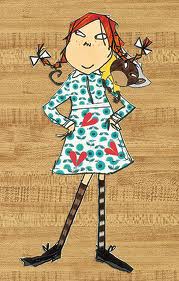
Pippi Longstocking from the Pippi Longstocking series

Madeleine from the Madeleine series

Saturday, November 17, 2012

Rosy's scrawled book recommendation: The Eyre Affair by Jasper Fforde

The Eyre Affair
Jasper Fforde


Blurb
There is another 1985, somewhere in the could-have-been, where Thursday Next is a literary detective without equal, fear, or boyfriend. Thursday is on the trail of the villainous Acheron Hades who has been kidnapping characters from works of fiction and holding them to ransom. Jane Eyre herself has been plucked from the novel of the same name, and Thursday must find a way into the book to repair the damage.

She also has to find time to halt the Crimean conflict, persuade the man she loves to marry her, rescue her aunt from inside a Wordsworth poem and figure out who really wrote Shakespeare’s plays. Aided and abetted by a cast of characters that includes her time-travelling father, Jack Schitt of the all-powerful Goliath Corporation, a pet dodo named Pickwick and Edward Rochester himself, Thursday embarks on an adventure that will take your breath away.

Publisher
Penguin Books

ISBN
9780340733561

Rosy's scrawlings on The Eyre Affair
Finally, I've reached a book that instead of being lent out and lost has been lent to me and sneakily kept. I could buy another copy and send this one back but I believe there's no hurry as I think he forgot he lent it to me. Not any more though, I believe. I'm now wondering if I'll get a little reminder. This book was one I found on a friend's shelf. As is usually my way, I entered their home and went to the bookshelf to see what was new and interesting (I can tell as I do this during every visit). There I found a copy of The Eyre Affair with a much blander cover but with the blurb above. The blurb was all it took but my friend also said it was a must. So I 'borrowed' it. Really, I did intend to bring it back but, well, I kind of got attached to the story...
When I was young, one of my personally selected children's books was Jane Eyre. I was also interested in fantasy and horror by that stage too, some very dark. You can see why I was interested in The Eyre Affair even though this book is of a lighter nature than most fantasy books or horror I tend to read. This book brought with it, in a big way, a love of fantasy comedy and bright fantasy adventures.
Reading The Eyre Affair is a little like reading Alice in Wonderland as from the outset life is a little strange but soon you find that being a literary detective involves actually travelling into stories and making sure they follow the preferred story line. Escaping characters must be stopped, relationships must be conducted properly and stories must end as desired. Of course, what was, is and will be don't necessarily follow the stories as you currently know them. Reading The Eyre Affair is much like falling down the rabbit hole of literature: imaginations within imaginations.
Thursday Next fights fires, chases bad guys, tumbles through books and cares for her pet dodo. She's the new Jane Eyre while Jane's away and has to do her best to ensure the story continues to exist, hopefully with the same sort of plot and development as it had had before Jane's kidnapping. Thursday Next is an older, wiser and tougher Alice who's mostly, not always, in control of what's happening within Wonderland of the written word.
If you've read any other Jasper Fforde books you are probably familiar with his styles. What's notable about this series is just how many strange ideas and traditional concepts he melds together to form the adventures of Thursday Next. This book and the ones that follow are for those who love tangents, odd and twisted plot lines and wild combinations of ideas. In fantasy, this series has established a new form of sub-genre, one I hope to see continue and broaden. There is a world within the written world. And as every avid fan of a book series will like to do, realising characters and stories is brilliant fun. Within The Eyre Affair  some well known and much loved characters are dusted off and given new, playful dimensions.

I'd recommend this book to: anyone who love grand flights of fancy, believing literary figures to be real, the classics and brilliantly bright fantasy.

Wednesday, October 17, 2012

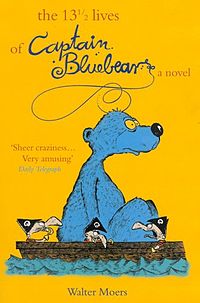
Rosy's scrawled book recommendation: The 13½ Lives of Captain Bluebear by Walter Moers

The 13½ Lives of Captain Bluebear
Walter Moers

Blurb
"A bluebear has twenty-seven lives. I shall recount thirteen and a half of them in this book but keep quiet about the rest," says the narrator of Walter Moers’s epic adventure. "What about the Minipirates? What about the Hobgoblins, the Spiderwitch, the Babbling Billows, the Troglotroll, the Mountain Maggot…Mine is a tale of mortal danger and eternal love, of hair’s breadth, last-minute escapes." Welcome to the fantastic world of Zamonia, populated by all manner of extraordinary characters. It’s a land of imaginative lunacy and supreme adventure, wicked satire and epic fantasy, all mixed together, turned on its head, and lavishly illustrated by the author.


Publisher
The Overlook Press; Tra edition

ISBN
978-1585678440

Rosy's scrawlings on The 13½ Lives of Captain Bluebear
Welcome to one of my most treasured books and one that gave me hope that I could combine some of my great project loves together. I'll just say simply that any book with illustrations personally drawn by the author makes me treasure it a whole lot more than any other book. Where I might once have dog-eared pages, cracked the spine, scrawled notes in the back or passed them on you will find me incredibly reluctant to do so simply by adding illustrations from the author. I guess this is because to do such a thing is to take the story a level up, to reveal more and to make a physical artwork out of a mental landscape. I also hold a lot of respect for art, be it good or bad, purely for the effort put into making it. Plus there's something a little magical about it all that takes you back to an age when hearts were more easily read, if not pure. I remember reading an illustrated edition of The Hobbit and it was the first proper book I ever read (not Spot the Dog) and it is back to roughly that age I fly whenever I see or read this The 13½ Lives of Captain Bluebear. That I now hold hope to have my own illustrations printed along with a story I imagined because of this book is aside from the point but it does show more of the impact a good book can have.
Even without intricate illustrations and onomatopoeia displayed large this book is extremely fun to read, likely for both adults and kids. The world of Zamonia is large and yet intricate, full of little delights and scenes written in a manner that adds magic to the experience of reading. Tension is there but the high stress of many fantasy and urban fantasy stories written today is nowhere to be seen so instead of coming away stressed and strung out there's a feeling of delight and ease. Captain Bluebear's story/ies are for those who find the little things in life enchanting and the big things in life stunning. There's no end to the play involved and it appears in the large and tiny creatures Captain Bluebear (I should include him as one of them) encounters, the strange landscapes he wanders through, the nooks and crannies within caverns, the booming sounds writ large, Captain Bluebear's journey and the completely unpredictable plot.
All in all, this book is a combination of comics, literature, children's literature, classic fantasy and creature features, to name a few things. I'm sure there's more you could say about it but really this book is just one to try. It is a whole other world, one you've probably never encountered before - not even the like. And because of this you should go and explore it. The 13½ Lives of Captain Bluebear is very well written, highly imaginative and playfully illustrated and I know that if it hadn't been The Hobbit picked as a first real book to read then this one would have been a fine pick. It has all you need within it, including some morals and life lessons as all good literature has.
So I shall end the recommendation with this: read it! You won't regret it even if you feel like you're mind is turning inside out.

I'd recommend this book to: anyone with a playful heart, reading to children in need of an imaginative and colourful challenge, who likes illustrated books and simply anyone who loves light-hearted but meaningful fantasy. In fact, I'd highly recommend this as a first real book for any child, especially if they find the reading material they've encountered so far boring. This will cure all that.

Tuesday, May 22, 2012

On the question "Have you read?"


How many times have you been asked, "Have you read....?" or even "Have you watched/heard...?" and answered 'No", only to have your answer received with scorn? Did you feel like you've somehow failed to be something, likely intelligent enough or worldly enough?

Well, don't be surprised that you do feel a bit irked and self-doubtful because that's just what they would like you to feel. Why? So they can feel better because they are in the know.

But the even better turn of events is that if you ask just the same question about anything not in mainstream media there is a very high chance that the response to your question will be "No" too, meaning you can in turn get them back with a careful sneer or snobbish look. Done, dusted, game over.

All this can occur because it is actually far more likely that you will hear the answer "No" to any "Have you read...?" question you pose than yes, simply because of the number of books available to read far exceeds the number of books it is possible to read in your lifetime, let alone by the point at which you get asked this question.

How we choose what to read is greatly influenced by the education system and by the mass media but also by the recommendations received by those willing to pose this question in a more friendly manner, meaning they're asking you so they can either have a conversation on the book or recommend it to you because they're just that enthusiastic about it and think you'll enjoy it too. By these methods alone do we ever chose exactly the same books to read en masse. Otherwise, it is all personal choice and given the wide variety of personal interests and immediately available books there isn't as much overlap in reading material as you'd think.


If you send two people into a bookstore and say buy anything at all, topping out at 10 books, it is far more likely that they'll have a completely different set than a completely similar one. And if there are any similarities it is likely only to be 1-2 books in the list. Yet you'd probably find them all worthy of reading for some reason or another.

The great thing about this is the number of enthusiastic recommendations that can occur because of this, something an author or publisher can encourage through a good reputation and a decent personality. Such things just add to the appeal of a fantastic book. Forced viral campaigns don't work so well though, when it comes to many people making choices on reading material. The only thing that could work is peer pressure through this "Have you read...?" question and the surprise or sneer at the answer "No". If you're worried this isn't enough, don't fret, peer pressure can make many, many people do a lot of dangerous, crazy and out of character things so being forced by peer pressure to read a book isn't something most feel the need to protest about.

There is something else that comes from knowing that it is likely a person won't know of a work unless prompted. It is the knowledge that even those who profess to know a great deal about many a written work don't know near as much as either they think, you think or any of us want. Purely because it is utterly impossible for them to know of or read all the necessary works required to be in a position of absolute authority in the literary world. So breathe easy, you aren't as clueless or out of the loop as you thought and there is no-one capable of holding authority over you in the field of literature. They might just hold a bit more experience, that's all. Or they might be a tad pretentious.

This means though, that scorning someone for not having read what you have isn't a very nice thing to do and only makes a fool out of you. No matter whether you're scorning a friend, a teacher, a writer, a reader or anyone really, you have basically gone about it all wrong. The world of literature is there for exploring and sharing openly. Monopolising, aggrandising, sneering, snooty behaviour, self-importance and shouldn't belong but it does anyway.


But I will say this: despite everything you hear, the choice of what to read, how much to read, to follow a trend or not to, to believe the knowledge you gain makes you important or not - all of it - is up to you and you alone. But be careful, your attitude only reflects on you. You aren't solely what you read. You aren't as intelligent as the level of literature you read and memorise but rather something else entirely. The world of literature is there to explore but you aren't the world of literature and never will be. It is a world to explore and add to and it will never be conquered by anyone. Rejoice in that. Have fun!

Sunday, April 29, 2012

Is cursing in fiction necessary?


Recently I ran across this question: Is cursing necessary in writing? I thought it was an interesting question.


I wouldn't say cursing was necessary but the frequency with which it appears in texts throughout our written history indicates that cursing is a part of our everyday speech as well as our entertainment (whether you like to hear it or not). Even the eminent William Shakespeare was fond of a good curse or blasphemy, although many readers may not recognise them as such. 
  • "'sBlood" - God's blood
  • "sWounds" or "'zwounds" - God's wounds
  • "Firk" - meaning "fuck"
  • "Sluic'd" - meaning "fucked"
  • "Out, damn'd spot!" - referring to blood or the reddening of hands through murder
  • "What the dickens?" - referring to Satan, as in "What the devil?"
  • "What the deuce?" - referring to Satan, as in "What the devil?"

And if his quick cursing wasn't fit to entertain he would write insults and black observations like these:
  • "So, so, thou common dog, didst thou disgorge thy glutton bosom."
  • "Have you no modesty, no maiden shame, no touch of bashfulness?"
  • "He daily doth frequent with unrestrained loose companions."
  • "Her beauty and her brain go not together."
  • "He will fence with his own shadow."
  • "He shall die a flea's death."
  • "Damn her, lewd minx!"
  • "Base dunghill villain, and mechanical, I'll have thy head for this."
  • "There's many a man hath more hair than wit."
  • "Out of my sight! Thou dost infect my eyes."
  • "Many a man there is (even at this present, now, while I speak this) holds his wife by th' arm, that little thinks she has been sluic'd in 's absence and his pond fish'd by his next neighbour, by Sir Smile, his neighbour."
Oh, I could go one for absolutely ages...


As for Chaucer... Wow. Really, just wow.

He didn't just use swear words, blasphemy and foul language. No, he was one for xenophobic insult as well. If you manage to get past the Middle English (some words are still the Old English versions while some would be used for years to come as Middle English and our English) to tackle the text for its content then you will find an incredible amount of swearing, bawdiness and insults. And it is what gives his characters depth and believability because most are the likes of cooks, merchants, millers or knights: the ones you'd expect such words and behaviour from. Besides, you simply cannot tell a bawdy tale properly without using curse words, innuendo, insults or double-entendre.
  • “Sir Parrishe Prest,” quod he, “for Goddes bones telle us a tale … by Goddes dignitee!”
  • "For Cristes sake, ne swereth nat so synfully in dismembrynge of Crist by soule, herte, bones and body. For certes it semeth that ye thynke that the cursed Jewes ne dismembred nat ynough the preciouse persone of Crist, but ye dismembre hym more."
  • "The cursed Jewes"
  • “By God! I hadde rather than my sherte.”
  • “I-blessed be thy breche and every stoon”
  • “O leeve sire shrew, Jhesu shorte thy life!”
  • “By Godes herte!”
  • “For Cristes peyne,” “for Cristes passioun.”
  • Our Host gan to swere as he were wood [mad]; “Harrow!” quod he, “by nayles and by blood!”
  • "shitten shepherd and clene sheep"
Does this sound less impressive than "fuck"? It isn't. These manage to insult in far worse ways than by crudely referencing sex or that someone is unlikeable. These lines go straight for what is most important to many of the era: religion. Oh, that isn't to say that Chaucer never used terms meaning something similar to "fuck" because he surely did. Multiple times. Or he'd just write this:

"Derk was the night as pich, or as the cole,
And at the window out she putte hir hole
And Absolon, him fil no bet ne wers,
But with his mouth he kiste hir naked ers
Ful savourly, er he was war of this."

(I'm definitely leaving this untranslated or it becomes a little too rude for the younger readers.)

All this from an English poet of the medieval era said by Thomas Hoccleve to be “the first finder of our fair language.”

So if the two greatest writers we know; Chaucer who helped establish Middle English and wrote down many words never before seen in manuscripts (it is unsure if he invented them) and Shakespeare who invented more words than any other writer and has become a, if not the, figurehead of English literature, used cursing on a regular basis to add colour to their works as well as humour, cynicism and black wit then it is fairly safe to say that cursing, although not necessary, definitely has its place in literature.


Personally, I think that if it is used in everyday speech then it can and sometimes should be included in dialogue as it adds depth and realism to the characters. But as with everyday speech, overuse is off-putting. I do tend to swear a great deal myself but I blame my woodworking and tomboy past for that (trust me, any craft where a final cut or assembly is done wrong means you've lost a stack of money, time, effort and supplies will make you swear a blue streak similar to and sometimes worse than that done by your average sailor). Still, in my writing I tend to be a bit conservative. In my latest manuscript I made every single swear word or curse appear in another language: Croatian, French etc. An amusing result is that the swearing has gained a touch of class and has about the same impact on a reader as when you hear cursing in a foreign language and just have to find out what it is. Also, I have only used one curse more than once. The rest are all distinct in their application, appropriate to the moment.


Variety is the key, as you know if you frequently swear a blue streak. It isn't worth the time of effort to include swearing in your work if you just use the word "fuck" two hundred times. It is boring more than anything else and we all know what happens to boring reads. It also isn't worth the effort if you place it unnecessarily. By this I mean, if a character isn't saying it then it can probably be cut as narrators don't tend to swear unless they are actually one of the characters. If a character swears too much - your readers will let you know or you may be able to tell yourself - then cull it back. In the case of swearing less is more. Limited and appropriate use, such as when a character is anger, lascivious, shocked or insulting someone, is more impressive than overuse or consistent use. Swearing can also be used to set scenes, establish authenticity in a gritty world and generally lower the tone, which can be required for some stories to read true. You wouldn't write a book on gangsters without including swearing. It just wouldn't ring true because we expect gangsters to swear.

So, while not necessary for the most part I'd say that cursing in fiction is here to stay and has its place, one easily defended. Use it wisely and you'll see your characters become real, understandable and sometimes sympathetic. Use it badly and you'll turn your readers away.

Wednesday, April 4, 2012

Monsters: monstrous, sexy, appealing and cuddly

A question that has been rattling around in the back of my head is this: Why do we keep altering our traditional monsters to make them cuddly or sexy?


Weren't they good enough as monsters to terrify us? By changing them are we removing our fear? Or are we expanding upon the mythologies, warning on a greater scale not to trust the beautiful and the appealing just because they are beautiful and appealing?

It's a bit of each as far as I can tell Plus a dash of intentional altering of the product, thereby expanding the market, in order to make the monsters appeal to children and the squeamish. Well, maybe just the squeamish, the over-coddling mothers of children and the mothers of babies.

For centuries monsters were appealing as they discouraged and frightened and they could be physically classed as monsters as well as being monstrous by nature. Until the recent years. There was the occasional appealing monster though but not many. Appealing monsters generally included gods and devils who would act against humanity, either impulsively or with consideration. Dragons were in a way beautiful but that beauty was hidden by flame and fangs. Pixies and fairies came in both forms, beauty as a disguise for monstrous actions. Adoration and worship of an immoral entity or one anti-humanity was an accepted concept but one condemned in practice.


So where did the cuddly versions of monsters come from? Disney and the like. The feeding of the cute and cuddly to the parents and children. Fed to the parents so they can feed it to the children. Fed to the children so they can demand products of the parents and create peer pressure. Let's just say marketing and advertising is highly manipulative, and I'm thankful not to be working in the field anymore. 

Why monsters weren't good enough in their monstrous forms is because they wouldn't appeal to these two highly varied groups as such. Monsters would in soft, cuddly and gentle forms though, especially if they're presented as misunderstood, gaining sympathy.

Children themselves can be quite vicious and cruel and can appreciate a good frightening story full of monsters because they don't view the world through moral lenses. Morality is learnt, sometimes even through stories that include our traditional monsters, and isn't present in children until they've felt regret, remorse and that desire to turn back time. Usually after making a friend or family member cry.


Children have empathy at a much earlier stage than morality and it is through the use of this emotional connection that morality is learnt. Pre-empathy is around the "mine, mine, mine" stage of a toddler. It is then that they learn to give and take and that another person might respond well or not. Yes, they remain self serving for a while longer and sometimes never break out of such behavioural patterns.

But my point is that even from this early age an acceptance of monsters being monstrous is possible. It is the parents who choose not to reveal nasty monsters to them, instead choosing the cuddly versions, rather than the children having an aversion to monsters. Fear is a natural response. So is curiosity. Keeping the child's life monster-free because of these reactions is a mistake and, I think, a shame (re the degradation of cultural). I approve of children learning morals through a fear of potential repercussions rather than by finding out hurting someone hurts themselves after the damage is done.

The adult version of this type of learning is found in religion with its reward and punishment system, the teaching of religion acting as a warning system, and it is approved by the vast majority of people on the planet so why not use monsters to teach morals? We have before and many still do.


As for the appealing versions, the sexy monsters, there is much to be said about having an appealing monster acting monstrous. Not so much for one acting like a wilted flower, without might or strength or fear on its side, only soppy romance. Yes, I like my monsters to remain monsters. The glimpse into the dark side of humanity, into our fears, hatreds and desires reveals much more about us than the altruistic and moralistic sides. It is only through curbing the darker aspects of humanity that we become truly civilised. Whether we learn such control at an early stage or a later is the only question. Again, some never learn enough.

To keep monsters monstrous, whether only in nature and not appearance, helps us deal with occasions when humans act monstrous, especially beautiful, appealing, pitiful humans or ones who can be sympathised with. By being exposed to monsters acting monstrous the revelation that it is in the nature of the being not the appearance comes about. But only after the initial realisation that the being is a monster at all, such a realisation being difficult for a person to figure out without early exposure to traditional monsters.

The only potential side-effect to look out for is that this discovery is not made and that people come to be judge on appearance alone.

Saturday, March 24, 2012

Two simple definitions of writing


Fiction and Literature (any genre)
Using primarily words, the rearrangement of reality to reveal and explore the human condition.

Non-Fiction (any genre)
Using primarily words, the notation of aspects of reality to reveal and explore the human condition.

Usually the definition is something like this but this doesn't really mean much to a writer:

Writing
Noun: 
 The activity or skill of marking coherent words on paper and composing text.
 The activity or occupation of composing text for publication: "she made a decent living from writing".

Sunday, March 18, 2012

The difference between literary fiction and other genres


To be honest, sometimes I can't tell the difference between a well written fiction book and a literary text. The differences can be too abstract for the reader to clearly understand. 

I just ran across this statement by Sonia Meyer: "Literature is when after finishing the book, the characters remain" as well as other statements to the effect of literature allows us to understanding ourselves and help our hearts to know ourselves. 

I have no essential problem with literature being classified as books that reflect and explore what it is to be human but what book doesn't in its own way do just that?

Even dictionaries are an in-depth exploration into ourselves because all our words, our base mode of communicating, are written down for us to search through whenever it pleases us. But less on non-fiction which obviously explores what it is to be human by writing it down as baldly as possible and more about the other fiction genres.

Standard fiction, if you could ever really get away with calling it such, often does exactly the same thing as literature in terms of humanity's self exploration and reflection but often includes more laughs, off-the-wall adventures, distorted but illuminating reflections on uncommonly approached subjects all packaged in light fluff that is extraordinarily hard to write. Although I don't generally read general fiction, being a fantasy, sci-fi and horror buff, I have to say there is a reason why so many people love a good general fiction read. The themes, motifs, plot designs and devices are less bogged down in earnest sole-searching and more into illuminating the play of our world and our minds. Never underestimate the importance of play in what it is to be human (that is another giant scientific subject in itself but really, play is fundamental to humans both in the development of the individual and of society).

Romance books explore what it is to love, obsess, hate, desire, want, adore, need, crave or fall into a rut, find your place, establish a home, build a nest, bring up a family and many other things besides, all through either rose coloured glasses or very blue ones. Both rose and blue viewpoints are valid as they are a part of out own instinctual pessimistic and optimistic impulses. Although I find rose coloured viewpoints a little hard to take due to my normally purple or blue viewpoint, I still believe romance literature, as fluffy and annoying as it can be, is a valid and interesting exploration into our hearts. It is often what we'd like to happen more than what does but who of us doesn't dream of belonging somewhere and to someone? We are beings that need such things on a fundamental level and to do without is like losing a part of your humanity.

Crime novels explore our darker sides. Whether fictional or true crime they reflect our worse desires, our animal side and where civilisation breaks down due to greed, hate, revenge, desire, egoism and all things dark to black in nature. We even call some of what is explored evil and believe it either essential in our human makeup or in the universal makeup. While I don't subscribe to the universal viewpoint or to 'evil' as such I do see that our base animal instincts are not always a good fit with our higher ideals for society. The mismatch and all the problems that come with it can rot a person's character. The result is that we can and do commit crimes against one another either individually or en masse. Both such occurrences are explored in crime novels, the characters often reflecting the deepest and most suppressed individual (and social) dark drives.

Fantasy books are one of the best formats for soul and heart searching a human can possible use. Fantasy allows for an objective viewpoint as well as a subjective, both often running parallel to a greater extent than in any other form of literature. Absolutely any issue concerning humanity can be explored, either through an outsider's view of another society or through an insider's search for answers in a strange world. In fact, the best fantasy books aren't ones based solely on fantastical events but on their impact upon an individual or on society (or vice versa). Creation, destruction, life, death, good, evil, lost, found, homeless, landed, greed, generosity, love, hate and anything that can't be set as polarities such as our struggles to survive, our instinctual drive for stability and a home, our need for adventure and excitement, our mistakes and the pitfalls we often find ourselves in because we were too keen. I cannot say enough for fantasy as a genre. It ties everything together and can allow the writer free access, completely without rules and boundaries, to explore any aspect of humanity conceivable. The only matter to consider is whether a publisher will accept it for the mass market. Only publishers will place any guidelines on what is acceptable in fantasy, purely to ensure they sell enough of a particular book. But that is the way it has to be as business is business and you can't make free art so without some guiding principles.


Science-fiction is an interesting genre as it explores our desire to logically explain the universe and all it contains at the very same time as it explores our desire to play with it and break all the rules we do find. There are certain rules to writing science-fiction but they are few and far between, the most important of which is obviously that science is included somewhere in the theme and structure. Science-fiction is a genre that has allowed writers to explore what happens to humanity, to a society, to the world and to the universe if something happens, usually a social, political or technological change or event. The genre allows for and often reflects the light with the dark, preferring purple to blue tinted glasses simply because realism and pessimism go hand in hand with logic and preparedness. The isn't a science-fiction work I know if that hasn't explored humanity's heart and sole in some way, shape or form.

Horror books delve deep into our darkest nightmares, sometimes too dark and sometimes not dark enough. To say we were creatures made entirely of the good, civilised and logical would be a fallacy and the horror genre illuminates that for all and sundry to see. Horror is born of our need for guiding principles to life, our instinctual fears of the 'other' and of death, our darkest desires and drives as well as our need for a good old scare to liven the senses. That might seem nonsensical but well, we are in essence nonsensical creatures. If you don't think so pay earnest attention to your thoughts, reasoning and excuses on the burning social issues that have plagued mankind for centuries. Ask yourself why you do it and deconstruct your position in society, your involvement and why you do anything at all. The answers you find will leave you feeling a little miserable but if you accept that we are formed by contradictions and built on a bundle of nonsense instinct for survival and that almost everything you do or say is tied to your need to survive then you'll do alright. Horror often faces us with the uglier and nonsensical truths, leaving us shaken and searching for more answers as to why. If that isn't writing reflecting the heart and soul of us all then I don't know what is.

Children's literature encompasses all of the above but in easy words and with a limited number of concepts woven into a single story, all so the young mind can grasp it. Any children's literature that doesn't reflect aspects of humanity isn't worth the paper it is written on. That said, it would be very hard to write one that doesn't reflect humanity even a little bit.

Literature needs more than just the classification "books that reflect and explore what it is to be human" to be labelled literature. To me the term literature is almost synonymous with book. A human writing is a human exploring humanity. All books contain aspects of the writer, the audience, society, civilisation and the complex and confusing animal called human.


In identifying literary fiction as literature the standard of writing could be a point of order (sorry, I've been watching a lot of Rumpole of the Bailey) but the standard of all writing has been lifted progressively higher with the proliferation of publishing over the last few centuries. Now, you're probably thinking about classical literature and considering that maybe not, maybe it has fallen, but those writers throughout history who have made it into the classical listing, the canon being its height, were and are the best of the best. There were many more writers who've been forgotten simply because they weren't but they did publish, their works were read and the quality of their work has varied wildly throughout publishing history.

Other than this I'm at a loss. Literary fiction is to me just well written, nicely polished and serious-minded fiction where the writer is earnestly trying to convey a point about humanity and that alone. Play, scares, shock, horror, delight, wonder, discovery, magic, disbelief and many other interesting aspects of writing and reading all take a backseat to this serious exploration of an issue even when they are included. That to me is what make literary fiction literature and is also why I only read it every now and then when the point is one I will be interested in. I see no reason to force myself or others to read literary fiction on a constant basis simply because it is supposed to be serious and high-brow simply because all genres include what I need for a good read: an exploration into what it is to be human.