From: harvardsententiae.org
There are roughly 2000 words found in Chaucer's manuscripts that aren't found in manuscripts printed previously. This doesn't mean he invented the words or that alternate versions of these words weren't in common speech of use in manuscripts. But these words are written and used they are today. Considering Chaucer wrote in Middle English, this is pretty interesting.
These words include (I've highlighted my favourites):
Absent, Acceptable, Accident, Add, Agree, Alan,
Alight, Amble, Amble, Ambler, Annex, Approver, Arc, Army, Arrayed, Arrive,
Ascendant, Award, Bagpipe, Bedstraw, Begged, Bet, Bodkin, Bolt, Borax, Border,
Bourdon, Box, Bracer, Bragget, Bream, Breastplate, Bribe, Bribery, Buckle, Bum,
Bumble, Cape, Caterwaul, Ceruse, Chant, Chime, Chose, Cinnamon, Circe, Citrine,
Clasp, Clink, Collared, Collect, Considering, Constabless, Constant,
Convertible, Cordial, Corny, Corpus, Court-man, Crone, Dagger, Debtless,
Declination, Definitive, Demoniac, Demonstrative, Desk, Determinate,
Digestible, Digestion, Dilatation, Disfigure, Dishonest, Dives, Domination,
Dormant, Easement, Ecclesiast, Envelop, Equally, Equation, Erect, Exaltation,
Examination, Execute, Expanse, Expel, Expulsive, Falconer, Faring,
Fart, Femininity, Finally, Flattering, Flute, Fluttery, Foal, Foot-mantle,
Forge, Foster, Frowning, Funeral, Galaxy, Gaud, Gaze, Halfway, Harry,
Haunch-bone, Hippocras, Hodge, Horizon, Hostelry, Householder, Howl, Huntress,
In, Inclination, Infect, Ingot, Intellect, Interrogation, Jingle, Kneading, Kneading-trough, Knob, Lab, Lacing, Latitude, Laureate, Laxative,
Licentiate, Line, Luce, Lucina, Lure, Magic, Magician, Man of law, Marquisess,
Marrowbone, Martian, Melancholic, Menacing, Mercenary, Miscarry, Mishap,
Mislie, Moral, Mortal, Mortally, Motive, Mover, Murmur, Murmuring,
Muzzle, Muse, Narcotic, Nod, Notable, Nowell, Nymph, Obscure, Observe,
Obstacle, Opie, Opposite, Opposition, Ordinate, Out, Outcry, Outrageous,
Pardoner, Party, Patent, Peace, Pearl, Pilate, Pegasus, Peregrine,
Perpendicular, Persian, Perturb, Pharmacy, Piercing, Piping, Plain, Plumage,
Policy, Popper, Poppet, Porteous, Portraiture, Possibility, Preamble, Preambulation,
Resemblance, Preen, Prenticehood, Princess, Procreation, Progression, Refuge,
Proportional, Prospection, Prospective, Quack, Renting, Resolve, Resound,
Returning, Reveller, Reverberation, Rigour, Rioter, Rumour, Sack, Saffron,
Sane, Save, Saving, Scissors, Score, Seriously, Serve, Session, Sheffield,
Shelf, Shouting, Sip, Slumber, Smiler, Snort, Sold, Sole, Spaniel, Spence,
Squire, Stew, Strangle, Strangling, Struggle, Superlative, Stubborn,
Superstitious, Swarm, Swive, Tartar, Tester, Theatre, Thick and thin,
Thoroughfare, Tip, Trench, Trill, Trip, Tub, Turret, Universe, Utility,
Vacation, Valentine, Vanishing, Variation, Varnish, Veal, Very, Vicar general,
Victorious, Village, Visage, Vital, Vomit, Vulgar, Wallet, Whippletree,
Whistling, Wildness, Winged, Wrack.
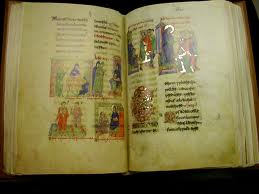
If you want to get a proper understanding of why these words are so significant, here is a section of The Cook's Tale by Geoffrey Chaucer (1340?-1400), as written:
THE COOK'S PROLOGUE
The cook of londoun, whil the reve spak,
For joye him thoughte he clawed him on the bak.
Ha! ha! quod he, for cristes passion,
This millere hadde a sharp conclusion
Upon his argument of herbergage!
Wel seyde salomon in his langage,
-- Ne bryng nat every man into thyn hous; --
For herberwynge by nyghte is perilous.
Wel oghte a man avysed for to be
Whom that he broghte into his pryvetee.
I pray to god, so yeve me sorwe and care
If evere, sitthe I highte hogge of ware,
Herde I a millere bettre yset a-werk.
He hadde a jape of malice in the derk.
But God forbede that we stynte heere;
And therfore, if ye vouche-sauf to heere
A tale of me, that am a povre man,
I wol yow telle, as wel as evere I kan,
A litel jape that fil in oure citee.
Oure hoost answerde and seide, I graunte it thee.
Now telle on, roger, looke that it be good;
For many a pastee hastow laten blood,
And many a jakke of dovere hastow soold
That hath been twies hoot and twies coold.
Of many a pilgrym hastow cristes curs,
For of thy percely yet they fare the wors,
That they han eten with thy stubbel goos;
For in thy shoppe is many a flye loos.
Now telle on, gentil roger by thy name.
But yet I pray thee, be nat wroth for game;
A man may seye ful sooth in game and pley.
Thou seist ful sooth, quod roger, by my fey!
But -- sooth pley, quaad pley, -- as the flemyng seith.
And therfore, herry bailly, by thy feith,
Be thou nat wrooth, er we departen heer,
Though that my tale be of an hostileer.
But nathelees I wol nat telle it yit;
But er we parte, ywis, thou shalt be quit.
And therwithal he lough and made cheere,
And seyde his tale, as ye shul after heere.
THE COOK'S TALE
A prentys whilom dwelled in oure citee,
And of a craft of vitailliers was hee.
Gaillard he was as goldfynch in the shawe,
Broun as a berye, a propre short felawe,
With lokkes blake, ykembd ful fetisly.
Dauncen he koude so wel and jolily
That he was cleped perkyn revelour.
He was as ful of love and paramour
As is the hyve ful of hony sweete:
Wel was the wenche with hym myghte meete.
At every bridale wolde he synge and hoppe;
He loved bet the taverne than the shoppe.
For whan ther any ridyng was in chepe,
Out of the shoppe thider wolde he lepe --
Til that he hadde al the sighte yseyn,
And daunced wel, he wolde nat come ayeyn --
And gadered hym a meynee of his sort
To hoppe and synge and maken swich disport;
And ther they setten stevene for to meete,
To pleyen at the dys in swich a streete.
For in the toune nas ther no prentys
That fairer koude caste a paire of dys
Than perkyn koude, and therto he was free
Of his dispense, in place of pryvetee.
That fond his maister wel in his chaffare;
For often tyme he foond his box ful bare.
For sikerly a prentys revelour
That haunteth dys, riot, or paramour.
His maister shal it in his shoppe abye,
Al have he no part of the mynstralcye.
For thefte and riot, they been convertible,
Al konne he pleye on gyterne or ribible.
Revel and trouthe, as in a lowe degree,
They been ful wrothe al day, as men may see.
this joly prentys with his maister bood,
Til he were ny out of his prentishood,
Al were he snybbed bothe erly and late,
And somtyme lad with revel to newegate.
But atte laste his maister him bithoghte.
Upon a day, whan he his papir soghte,
Of a proverbe that seith this same word,
Wel bet is roten appul out of hoord
Than that it rotie al the remenaunt.
So fareth it by a riotous servaunt;
It is ful lasse harm to lete hym pace,
Than he shende alle the servantz in the place.
Therfore his maister yaf hym acquitance,
And bad hym go, with sorwe and with meschance!
And thus this joly prentys hadde his leve.
Now lat hym riote al the nyght or leve.
And for ther is no theef withoute a lowke,
That help eth hym to wasten and to sowke
Of that he brybe kan or borwe may,
Anon he sente his bed and his array
Unto a compeer of his owene sort,
That lovede dys, and revel, and disport,
And hadde a wyf that heeld for contenance
A shoppe, and swyved for hir sustenance.
It is well worth struggling to read Middle English when it comes to Chaucer's works. He was one cheeky writer and his works are filled with the crude, rude and immoral. Good for a laugh anytime.