Friday, May 4, 2012

On ideas, originality and creativity


Have you noticed how often there's a proclamation or a new, fresh, original or creative idea or concept and when you go to find out all about it you’re disappointed to see it is either a rehashing of old ideas in a new format or a blending together of themes already well known but the blend just happens to be a little different?

By this time in my life, after hearing the terms new, fresh, original and creative being thrown about for nearly every newly popular book or fad out there I've come to expect to be disappointed. In fact, experimental science is about the only thing I find worth getting excited about after hearing those words. Today's example of exciting news was "Eye microchip gives sight to blind".

Now that is as new, fresh, original and creative as we get. Which is pretty good as far as I'm concerned, even if the discoveries were based on years of research, bandied ideas from multiple scientists and thinkers and a collective effort on the part of the IT industry to come up with the chips in the first place. As you can see, the originality is all in the application and the ability to connect the dots.

For a while I pondered why there weren't any truly new ideas about, ones that are completely disconnected from anything that has come before. A few years back I came to the conclusion that we don't have new ideas, just blending of old ones in new ways. Sometimes in incredibly outstanding ways and sometimes in incredibly idiotic ways.

Many I conveyed this thought to didn’t accept this idea of mine as most like to think they can come up with new ideas, particularly in the age of copyright. But I think the arguments just came down to the definition of a new idea. They thought that if no one had done it just like they had then it was a new idea. I thought that if you’d used multiple old ideas and concepts to create your new idea then it wasn’t really new, just a new or different blend (one others have possibly had too).

Instead of new ideas, completely disconnected new ideas, what we have is like an endless building process. Over the course of our existence as a species, humanity has gathered data on the planet, ourselves, our fellow inhabitants of the planet and the universe. It is even possible that the data collection may have even started before we could be labelled truly Homo sapiens. The amount of information we have collected is beyond extraordinary. To the point were it is now absolutely impossible for one single human to hold and remember all the information at once, let alone access it all in their lifetime. We have truly amassed a sea of data.

So what a person holds in their mind is the knowledge passed down to them (sometimes correct and sometimes erroneous) and the information they've searched out for themselves. They do not and cannot hold information in their minds that they've never encountered before in any way, shape or form. Not even a hint. Otherwise we'd be psychic of a sort. Or fore-thinkers. I really don't know the category or extra-human you'd like to class such a type of human as so suffice it to say we'd be other than bog-standard Homo sapiens at that point.

Instead of trying to come up with information we've never encountered before we in fact have a better solution for data gathering and application than any encountered in the animal kingdom, although many animals will have a similar ability to part of ours. We have two things. We have synapses that fire scattered and uncontrolled impulses along with controlled ones. And we have the ability to record our thoughts, writing, crafts and art being the first forms of this recording.


Our synapses are constantly firing, zapping each other over and over or disregarding each other to fire at others instead. The weaving patterns of emphasis and disregard create memories and forgetfulness. If particular synapses don't fire then they become dormant, as you read in that article about lost coloured dreams suddenly returning after years of darkness. The unused are sometimes overwritten for use by another skill you find more important. So you forget one thing and remember another (thus you can't remember your old maths solutions but can remember how to go through the stages of cooking a BBQ). The used connections become stronger and more permanent. But even in their use they change, much the same as an over-trodden path in the woods does through the years. So you memories change over time, and truth is lost almost immediately (don’t go hunting for absolute truth – it will drive you mad.)

With all the firing, misfiring, ignoring and whatnot come your memories, movements, sensations, thoughts and consciousness. But there is also something else happening. There is a lot of "static" going on, particularly in the misfiring, that can link thoughts, memories, movements and sensations together to change your conscious awareness of any particular thing. And this static and misfiring happen all the time. A simple test is the old tongue twister. After a very short time you simply can't say what you wanted to say and start saying complete gobbledegook.

Maybe even gobbledegook, a new way of iterating sounds, could be used as words if given a meaning. And those words built into a language. People do this all the time too, for example: "Oh, I'm sorry, sir. I'm anispeptic, frasmotic, even compunctuous to have caused you such pericombobulation." – Blackadder.

Your brain just keeps making connections over and over, through misfiring and static, mistakes or intentions, discoveries and new information gathered. And anything newly added to your memories becomes fodder for another odd blending of ideas that comes from your brain doing something that seems quite impractical from the outset but is in fact one of the most practical and magnificent things about the brain at all.


The other thing that humans do, that which no other in the animal kingdom does, is record what knowledge we've gathered. We don't just pass on our discoveries through "monkey see, monkey do" anymore, we write it down and store it for anyone (mostly) to see and use. And we've been doing this for thousands of years. There is too much to handle for any single person. Ever. But that doesn't mean any particular person couldn't go a research any particular subject, blend it with whatever else they know and apply it in a new way. They could and do.

The upshot of all this is that humans are constantly coming up with combinations of ideas and developments that astound us. No single human could think of them all so most are amazed when anyone comes up with one, particularly so when that person comes up with one that benefits so many and seems so simple an idea but is so complicated and requiring extreme skill to develop. 

Humanity doesn't come up with new, fresh or original ideas. It never has. The advertising that we do is false and the self-congratulations we give ourselves are attributed to the wrong skill. Humanity instead has this gorgeous mind that constantly blends and mixes data in creative ways to come up with solutions to problems and answers to questions through experimentation. It is our problem solving skills and our ability to actively search for answers that should be acknowledged. That and our ability to write and communicate.

Thursday, May 3, 2012

The art of sales for writers


Prepare
Before you begin selling make sure you have researched the market and your audience thoroughly. Understand what appeals to them and why. Figure out what other writers, publishers and agents have done to promote similar books and whether the techniques they used worked for them. If you are dealing with specific people or groups research them and find out what would be the best way to approach them.

Preparing to sell is much like preparing for a job interview, arduous and painful but well worth it in the end if only for the sake of not embarrassing yourself and alienating others.

That old thing... Do we have to, again? Yes.

People skills
Many people find socialising easy. It comes naturally to them and so they don’t bother fretting about half the things an anti-social person would. But others find it difficult but if they wish to personally sell their work they will have to learn and overcome their nervousness.

Remember that if you are selling your book personally, whether face-to-face or via the Internet, then you and your behaviour are the face and personality of your work.

If you are truly, and you believe irredeemably anti-social, there are many courses available that can help you develop your people skills and cover many aspects such as questioning and listening skills, giving and receiving criticism and praise and using assertive behaviour.

But if you are anti-social by preference rather than necessity (you will understand me if you are anti-social by necessity) then take the time to gradually build your network of peers, ease into conversations with strangers and realise than not everyone is out to get you from the get go.

Above all, remember that politeness is absolutely essential as is the ability to take the answer “no”. You’ve probably all experienced pushy sales people and have likely wished they’d just go the f away or drop off a cliff. Just remember that if you are promoting your own work then you are a salesperson and if you’re too pushy and objectionable then the person or people you’re trying to sell to will think a lot of mean and violent thoughts about you, not recommend you to their friends and family and give you that “no” answer.

Developing people skills is often difficult for the anti-social but try anyway.

First impressions really count
If you are having your first book club meeting, press conference, book signing, radio show, interview, Internet chat or anything else then remember that first impressions are really important.

The majority of people make their first impression within 15 seconds of meeting you and as you know from judging covers, that impression can make or break a sale. Dress respectably (semi-formal to formal), act politely, show your personality but not in an aggressive manner, directly acknowledge those seeking your attention in a friendly manner and if the ice hasn’t broken by then show some of your likable inner drive and enthusiasm for either books or writing (without over expounding on how great your own work is so it should be bought – no one likes an egoist for their ego).

You never would have thought...

Starting a relationship
Once you've successfully made the first contact you need to build on the relationship you have with your customers, promoters and enthusiasts. They may all be strangers to you now but soon you’ll find many of them talking to you on a regular basis, if you allow it. And it is advisable that you do talk, listen and understand their needs even if you can still be labelled somewhat reclusive. Responding promptly or regularly, making appearances, recognising and valuing feedback and the nature of those who are fans is essential to maintaining the good accord you established during your first meeting. None of this has to be pushed or forced on your part, in fact the more naturally friendly you are the better.

Yes, there may be the occasionally over-zealous fan or odd question you can’t answer, there may come a time when there’s too much to respond to and so you’ll have to pick and choose but there are ways of dealing with such situations. Formatting the meeting, limiting the number of questions asked by assigning a time slot, finishing time or a number can all work but make sure the instructions are worded as an opportunity not as a warning.

Why you want to build a relationship with so many people is because they are the ones helping make that living you are after. Without them your work would just gather dust, be forgotten and then be mulched. Also, once you've developed a friendly relationship, shown that you understand and have earned their trust you are on the right track to making them a regular customer. In other words, loyal fans nearly always buy the next book you write.

There is more to it than just what's on the Internet but this should help you get started. Oh, and don't forget that last bit - treat yourself.

Relationship building and maintenance
To build on the relationship you have with your fans and supporters it is important to maintain regular contact through meetings, appearances and the Internet. If you don't have any presence at all then your fans and supporters will dwindle away either because they are moving on to read other books and find more exciting interactions or they have become embittered by your lack of response, supposed arrogance and aloofness and your inability to show you valued them.

Make sure your direct supporters know that they can contact you on your email, work number and mobile while your fans can contact you at meetings or through an Internet site or social page. If every one of the people you’ve built a relationship with, no matter how close of distant, believes they can reach out to you if they wanted then you would remain in their thoughts and esteem.

As the anti-social amongst you know all too well, silence can be read many different negative ways and only one of them is likely to be correct.

It takes many working as a team.

Listening to your fans and supporters
Your fans and supporters might mention a problem that they are currently experiencing either in relation to your work, with the content of your work, how your work is being promoted or anything else. Don’t just ignore their words or think they have no right to say such things because they do. What they don’t have a right to is changing your actions for you. It is up to you to listen and change, if you want, on your own.

If you can solve whatever the problem is then don't be afraid to give them your advice, provide the solution or make the necessary change. If you want to. If you don’t then all the consequences, good and bad, are for you to deal with. No everything will be a crisis but listening and changing little things along the way will help a great deal with your lack of change when a crisis hits. People will be more likely to listen to why you are against changing if they believe you don’t take such a stance just because.

Even if no one asks for your help, if you see a problem then work to fix it. Be confident and helpful.

The hungry hordes must be fed.

Sell the benefits
Sell the benefits of your work aren’t just in the sales. Remember that your book is providing entertainment or information to your fans and supporters. The benefits of reading your work, new and old, are in the content for all your fans. There is no benefit for them in simply buying your work and not reading it so sell the content. Appeal by writing great content (I don’t mean content writing I mean what’s between the covers – not sheets either) and promoting your strong characters or message.

Readers have their own worlds. Provide them a world.

Don't rush the sale
Never let a potential fan or an ardent fan feel like they are being rushed or pressured into a sale. This can make or break a relationship, as mentioned with regards to the pushy salesman. Slow down and tease people into being interested in your work. Don’t shove it in their faces. The most sales will be gained by getting a message of presence out there so that they’re aware of your work existing but having that message free of any demands or expectations of your audience acting to buy. Everyone likes to feel like their free will is respected so respect their choice to buy or not to buy. There is no question here.

Do! It! Or else.

Remember a promise is a promise
If you promise to do anything, whether it is a favour relating to your book or an appearance at a fan meeting, then make sure you keep that promise. Broken promises without an “I’m on my deathbed” notice will not be regarded with sympathy. You will loose fans and supporters by behaving badly and disrespectfully. So no matter how much you don’t want to put your game face on and get out there.

If there is a deadline with your supporters, be it the publisher or your agent or editor, make sure to provide whatever is needed at least a day before. This isn’t a case where a teacher can grudgingly sign off a late essay. This is a business relationship and you must always remember that whomever you’re working for is also working for someone else and needs to keep up a reputation of his or her own. Your lateness is their lateness and a risk to their livelihood so they will hate you for it.

If you're forced by unforeseen and irreversible circumstances to extend the deadline then contact whoever needed straight away and let them know. That way they can pass on the deadline change to their superiors in time and escape the falling guillotine. Your notice shows consideration and consideration goes a long way towards maintaining good relationships.

Pinky swears can't be broken.

You're the expert
Never forget that you're the expert of your work. Make sure your fans and supporters know that they can turn to you for answers with regards to content, direction, changes, problems and promotions.

Even if you aren’t managing the sales personally be aware and conscious of what is needed by your sales manager and support the sales however you can without stepping on toes. Smile when ordered because they won’t order lightly. You and your work are the focus of attention. So make it work for you even if you feel like you’re a puppet on a string.

By this point you understand the industry your in and have the knowledge to provide advice and share good practice with either your peers or those who wish to become writers. Share and support, don’t hog, as this way you will gain a reputation for caring and being approachable.

Wednesday, May 2, 2012

On writing what you know

There is a piece of advice often given to new writers that goes like this: "Write what you know".


Does this make you feel limited? Probably so, as you're wondering just what you know well enough to write about anyway.
Any less daunted? Not really, as you don't know yet how to construct a book properly because you haven't yet done it so how do you know about any of it anyway.
Wondering if you know anything well enough? Probably.
Feeling suddenly stupid and worthless? Likely.

Oh, the self defeating thoughts do go on, don't they. It is just one of those things humans are particularly good at. 

But having such thoughts isn't something you should ignore Just as the advice of writing what you know isn't something you should ignore. Your self defeatist attitude is just another piece of writing fodder so store it away and look into yourself for what else you've experienced.

What you know from the very start that can be used to write a book will be a list something like this:

  • You know yourself enough to know you want to give writing a go. 
  • You know you friends and family enough to deal with them (I say deal as not everyone gets along fabulously).
  • You know the animals around you enough to deal with them too. 
  • You know your history.
  • You know pain, love, fear, desire, logic and a lack of logic, the complexity of life, hunger, greed... etc.
  • You know how people normally react in certain situations.
  • You know basically what rules of the universe can and can't be broken.
  • You know beauty and ugliness.
  • You know what it feels like to dream and to wake. 
  • You know what it is to be a victim.
  • You know what it is to be a winner.
  • You know what it is to be adventurous or foolhardy, to take risks on a whim and ignore advice.
  • You know the balance between bravery and terror, between self-defeatism and rebellion, love and hate.
Again, the list could go on. And it doesn't even include any of the skills you've built up over your years of studying and life experience. When appreciating the advice of write what you know always start at the foundations of what it is to be human. If you remember that you are constructing humans or understandable beings out of words then you should be able to get started in constructing characters.


Also, don't forget that you don't have to write exactly the circumstances you experienced to gain any of this knowledge. As with most fictional writing, it is that you express these emotions through your characters and express your understanding of the world that is important. Not the grounded realism of the event or circumstance. Readers want to look into the soul and mind, not read a list of this happened and then that happened.

So everything you've ever experienced is fodder. Make your characters do whatever they need, move about on their own logic (not the narrator's or yours), see the world through their own ideas with their own mental restrictions. And you can do it because you know what it is to be blinkered and not know everything that is going on around you. You should be able to construct an appealing character just by applying these vulnerabilities.

If you don't know or understand yourself and others in this way then writing isn't your art. There are other arts out there, other crafts and ways to be creative that will likely suit you better and make you happier than slogging away at making your characters real when you can't grasp enough information to base them on. All value in creativity does not lie in writing, in fact it might be far more useful to humanity as a whole to be creative in math or science.


The reason why this advice is so useful to those starting out is it doesn't just advise you on character construction but also world construction and on genre. This is the bit that involves your skills and knowledge, the bit that had you feeling quite miserable.

If you have absolutely zip of an idea about basic science then please, whatever you do, do not try to write science fiction unless you are completely prepared to learn a lot through research and apply it. Without adequate scientific knowledge your world construction will not be believable enough for the avid fans of the genre. If you cannot imagine fantasy scenes in other people's works and dislike the illogical flights of fancy then please do not write fantasy as in fantasy you will have to explore in-depth all that you didn't understand and dislike. Your dislike and inability to connect will transfer through to the tone of the text and destroy all the good work you put into it.

Writing what you know in terms of skills doesn't just mean write on what you have studied well but also write on what you appreciate and understand. Usually, you will find an indication of your interests in the types of books you read. Now, not everyone reads only one or two genres. Sometimes a reader reads multiple genres.


I myself have read and continue to read from these:
  • Fiction
  • Literature
  • Horror
  • Fantasy
  • Science Fiction
  • Biography
  • History
  • Historical Fiction
  • Alternate History
  • Crime
  • True Crime
  • Mystery
  • Popular Science
  • Comedy/Humour
  • Comics
  • Manga
  • Plays
  • Poetry
  • Romance
  • Classics
  • Theses
  • Journals
You probably now understand the problem I faced when deciding which genre I should write in. But to jump start you ahead of where I was, look at the books you have collected. Which ones are your favourites? Which ones do you understand the most with regards to back stories, genre trends, plot devices and character construction? Which type of book have you collected above all the others?

For me it ended up being fantasy, science fiction and horror with a fair smattering of crime, true crime, mystery and popular science. So what else was there for it but to chuck them all in a blender along with bits and pieces of a few others and see what came out?

The only problem you will face when writing a book without a distinct genre is that many publishers won't know what to do with it. But you can still write it and hope a publisher will pick it up. One way to encourage a publisher to pick up your work is to make sure you directly and unwaveringly target a specific audience. Don't write while you are unsure of how it will sell or read if you want it to be bought and read by the masses of readers out there. Do if you don't mind taking the time to test yourself and cut your teeth on something, saleable or not.


If you only come up with one or two genres to pick from with regards to your favourites and most collected then you should find it easy to start writing. An audience is already out there that appreciates just plain crime, romance or horror, for example. There are also pre-prepared audiences for paranormal romance (fantasy combined with romance), science fiction and fantasy blends, science fiction or fantasy combined with crime and so on. Between two genres most blends have been successfully explored and sold so an addition to these shouldn't be hard to sell to a publisher as long as it is appealing and well written. 

Side note: Don't blame the publisher for their not picking up your work as they run a business based on continual high-stakes gambling and will generally only pick those books they believe will give them a good return on their investment. They won't publish just anything in hope of a sale. As with most forms of gambling there are methods to make sure you come out even or on top and these methods are applied by publishers, and not just through pickiness. It is up to you to provide them with a fantastic piece that's also saleable.


As to world construction, familiarity with not only a subject but with what it is to be human should allow you to build a complex world for your complex characters. To start out the world is best constructed from your knowledge on a subject, whether you gathered it recently through research or through years of study and experience. Just as your characters become the most life-like and appealing if they reflect your own experiences. Genre is easily governed by the world you've constructed through knowledge and preferences even if you cannot pick which genre to approach before constructing a world.

From here, the writing, editing, submitting, rejection, rejection, rejection and possibly finally acceptance falls on you. It isn't anyone else's fault what you write, how acceptable it is, if it is unaccepted, if it is but doesn't sell well or anything else. It is yours (unless the publisher is one of those dodgy ones designed to take an author's money and do little else - yes there are dodgy little companies out there so watch out). But the good thing is that even if you fail you can dust yourself off and keep on going to find success, as long as you haven't managed to offend everyone about you in the process of being rejected. So be nice and keep writing.

Tuesday, May 1, 2012

Using anthropomorphic characters in fiction

It is surprising how many of our favourite characters are anthropomorphic in nature. We especially love anthropomorphic versions of animals we keep as pets or on a farm. In fact, the ones closest to us in our everyday lives receive the most anthropomorphism so that we can draw them even closer to our hearts.

This might seem a little disturbing for an outsider looking in, particularly when our over-sentimentality and irrational attachment is balanced against our farming and butchering methods and our environmental maintenance methods, which frequently include the culling of those animals we profess to love so much. Oh, and don't bother thinking cats and dogs have escaped our less loveable actions because we've been killing them for as long as they've been around us or threatened us, sometimes for completely irrational reasons that are based on fear.

So for those of you who are a little unsure just what anthropomorphism entails here is a short definition: "Anthropomorphism is any attribution of human characteristics (or characteristics assumed to belong only to humans) to other animals, non-living things, phenomena, material states, objects or abstract concepts, such as organisations, governments, spirits or deities." - Wikipedia.
In short, for animals it means this:

Snoopy

Teenage Mutant Ninja Turtles


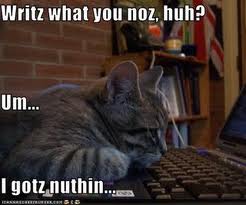
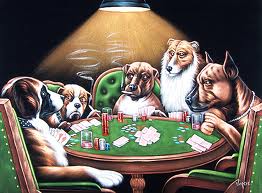
Dogs playing poker? A dog typing on a keyboard? Turtles fighting as ninjas? Why not?

Aesop's Fables (written in 6th century BC Greece ) is a quick and easy example of literary anthropomorphism rather than in art, comics or cartoons. Another one many of us grew up with was the cat in the hat. Anthropomorphism also features in most religions and mythologies humanity has ever believed in, sometimes as a way of illustrating that we should get along with nature and sometimes as a warning of nature's fickleness. As a literary device anthropomorphism has ancient roots and will likely always be a device used to illustrate our relationship with nature.

Cat In The Hat

On an interesting side note: There are religious doctrines that take a position expressly against animals, plants, the earth and the weather having any characteristics in common with humanity, particularly with regards to souls or intelligence. To be honest, I find these opinions damaging and blinkered so you won't find me expounding on them in any positive manner.

Now, in literature, comics, cartoons and art you can technically assign any particular human characteristic to any particular animal, plant, mineral or weather system you so please. Generally we have assigned human motivations, the ability to reason and converse, human reactions and human emotions. But no matter what is assigned or how much, as long as there is a combination of both natures then the character is anthropomorphic. For in essence anthropomorphic characters are a mix of humanity and the original nature of whatever you've chosen to assign human qualities to. Even if only in the form of the character remains as animal, plant, mineral or otherwise.

We are all quite familiar with very humanised animals but sometimes there is only a hint of humanity given to a character. That hint of humanity however, is nearly always recognised due to the powerful images produced. For example: The sea is a she and she rages as much as she provides peace, she's a grave and a source of life, she's endlessly powerful and immense yet she can give safe passage if she so wishes.

Scene Two: The Sailing Vessel Runs into Rough Seas by P.e. Lawrence


You could go on but the sea that is a she is still the sea and in reality is far from anything human at all. Describing the sea as a woman though, adds mood to its wild nature, adds extra purpose and provides agency. Assigning a gender denotes a will where there isn't really one. In reality the sea doesn't need a will to act and react as it does. It just is what it is. We usually perceive it as smaller separate regions or do not attempt to fully grasp its power at all but with the addition of a gender and a will the sea becomes a mighty singular force within our minds, one that could easily dominate an entire book with all the human characters reacting to the sea's will.

So if you are writing an anthropomorphic character, how much humanity should you include? How far should you take it and what characteristics of the original being should be lost in the replacement?

That depends on the role of the character in the story and whether you intend to shed light on the manner in which we treat animals, plants or the earth.

If you want to shed light on such things than a fairly even mixture might do well. There is enough humanity to be understandable and there is enough of the other to appeal to an audience to understand. Just as children once cried out of the fate of deers because of a movie called Bambi, there are now children who will likely want to do anything to save a penguin, lion or panda. There are likely even children who now love monsters for the very same reason.

The original form of the being needs to be maintained though, as this is the identifier, the aspect that will be most recognisable for years to come and the aspect that acts as a reference to which animal, plant etc. needs care and protection. So if the form remains the same for the purpose of drawing attention to a cause then so should some of the motivations of the character and the environment he/she/it lives in. A penguin wandering the city acting as a human will do little for the cause. So what changes? The emotions, the intelligence and the ability to reason and converse. Give them speech, relationships and something to fight for. Make them active and make them the focus of your plot, the ones to act rather than the ones to react or be acted upon.

Happy Feet

If you aren't creating an anthropomorphic character for the purposes of shedding light on an issue relating to nature then any degree of anthropomorphism will likely do. But as there are degrees you should play with those degrees to bring out the 'personality' you desire in your character and the amount of impact you'd like your character to have.

The more humanity is added the less haunting, distanced or unearthly a character will become. Your anthropomorphic characters can even become entirely understandable and recognisable as human if given excessive amounts of humanity. If you ascribe excessive amounts of humanity without explaining why, it will become quite ridiculous that your character isn't human at all.

There has to be a reason behind anthropomorphic characters being what they are if they are all but human. That reason can be provided through a back story on genetics and a plot revolving around evolution, or something of that nature. This might seem a bit far fetched or convoluted but a reason does need to be included so don't forget to add it in. Why? Because only when a reason for their existence is adequately applied can you look into humanity's nature as an observer - the anthropomorphic character being human in nature - which is generally why a mostly-human anthropomorphic character is used. To create this observation of humanity's nature only minimal aspects of the creature's original inner personality and nature should remain while all aspects of human emotions, motivations, intelligence, ability to converse etc. should be added.

Planet of the Apes

The less humanity added to a character the more profound an impact that character will have when he/she/it acts, particularly if you only assign a will or soul. The character becomes something that humans know they cannot control easily or understand (both control and understanding being dominant drives in humanity's own self-characterisation). When wronged the anthropomorphic character can be made into a powerful force that humanity fights against or simply seeks to survive. Or if there is to be no such thing as wrong or right, when the character acts it is for its own survival or due to its own nature, one that could have the same devastating results for humanity if humans don't learn. Even if they are presented as weaker than humanity these less anthropomorphised characters are ethereal and delicately eternal in our eyes. They provide a fleeting and tantalising glimpse into what it is to actually be something other than what we are. They can also become a figurehead for that particular being or entity.

All that said, no matter the degree of humanity added, anthropomorphic characters are powerful and lasting and if it is possible to add them to your story then add them without hesitation. It does mean you may have to step outside the bounds of reality based general fiction or literature but don't worry, you don't have to stray too far if you don't want to. A good old traditional piece on the sea and whales, the desert and water or spooky forests with clawing branches will do the trick. Still, anthropomorphic characters can really make a story as long as there is adequate justification for their existence (except in the case of entities that can be likened to gods - the sea, the wind, earth etc.) and the level of anthropomorphism fits with the rest of the story.