Showing posts with label Creativity. Show all posts

Wednesday, June 19, 2013

Is there are war on creativity and the arts?


This is written solely from my personal perspective, which has some experience in some fields and just hearsay in others. I'd love to hear what others think on this topic too so pitch in. What concerns me is that everywhere I look the arts seem to be running into hard times despite the population increasing and art being produced on a wider scale than ever. Only the world of comics seems to be doing well enough right now, what with movie deals expanding the audience further and copyright still be fairly firmly in the right hands and enforced. Mind you, they're only just coming into play on the Internet so I don't know how long that will last. I'll get back to you on their field if they should go the way of the book industry. Which is always a possibility.

Fine arts, a.k.a painting and sculpture etc. has become less and less appreciated by the masses while printed photos, either on canvas or off, has become more popular. And I'm not talking about arty photos taken for a single purpose by the one to have it printed, I mean mass produced nothings of things like twigs in various colours. Even printed family portraits would pass as vaguely uninspired but worthwhile. The most appreciation most artists get for their works is a hanging in a show, a very slim chance at a sale (very, very slim), and possibly enough people walking through a showing and appreciating the work to have a known name in a certain area. Whether or not gaining a name leads to more sales is another thing. It seems that the masses still have this idea that art is mostly to be found in glitzy galleries, doesn't make sense and that all artists are pretty well off due to exorbitant pricing. The reverse is reality. Most artists feature in small galleries or nowhere, their art is easily understood and appreciated (although those 200 word descriptions are still demanded by gallery owners when artists just want to write it in one sentence, such as "scene of the back pasture at morning" or "man/woman crying"), and their pricing barely covers the cost of materials and framing.
What's causing these artists to struggle? The large retailers offering cheap and nasty prints and the lagging and outdated social concept that artists all have it the way a few did in the eighties. Even the Tax office management thought there was money to be gleaned in taxes from artists and insisted all artists fill in tax forms. On finding out most came in at a loss they gave up on such a foolish idea. It is laughable really but on seeing mass produced prints with frames worth hundreds and the print worth $2 in houses and offices all over I just feel like crying for the whole fine arts scene. Artists are losing out on sales and recognition for ignorance, disinterest in individuality and quick sales.

As you can tell from all of the above, photography is also being undermined by the mass produced prints now sold by the big retailers. For an individual piece, one not to be found anywhere else, you will have to fork out for the artist's time and materials plus a little profit. This does mean a higher price but uniqueness is assured and the photographer's income along with it. For those who produced the mass produced prints, there might be a few dollars to be had but most aren't produced by a single artist creating art but rather someone within a company taking a photo and having the product so digitally enhanced it has little relation to the original work. The artists who do find their works printed have usually already taken some of the most famous photos of our era and do receive some money for their work. Said artists though, are few and very far in between. They are also often employed by or work with newspapers, where they make the bulk of their earnings taking shots of celebs, events and disasters. Photography for photography's sake? Has anyone heard of this being bought and sold en masse anymore? Not really. You have to be in the field to find the clues as to how to be successful and while in the field you see thousands of others producing great works that highlight colour, space, shape, texture, emotions, lines. The competition for recognition is extremely high but recognition doesn't necessarily lead to monetary reward anymore. Although, it might help with getting you a newspaper contract so you can make a living taking less thought out photos of events, disasters and of course, celebs. The best of the best then do take the time to try to infuse a focus on colour, space, shape, texture, emotions and lines into their work, creating those famous photos and securing a little extra pay through the mass production of their work. Why all this struggle on the part of the photographer? Instant, thoughtless gratification on the part of the consumer, a disregard for individuality and personal appreciation and the ever present shadow of big retailers and cheap mass production.

Music artists are having a tough time of it too. You're probably thinking "not really" or some such with a mind to junk like Bieber or some other toy boy prince, girl power band or glittering in gold rapper. You'd be right in thinking they're bringing in the big bucks quite easily but even they have it rough compared to before. Individuality and creativity do not exist in such fields of music and where it does exist the big bucks are nowhere to be seen. Most musicians nowadays have to walk not only the tightrope of creativity vs earning money but also copyright vs mass reach. To keep one's copyright is to stay small and earn little, which does allow for creative freedom as you're unlikely to get a contract. To have your copyright infringed by all and sundry is to earn more (though not at all what you should be earning) and reach millions but to have your creativity stripped from you for increased sales and an income propped up by product placement and advertising. All because the masses steal music like never before. Sure, music can be free as it is but airwaves free to the ears  and files are just there but the masses continuing to take without paying does mean the entire music industry is facing a financial and creative crisis and all those pesky new programmes and restrictions are created to annoy the consumer who just wants to hit one button to play but has to go through more than necessary. The masses think they have rights to someone else's work but they don't really. Not until those rights are released by the creator. Unfortunately, most people don't see the creator as the one holding said rights but rather an enormous company that won't miss a few dollars anyway. Taking music for free is seen as stealing a single candy from a supermarket filled solely with candy rather than taking a giant slice of someone else's dinner. For those musicians not really deserving of the name as they're more puppets than anything else, dealing little in music and even having their product altered down to the base notes by machines, there seems little harm in stealing from them but consider this: if even these remaining "music stars" disappear the entire music industry as we currently know it will crumble apart. In this, I'm actually not sure if the result would be better or worse for musicians everywhere. Music would naturally have to become more local and creative, shifting back to something closer to what it was pre the music producer boom. But then, most of our collective knowledge about some really fantastic bands would disappear too. Of course, this isn't necessarily the way it would all turn out but I would say it is fairly inevitable that to continue to steal means to slowly destroy the very mass culture you're all wanting to follow by stealing. And along the way you'll destroy many a smaller band who's just making their break.

What's happening to music is fairly similar to what's happening to movies. If you're at the top then you can afford to produce movies still even though the costs are enormous and the amount of earnings lost seems to be forever growing. To combat lost earnings the movie makers produce what is believed to be desired by the masses, drawing in larger and larger audiences for single films. The upshot of reaching a wider audience per film though, is stripping out all the possibly objectionable aspects and making films less creative or revolutionary than ever. This is why we see the same old story lines over and over, the emphasis on booming soundtracks and flashy fight scenes over unique plots and unconventional characters etc. For the rest of the movie makers it is a struggle to gain funding, to find a wide enough audience or even to get a showing. Indie works have their time and place but they aren't seen often, bring smaller crowds and appear in very few cinemas. The DVDs to follow have to same pattern. The bigger the audience of the original show, the more prints are made in hope that a wide section of the population will want a copy. The smaller the original audience the less likely you are to find a print at all. And then there's things like, it was big enough to be shown in several countries but the estimated audience of a print only sees returns in the original country at best so sales are lost for a lack of subtitles being included or for few sales points. There are so many movies out there that the number would have your head spin. Movie production took of far faster than pretty much any other art form and yet, what can you find in most collections? The same as in everyone else's. The top sellers of the day and some childhood classics. Only the fanatical collectors have combed through enough of the backlog of movies and shows to find original prints or rare B-rated works. And many of these will sell for peanuts and have been damaged for lack of proper care. And I don't even want to consider the stashes held by governments and TV stations that remain locked away from the public for one reason or another but usually neglect. Movies are going the way of music for the same copyright issues, the same mass demands and the lack of appreciation for something completely different.

And finally books. This is home turf for many of those who come to my site. The world of books is in a mess and non of the authors, critics and publishers seem to know exactly where the industry is headed. Traditional publishing houses are clashing with the newer ebook publishers and big retailers. Indie publishers are losing out to big retailers and traditional publishers that merge. ebook publishers had a boom and are now competing with their own clients as authors begin epublishing on their own to save the costs of the publishing house. Who knows what mess the distributors are in but usually a publishing house is a distributor now so I guess it follows suit that they're in a bad way too. There's a high chance that an author will have to find an overseas publisher if the distributing publishing houses in their home country distribute more than print. The pool of authors seeking the more definite sales from a traditional publisher who's also into distribution is growing enormously, increasing the slush piles of said publishers. This means that more and more publishers are now shutting their doors to submissions. Well, this along with the fact that it is cheaper to distribute the same old hits than to print a new work and take a risk on a new author. Even critics are under fire from 'reviewers' who do little but write "this is crap" or "this is great" under a book on Amazon or such like. Critics have gotten to the point of saying you aren't a critic unless you analyse the work, and likely for a publisher. So where's the line between a critic and a blog reviewer who writes an essay on the book? The mire is large in the book world and it has been created by several factors: new technology, copyright infringement of said new technology, the increasing numbers of authors that is thanks in part to the author mystique and to writing classes and courses, the big retailers emphasising consumer responses and interaction and the price war created by different methods of publishing. Unique writing is being thrown in for formula and expected results from sticking to genre trends and certain writing styles. Big names are ever big while little and new names are drifting into the world of nevermore. There are some publishers looking to change this by seeking out niche markets and different writing but those are few and the competition is high. Indie publishers offer to print more unique works but their distribution is limited and sales as a result. There are probably more aspects to include but to be honest, considering the mess the book industry, my favourite arts industry, is in just makes me want to cry (Quick! Someone paint me!). All the problems of the book industry come down to the consumers wanting cheaper fad books all the time as many saw the possibility of such and began a wide demand for competitive pricing and the slower change of consumers giving up the reading of less popular works for other entertainment pursuits. Fashion, as driven by the less read consumer, has taken a hold of the book publishing industry and the hold is uncomfortably tight. In all, the traditional publishers, the distributors, the ebook publishers, the vanity publishers and the critics are all just responding to consumer trends. The sales that were once eroding solely for entertainment competition are now eroding for internal strife. Unfortunately, the authors are suffering for it and there are more of them than ever, creating a shark pool that's calm on the surface and bloody underneath. Calm for sharing information and bloody for the intense competitiveness that comes with securing a living.

So with all this, is there a war on creativity and the arts? Well, not officially. It is more that we the people have shot ourselves in the feet and the knees and are progressing upwards. In some ways you could say that big business is to blame for setting trends in the first place but they really just follow sales. If it wasn't for us buying the same old stuff as everyone else in the first place then insisting it be cheaper and possibly (in some cases make that probably) free then we'd not be facing such mindless waffle from out media, the same old mainstream books from the publishers, the horrendous proliferation of Bieberism and such like, all while going home to sit and ignore the prints seen in hundreds or thousands of other houses as they're only really there to fill in space and impress visitors. If we all wanted things to change into something more creative, accessible and varied then we'd better go back to paying our artists and being interested in new sights and thoughts and stories.

That's it for my ramble for today (I hope it made enough sense). I'm not one to draw a definite conclusion on all this as there isn't even one out there in the big wide world of the arts. We'll all see what happens as it does. But if I lose my books there will be hell to pay. Boredom doesn't suit me.

Monday, November 19, 2012

On using your original source of imagination to overcome writer's block


There are times when your imagination runs dry. It could be from overwork or stress of another sort. It could be that you are simply tired. Unfortunately, such times can coincide with when you need to come up with a new story, new piece of art or new song. Sometimes the pressure of having to come up with a complete idea or at least the basis of all the ideas to come in one fell swoop is enough to have the imagination stalling in a form of shock.

There's plenty of solutions available for what's called writer's block, with advice from going on a run to taking a boat trip. All are valid and many will get you the result you want. There is, however, a difference between a forced idea such as one found in a newspaper article and one fresh from your own imaginings and insights. The difference is realised as something so insubstantial as a sense of playfulness or freedom. Normally you'd think these elements to any form of art wouldn't be so important when art can be made quite well without them. But I suppose it is fairly safe to say that the difference between good and great art and writing comes down to these insubstantial elements.

So, if you've got yourself a case of writer's block and you're looking to overcome it you can take that boat trip and observe those around you or read the newspaper and pull out interesting stories. There is a chance you will pick just the right story and a sense of play falls upon you before you even pick up a pen or brush. Or you can find your original source, or form, of imagination and apply it to whatever is currently concerning you.


When you were a child you would have tried all sorts of artistic things, whether you knew it or not. You may have had a paintbrush handed to you by a frustrated play school teacher who just wanted you to waste some time and time waste you did with great joy. You may have loved playing with sand or sloshing water about in whatever pattern you preferred. You may have formed imaginary friends and held tea parties or you may have excelled at building Paddle Pop stick (ice blocks for those who don't know about Paddle Pops) weapons to throw at your siblings. There was something you did as a child that at first was just fun but then became a bit of a skill or identifier.

For example, I was the child who did such a thing as imagine two large and patterned rocks as car parks or mines and run my matchbox cars over them while imagining scenes. My sister was the child who would skip about the back yard collecting leaves in a basket while singing to herself or her imaginary friend (we were never sure). My brother was the one who loved to make himself into a crocodile at the pool and chase his sisters about, snapping his hand/arm jaws the entire time. All of us excelled in various types of backyard warfare.

These times flew by rather quickly but they are lasting memories of who we are. These were things we did that identified us. You couldn't swap them around easily. There was no way I had an imaginary friend but I was definitely one for imagining large scenes. And while I tried on the crocodile form it was really best suited to my brother. These activities reflected the wells of imagination and interest that were originally there. People, places, dramas, big scenes, strange animals, playful human interactions. Of all the things you did as a child, there has to be something that spells you or holds much of what you were as a child. And it is that which you could easily draw on to create playfully.


Having an imaginary friend means you're deeply interested in both others and yourself on a close scale. You like relationships and don't like being alone much. Or at least you didn't when a child. Being creative now, you might have departed from focusing on relationships and people to things like politics or social issues. It seems like the two should be the same but what's happened is you've skipped from having imaginary friends to having imaginary scenes. It would be like my sister trying to be me and it would work out just as well as my time trying to be the crocodile. You could do it, with effort, but it won't feel altogether natural. Skipping back to creating close relationships may make you think you will have to give up on wider issues but this is false. Don't forget about microcosm viewpoints on macrocosm issues.

In all, to solve writer's block, a lag in inspiration or the desire to create just look to your past. Find what it was to be you back then and incorporate it into the work that is a reflection of you now. You can still be smart and insightful, cutting edge or old school with a twist, but with the addition of some original interests there is a greater chance your final work will include some of that all important playfulness and sense of freedom.

Monday, October 22, 2012

On what building tension in fiction really means

Shower scene from Hitchcock's Psycho where a murderer's advances are expected to be seen in time but aren't and the heroine you expect to be there the entire movie is killed early.

When you start out in writing you frequently hear people say that there needs to be tension in the story every step of the way. And sometimes you're left wondering just what they mean by tension. Other times you're led to believe that tension equals drama which means highlighting all the things that go wrong for the characters, big or small, and potentially writing almost solely on such things as murders, battles, betrayals, illness, heart-break, kidnappings and so on and so forth. In fact, on hearing about tension many of us assume it comes from the dark side of life only and tension denotes tense muscles, tense thoughts, anxiety and an expectation of bad things to come.

The only word in that last sentence you should pay attention to though, if you're a writer, is expectation. In creating fiction tension is more often than not produced by building up audience expectations over either the long or short term before revealing the answers, answers that hopefully lead to more expectations. There is as much tension in the building up of a slapstick joke as there is in the slow creeping of a serial killer towards a victim. The audience either understands what's coming or believes it does, only to be shocked or amused by what actually happens. What happens can be unexpected or according to their expectations and it almost doesn't matter which, as long as the tension through expectations has been adequately built. Without such expectation in the audience nearly all will just read or watch on through with little reaction other than "I knew that was coming". If you're lucky. If not, then the book, comic, TV show or movie etc. will be dropped as it is too boring.


Character is acting as shy and engaged as expected and then slapstick ensues.

Take a note from slasher films. You honestly know exactly what's going to happen. Teens are going to bite it, especially if they've had sex. The blond will scream and scream as she's knifed to death in bloody Hitchcock style (now in full colour). The victims will be predominantly female and the males running about trying to save the day will be shown up for the fools they are. And at the end there's a high probability that the killer will either get away with it or do a last minute pop up to be killed all over again. So. You know the story. Slashers be slashers. Yet there are good ones and bad ones, ones that make you laugh hysterically the whole way through and others that make you jump in your seat over and over again. All with relatively the same plot. What makes the good ones stand out? The amount of time and effort that goes into building audience expectations, whether the resulting tension focuses on the slapstick aspect or the horror.


You might read this and say, "Well, that's nice but how do I translate that into writing light-hearted comedy or literature or chic-lit?". The same principle applies really, it is just that the material you're working with differs. Now, instead of focusing on the knife and the killer's slow advance towards the shower curtain you focus on the bubble of conversation/argument as it pulls towards a punchline, the creation of behaviour patterns along with hints that things are all about to be destroyed, the growing discord between two or more groups as they attempt to solve a mystery or thwart those solving it, and so on.

There doesn't have to be a death, a breakup or the destruction of a family in the creation of tension. And you really don't need a serial killer, which has now become the easiest way anyone can write a story with tension. If you think I'm lying then pay attention to just how many serial killers are popping up in fiction nowadays compared to 10 years ago. There's been a serial killer revolution all based on the fact that serial killers provide drama which is tension producing and fits the bill of that demand all producers and editors have of "we need some tension here!". It is easy to go for the dark side of things when building tension but do keep in mind that a light-hearted story has tension in it and it takes skill to create such tension. All because without tension through building expectations there's no laughter, there's no freedom in discovering something unexpected, there's no thunderclap of realisation in putting together the puzzle pieces in an instant.

The best works, whether light or dark in nature, set you up, make you believe you know what's coming and then sneak in something completely unexpected. They don't revel in the darkness only and feed you just what you expect. Such stories wear after a while as the audience never gets either a glimpse that everything will end happily or a spoonful of something different. Same goes for overly gushy romances actually. The audience never gets a hint of what would happen in real life if such things occurred and gets annoyed with the cute, cuddly, flowered, glitzy and perfectly made up everything in the stories - be it the people or the world or the relationships. The best horrors break expectations and the best romances too. And that's after they set you up to expect certain things either through ads, through character stereotypes or through plot line development. Alternatively, you can go the extra mile of creating something no-one's ever come across before, which is quite hard to do so maybe settle for something that's by and large never been seen before (see note).

And just for fun: The characters are dressed and presented as expected and then you're hit with the language.

Note
When you remove the character descriptions so only the motivations remain, sift away all the landscape extras and just write the general plot line a lot of stories read the same or similar to each other. That nothing is truly original and everything is built upon something is just the nature of how human's build and develop ideas. To write a good story is to make large developments upon the old, to write an average story is to make few developments and to write a bad one is to make no developments or actually actively destroy the foundations already there. 

Monday, August 6, 2012

On approaching the blank sheet or screen


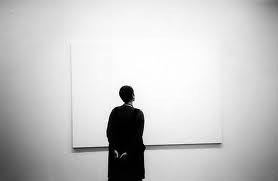
There is almost nothing more daunting than a blank sheet or a blank screen to a person bent on creativity. Aside from putting to ink what has only been pencil scribbles up until then, that is. Both beginning and finalising are terribly hard as beginning begs you to fill in the blank with your own thoughts and dreams, no prompting allowed, and the finalising gives you that terrible feeling you're about to be marked and judged worthless.


I say "you're" rather "your work" as for most people who've done something creative, any rejection to their work feels like a rejection of the mind and inspiration behind it rather than just of the work presented. It is all too personal. This is the reason why most people who go about rejecting works, either for a living or for fun, need to be a little gentle in their criticism. Constructive criticism is good and usually most helpful before the final stage. Downright slandering or "poo-pooing" like Matilda did the lion is just plain hurtful and doesn't really get anyone anywhere. Except maybe a pay packet for the critic and tears for the artist.

That said, this is on the beginning of creativity and less the finalising.


When starting out in writing or drawing or painting you're usually faced with a blank sheet, blank screen or blank canvas that seems to take on a life of its own. It stares back at you as though challenging you to fill it in properly and to make every word, pencil or brush stroke born of genius. There is no allowance for inept scribbling, according to the blank surface.


But far more often than not with art and writing, the work that is finally produced is actually the result of several trials and mistrials. To get a single sketch fairly finalised and ready for inking it may take several sheets of scribbles or several layers of scribbles before the image pops into being. Just as it takes several rewrites and edits for a novel to completely bloom.


The trick to getting past that blank screen or blank page stage is simple enough. You just have to realise that genius is usually born of hard work, skill is much practice and that you're only human and likely to stuff up multiple times on the way to creating anything fairly decent, not to mention gob-smacking awesome. That an boring another pair of eyes to help you see the faults and flaws in your work, especially if you're still insecure about your own skills, is how you go about creating.


That blank screen can be scribbled on and then returned to being blank or saved away for later thought. The sheet that's staring at you is likely one on top of a pile of sheets so think of it as a first draft rather than a final one and the sheet as replaceable if necessary. Canvasses are a bit more challenging as although you might have more, by the time it is set up as a blank canvas there has already been a lot of work done or a lot of money spent. So think of a canvas as an opportunity to layer those sketches and scribbles one on top of the other, followed by several coats of paint that create texture and a blending of colour you likely hadn't thought of. The same principles apply to painting a canvas as rewriting and editing the first draft of a book. It is all about adding and smoothing away and polishing.


Blank sheets, screens and canvases just need to be viewed as an opportunity rather than a challenge and from there you can play to your heart's content. As an opportunity to express yourself a blank page or canvas is enticing, especially if you have something on your mind that you'd like to show the world. And if the page or canvas is still a little daunting then just take up a pencil and scrawl a few light shapes on it, light enough that they can be rubbed away without leaving any marks behind. That way, the surface to work on isn't blank anymore and you can approach it freely.


If you're writing then just write down the conversation you just had or the lyrics of the music you just listened to or even a quote from the movie you just watched. Write down something that stuck in your mind. Then just write what's on your mind, whether its a different topic or not. Start with a feature of the world you're imagining or a character that's bumbling about in a half built world within your mind. Anything will do until your ideas begin to form properly. And anything you don't want to keep just delete once the page is no longer scary.

Wednesday, August 1, 2012

Pain and creativity


There is much to be said on this topic but I'll keep it short as I'm suffering a bit today.


Pain changes your moods and changes your thought processes. It makes you snappy and you tend to cut to the chase and despise anyone spouting bullshit where otherwise you might have smiled and nodded fairly gently. Pain makes you want to cut parts of yourself away in order to keep the pain-free bits but there's no way you'll do anything as that would cause more pain. And when you're all said and done on pain you jump for the pain killers, which often contain codeine or other relaxants that induce sleep. Knocked out, you feel even less but time flies by and nothing is done in the process. In fact, dreams while you're on painkillers become almost useless as creative material as either you fail to remember anything coherent about then, fail to remember anything at all or have them constantly interrupted by bouts of painful awakenings.


Meanwhile, it is said that popping pills and the like will help creativity. The pain sufferer usually doesn't get such a benefit, losing creative thoughts and even waking moments to mind-numbing pain pills and the sleep that follows.


This, along with other various repercussions of over usage of pain pills, is the reason why, as someone who has suffered pain fairly chronically through half her life, I tend to steer clear of pain pills unless I'm just about at to loose my breakfast, lunch and dinner. Sleep is my main remedy and while I loose time I almost invariably wake up with good creative fodder and a mind clear enough to write it all down, or draw or paint or whatever.


Physical pain is incredibly intrusive on the mind, more than most realise until they experience a good bout of it. But pain is usually temporary, even for the chronic sufferers, as it fluxes and wanes its way through our lives. Our recognition of its impact will vary according to how often we feel it, as will our reactions. Man flu is the reaction to little to no pain through everyday life for rather a long period of time, followed by a sudden onset of various symptoms seemingly unmanageable but actually rather mild. The reason man flu is so annoying to many onlookers is that many of those onlookers suffer far worse on the average day and just want to kick the man flu sufferer for griping over a day that would otherwise be labelled rather good. The tired and unsympathetic reaction is normal for someone normally in pain. As is a depressed viewpoint and an open recognition of physical boundaries, limitations and weaknesses. The pain sufferer might be called a wet blanket as they aren't as bouncy or keen to go do something physically challenging but the reality is, if it is going to make the problem worse then being called a wet blanket is a small price to pay for avoiding more suffering, especially if you hurt yourself again.


Navigating physical pain to work is difficult because of its impact upon our minds. A mind fogged by either pain or pain pills simply can't churn out work to meet a deadline unless there is significant risk riding on not meeting it. And meeting the deadline in such a condition will inevitably run the sufferer into the ground and cause them to need time off later to recover. If the sufferer is lucky they can ride through it once or twice but they will inevitably collapse at some point or another. Forgiving yourself and explaining the situation to those who need to know is the best approach. Just because you feel pain a lot doesn't mean it shouldn't impact you because for you it is normal.


The flip side of this is that chronic pain sufferers can actually become incredibly desensitised to physical pain. Pain can go unfelt entirely if the level of pain a person is used to far exceeds the warning signal pain of a physical problem. If you're used to only feeling pain at the level of "My gut has been sliced open with a knife" then you simply don't feel any minor ache for "My tooth is slowly rotting". You only find out when you visit the dentist and they gasp in shock over the damage done and how you hadn't felt a thing. Desensitisation can impact up creativity too as it can whittle away you sympathy, empathy and understanding of how small, niggling things can change a person. On the other hand, you could write a damned good drama or thriller filled with incredible levels of pain and angst that blows everyone's minds, as long as you managed to make them understand that people can indeed feel this way and you're not over-dramatising (which is oddly what you think when you see someone whining away over a scraped knee or cut finger).


Now, to keep this short(ish) I'm moving on to mental pain. Mental pain is otherwise known as depression or angst or fear or anxiety or heartbreak. In essence the pain comes from either and internal (chemical imbalance) or external source (foods or victimisation), with an instigator that effects the thought process (someone told you you were fat even after you visited a gym for a month and put in heaps of effort). The pain is really the thoughts of a person tearing and ripping apart that person's own identity, self-worth and connection with others. You don't even need to see yourself as much to begin with in order to tear it all to shreds anyway. The mental pain you suffer is highly destructive to creativity as you actively tell yourself you can't do anything well and nothing you do will ever be appreciated all while cutting off sources of creativity through actively destroying relationships in order to justify your own thought processes (often an unconscious action, this one, so if you want someone to snap out of it go gently here while beating the self worth back into them).


As you can see, the problem with mental pain is that it is usually brought on by something uncontrollable or fairly hard to control but heightened by only the controllable. In fact, it is very easy to control your own mind when it is tearing at itself. If you think to do it. The answer is: You tell it to shut up. You repeatedly tell it to work hard to fix the uncontrollable enough so that you can function. And you actively do as you're told. And if necessary you treat part of your mind like a whining child with the other part of your mind that's far more grown up and wise and live your life using the wise side. It is perfectly fine to have an almost split personality if no one notices and it is functioning. Only if your life is badly effected by something does it need fixing. Go back to that rule: If it isn't broken don't fix it. Cracked isn't broken. Cracked is quirky. Broken is dysfunctional.


Mental pain, because of the tearing away of the mind by the mind, also leaves the sufferer with little to no energy to burn on such things as creative thought. It is far too busy destroying itself to care about creating. But sometimes, just sometimes, there is an opportunity for someone suffering mental pain to write it all down as a form of catharsis. By writing some of the emotions felt down, in a fiction story or a biography, the person can burn off some of that excess mental energy, think through some issues and find level ground within themselves. By burning off that energy there's also less energy to spend on tearing oneself apart and so the change can be permanent as long as the person keeps on being creative. The main issue for someone with the potential to write who's suffering pain is that they struggle to put pen to paper as the lack confidence. If you ever run across anyone in such a position then give them a heavy boot in the butt to get them writing. It might hurt a bit at first but they'll likely be better off for it. And if it is you, reading this, then get cracking damnit! Go, write.


In other words. Fix it somehow. Whatever your solution may be, find it and bring it into play so you don't give those you love headaches (at best).


So enough from me. I caught the time while my eyes and thoughts were clear and my hand wasn't shaking to write. Job done. And while my mind goes foggy again I'll be drawing up a cyborg lady. Then I might crash and go to sleep again...


Oh, and good luck. Tisn't a war that ends really. But you can win battles along the way and everyone loves to win.

Thursday, June 7, 2012

On the value of first ideas in art and writing


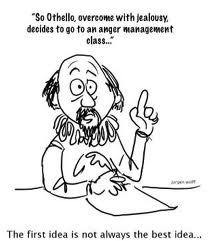
Many of those in the know, with regards to writing, will tell you that your first ideas should always be taken with a grain of salt or ignored. In fact, they often say that following them is a bad idea. 


But there are times when I have to beg to differ on this. Sometimes the first idea you have contains the spark of genius and the necessary propulsion to carry an entire artwork, whether it is writing or visual art. The best of these to follow are your eureka moments, your epiphanies, to do with life or the imagination as these often shed light on an issue that others would be interested in. Also, they often touch on something significant.


Those first ideas you have may just need a bit of rounding out to make them usable. They may need a bit more thought than you're used to putting into an idea before it can be properly followed. Your initial idea might be simple, inelegant and possibly difficult to use as the basis of a piece of writing or an artwork. But give it a chance to build in your mind because usually the thoughts that strike you out of nowhere, the thoughts that hold your initial imaginings, are the key to filling your art with life. And art and writing are truly valuable and appreciable when there is life to be seen in it.

Of course, there are ideas you should just keep on going from and never look back at but don't discard all first ideas like that. You will miss out on some beauties.


There is something rather horrible that can come from discarding an idea that is brilliant but difficult for one that is toned down and easier to work on. And that is dullness in the final piece. A dullness that will likely lead you to starting all over again (either that or being rejected), possibly with the original idea. In restarting you have to discard all the work done up to then, if none of it is salvageable, which is a touch torturous to do. 


There is another problem that can occur in restarting an imaginative piece. That is that you run the risk of producing sub-par work through being thoroughly exhausted with the whole concept. If you see this happening it is probably best to move on to another project. Don't discard all your work though as a break might be all that's needed and revisiting it later could lead to success.


The problems with first ideas, any ideas really, don't stop here though. 


Like many other ideas, even brilliant first ideas are susceptible to being overworked. When any promising idea is overworking for enthusiasm it can be destroyed. Through rethinking and retouching you can make an idea bloom and take on a brilliant shape that will amaze those reading or seeing it. But there are times, which happen quite frequently, when the idea that was so worthwhile at the beginning looses all life as the writing or art becomes lifeless, staid and still through overwork.


In such circumstances, the value of rethinking and retouching a work becomes less than we'd normally like. While editing, retouching or re-sculpting come in handy, extraordinarily so in the case of writing, you have to remember that there is a point when it all goes to far. 


Given that writing any full length book takes so much time and effort (much the same as making life sized brass sculptures in effort if not physical labour), it is often terrible to discover that the reworking you've done has completely destroyed the energy of the original idea, that spark that lead to writing in the first place.


Luckily, in writing, most of the reworking done is to our advantage. Language is smoothed out, a writing style formed and the structure is perfected. Much is done in reworking writing that enhances the original idea and I would never suggest forgoing editing entirely or that it lacks value. But be careful in your editing. Watch out when smoothing over the crucial points or those idiosyncrasies and flairs of imagination. They might be just what makes your work special.


The degradation reworking can cause to art is plainly obvious when you look at overworked or incorrectly worked art. Colours can still and stagnate, brush strokes are lost through overlaying, lines blur or become less organic, texture flattens out, visual perspective and sense is lost to the need for accuracy.


There are of course times when a fair amount of reworking is required to bring about an idea to its true form in art but if you touch it from then on disaster can strike. What would happen if one more chisel mark was made into David? Or many? What would happen if it was smoothed down just that tad more? How many lines and details will be lost?


And all this without it being a problem with the original idea. I'm actually more inclined to warn against over-thinking and overworking than following an initial idea. Just be sure to give careful consideration to all your ideas and, if you want to sell your work, see if they match a market out there.

Sunday, May 20, 2012

Thinking in pictures, sounds and words


There are people who think almost solely in pictures, people who think solely in sound and people who think almost solely in words. None of these processes particularly inhibit the imagination but they do impact upon and limit what can be created from it through interpretation and translation.

Most of us though, think in a mix of them all, with one or two more in focus than the others. This results in us tending towards certain forms of creative expression over others. And our chosen form of expression can rarely be shifted once we discover it, no matter what others have to say. So how should we chose a creative path to begin with? How are you more likely to chose the right path from the outset?


All forms of art often require a person to not only think in pictures but interpret the kinetic into the stationary. Many artists find interpreting the kinetic into the stationary an issue and so stick to what was stationary enough to begin with in order to be able to represent the subject as they wish, which may or may not include a high degree of accuracy. Then there are those who would like to be artists but cannot shift their focus from either seeing the whole picture to seeing the parts or vice versa. Art requires you to not only think in pictures but to dissemble and reassemble the subject matter in a method of your choosing, to analyse the parts in order to create the whole and to absorb the whole in order to see the significance of each part. Art is a practice that relies on the eyes and hands, on perception of form and function and flow, and is best created by those who think mostly in pictures while creating it. The person who stares, dazzled, at the sky or the sea or the flock of birds and has no words to say about it is likely one capable of recreating the sights through art given the chance to practice the techniques artists use.


Music comes from the minds of those focused on sound, movement and words but mostly on sound. Musicians can become artists or writers with a degree of ease due to the overlap of vision and interpreting methods but because of their intense focus upon sound visual arts can be quite difficult at times. If you are interested in sound above all else and have a song forming in your mind it would be quite hard to represent it satisfactorily in clay or paint or wood. To a person focused on sound above all other things the music world is beyond enticing, instead being downright absorbing and inescapable. Surrounded by such beauty and thoughtfulness for the ears and mind, with sounds that elicit all sorts of emotional reactions, how could a person focused on sound turn away from it all and constantly create soundless art or writing? It just shouldn't be and, more often than not, cannot be.


Science and maths are interesting to look at with regards to thought processes and sources of creativity. There is a high degree of focus on functionality required, on parts becoming whole and vice versa, on the desired or projected end solution and what would be required to create it. To be creative in science it would likely require a person to be able to think in pictures as well as words and numbers. In math, a high focus on words and numbers (or words as numbers and numbers as words) is required and even the ability to see the flow or translate numbers to pictures. But above all, in science and maths a sense of play has to exist. A knowledge that what seems inflexible can possibly be bent or broken, a knowledge of how things work together, build upon each other and click in place and a desire to tinker with it all. The desire to meddle with the world and discover what it is all about is where the creativity stems from in science and maths.


Writing is also interesting to look at because it requires an intense focus upon two types of thinking in equal measure. Or, at the very least, a strong ability to interpret one as the other. Writing requires a person to think in pictures and in words at the same time. It requires a writers to imagine complete scenes, worlds, events, people, to make them real as though you were staring up at that sky. The writer needs to build a world up from scratch and navigate about it freely only to then break it all down and assign words to each part and then not only write those words but make them coherent and enticing enough to a reader that the reader can then, according to their own though processes, rebuild the world in their own mind. Writing is creation and destruction, recreation and transference in one. It relies on multiple interpretations of a singular vision forever broken down into its parts. At no point in the reading or writing process is the whole creation exposed in full, not even with the ending. It requires an ability to interpret flow as well so there is in a writer just a touch of a strong understanding of the kinetic too.

So when choosing your path of creativity it is probably a good idea to match it with how you typically think. The skilled interpretation of words, pictures, sound and movement all play a part in our understanding of the world and our ability to express ourselves so it will impact upon your skill in any particular creative field. Choosing the creative field that best matches how your view and interpret the world is the best way to start. From there it is practice, practice, practice.

But this mix of focused thought processes and practice is in essence where that talent and skill come from that you so admire in others. Talent is the initial aptitude that comes from a good match in thinking to a creative style while practice is how the skill is built up. No one beginning starting out as an artist knows how to create brass sculptures but they do likely know how to paint or draw with some capability. Even in painting and drawing though, the arts most children start out with, there is a incredibly huge gap between the skilled artist and the initially talented child. And all that is required to leap that gap is much practice and careful consideration.

Saturday, May 5, 2012

On the pressure for original ideas in novel writing


As I concluded (well, started too) in my post "On ideas, originality and creativity" humanity doesn't come up with new, fresh or original ideas that are completely disconnected from any other idea out there. It is impossible.

And yet, in the creative field of writing there is an enormous pressure upon writers to come up with just that. The pressure comes from the public and from the industry itself. It is strong enough that even those starting out in writing or who want to feel the pressure to write on something that's never been written before. Failing to think of anything usually ends with a failure to write.

It is a utterly impossibility to come up with something completely new but the current state of our own propaganda, copyright system and our belief that "we can do anything" as long as we try makes many a beginner or aspiring writer believe they can and should do the impossible.

We can't. Don't even bother worrying over the fact that we can't. Just do what you can, solve what you can, work hard and you'll see benefits. That's what we humans excel at and what has brought humanity to this point (yes, some of you may be saying we should have done it all differently but that's hindsight and working with more knowledge than we had then. There is a certain number of us being pointedly blind and corrupt but this isn't to the point of everyone throughout our history has been).

Individual humans are like worker ants in a swarm. We learn what we learn and work within those principles alone while others learn something else and do something else. Separately we work on what we each believe important and join forces with some who share similar views. Altogether our achievements are in the masses and reach far beyond what any single person could ever do. This, we should be proud of. It is a rather efficient method of ensuring pretty much any possibility we know of gets explored somehow, often repeatedly for different variables, and our collective knowledge therefore expands with the results.

As you can see, I find Isaac Asimov's long distance views of humanity quite interesting to read.

So if we all work with separate little pieces of knowledge on life, the universe and everything and (as noted in "On ideas, originality and creativity") produce new or not so new blends of ideas we've separately encountered there will be many an overlap of ideas produced. 

Everyone capable of writing knows about death, betrayal, love, war, hate, suicide etc etc. Everyone is concerned in some way or another with the young and the old, whether they are of these classes or not. Everyone has beliefs as to what happens after death though not everyone agrees as to what: nothing, something unimaginable, a strict structure or a reincarnation.

2001 Booker Longlist novels broken down by theme.

Can't read the main themes?

Death
Love
Betrayal
Corruption and Theft
War
Suicide
Running Away

Only one lighthearted topic there and it is probably tinged with betrayal.

If even on the topic of what happens after death there are only four main options to choose from, how are you going to write something completely knew and unheard of? Can you think of a fifth option that has nothing to do with any religion or belief system out there? Something no one else has ever thought of before, even partially?

Are you wracking your brain right now trying to think of something to prove me wrong? Don't bother.

Put simply, you can't. But like before, don't even bother worrying over the fact that you can't.

Originality, newness and uniqueness is never found in its pure form. Just as truth is never found in its pure form. You will never create it no matter how smart you think you are or how original you think your current work or idea is. Your idea, work and smartness do not revolve around complete, pure originality. It revolves around how you blend what you know together, how you write this blend down and on what you focus upon amongst the miriade themes, events and issues that appear in your work.


Probability may say so but I highly doubt it would ever happen because the probability is so incredibly small. Besides, why bother? We already have the original and making monkeys do it is about the only novelty there is in producing another copy. If you find monkey slavery amusing at all.

Authors, writers and prospectives shouldn't feel so under pressure to come up with original ideas that have never been broached before. The pressure of copyright is there so you don't act the monkey and type out Shakespeare's plays to claim for yourself. It isn't there to force you to come up with something completely unheard of before, despite the pressure you feel.

Write with the knowledge that you can pay hommage to others, especially if you reference them. Write with the knowledge that you are allowed to touch on subjects, themes and characters other people have created or written as long as you alter them enough through actions, encounters, personalities, placements etc to be your own versions. Or reference them.

Copyright is there so that you pay your dues to the one who developed or owns the little idea you're using without altering. And fair enough, even if this is a complete distortion of how humanity has worked with ideas before copyright. In this case copyright is mostly progression (some disadvantages are included) because it does force you not to mimic word for word, idea for idea, thus promoting heightened change and development.

In a world where we can only blend the ideas already floating about we shouldn't force ourselves to write beyond what is possible. As with every other field we should challenge the impossible, expand our views and discover as much as we can through reforming ideas, exploring the possibilities of new discoveries humanity has made and heightening our collective knowledge and understanding by writing on every theme possible, not just the few labelled in that diagram above.

Collectively, writers shed light on everything for everyone, through recording and reformatting information, so that we can all consume knowledge and then act as we believe we should. If there is anything to worry about in writing and publishing it isn't coming up with a completely new idea that's never been heard of before. It is on shedding light upon the most unlikeable, troubling, problematic and disturbing aspects of ourselves and our world and hoping it will be accepted by a publisher.

Luckily gritty reads are believed mostly palatable and acceptable because they challenge a reader and cause a stir. You'll only be rejected for works that cross popularly help beliefs on common decency as well as moral and ethical acceptability.

Friday, May 4, 2012

On ideas, originality and creativity


Have you noticed how often there's a proclamation or a new, fresh, original or creative idea or concept and when you go to find out all about it you’re disappointed to see it is either a rehashing of old ideas in a new format or a blending together of themes already well known but the blend just happens to be a little different?

By this time in my life, after hearing the terms new, fresh, original and creative being thrown about for nearly every newly popular book or fad out there I've come to expect to be disappointed. In fact, experimental science is about the only thing I find worth getting excited about after hearing those words. Today's example of exciting news was "Eye microchip gives sight to blind".

Now that is as new, fresh, original and creative as we get. Which is pretty good as far as I'm concerned, even if the discoveries were based on years of research, bandied ideas from multiple scientists and thinkers and a collective effort on the part of the IT industry to come up with the chips in the first place. As you can see, the originality is all in the application and the ability to connect the dots.

For a while I pondered why there weren't any truly new ideas about, ones that are completely disconnected from anything that has come before. A few years back I came to the conclusion that we don't have new ideas, just blending of old ones in new ways. Sometimes in incredibly outstanding ways and sometimes in incredibly idiotic ways.

Many I conveyed this thought to didn’t accept this idea of mine as most like to think they can come up with new ideas, particularly in the age of copyright. But I think the arguments just came down to the definition of a new idea. They thought that if no one had done it just like they had then it was a new idea. I thought that if you’d used multiple old ideas and concepts to create your new idea then it wasn’t really new, just a new or different blend (one others have possibly had too).

Instead of new ideas, completely disconnected new ideas, what we have is like an endless building process. Over the course of our existence as a species, humanity has gathered data on the planet, ourselves, our fellow inhabitants of the planet and the universe. It is even possible that the data collection may have even started before we could be labelled truly Homo sapiens. The amount of information we have collected is beyond extraordinary. To the point were it is now absolutely impossible for one single human to hold and remember all the information at once, let alone access it all in their lifetime. We have truly amassed a sea of data.

So what a person holds in their mind is the knowledge passed down to them (sometimes correct and sometimes erroneous) and the information they've searched out for themselves. They do not and cannot hold information in their minds that they've never encountered before in any way, shape or form. Not even a hint. Otherwise we'd be psychic of a sort. Or fore-thinkers. I really don't know the category or extra-human you'd like to class such a type of human as so suffice it to say we'd be other than bog-standard Homo sapiens at that point.

Instead of trying to come up with information we've never encountered before we in fact have a better solution for data gathering and application than any encountered in the animal kingdom, although many animals will have a similar ability to part of ours. We have two things. We have synapses that fire scattered and uncontrolled impulses along with controlled ones. And we have the ability to record our thoughts, writing, crafts and art being the first forms of this recording.


Our synapses are constantly firing, zapping each other over and over or disregarding each other to fire at others instead. The weaving patterns of emphasis and disregard create memories and forgetfulness. If particular synapses don't fire then they become dormant, as you read in that article about lost coloured dreams suddenly returning after years of darkness. The unused are sometimes overwritten for use by another skill you find more important. So you forget one thing and remember another (thus you can't remember your old maths solutions but can remember how to go through the stages of cooking a BBQ). The used connections become stronger and more permanent. But even in their use they change, much the same as an over-trodden path in the woods does through the years. So you memories change over time, and truth is lost almost immediately (don’t go hunting for absolute truth – it will drive you mad.)

With all the firing, misfiring, ignoring and whatnot come your memories, movements, sensations, thoughts and consciousness. But there is also something else happening. There is a lot of "static" going on, particularly in the misfiring, that can link thoughts, memories, movements and sensations together to change your conscious awareness of any particular thing. And this static and misfiring happen all the time. A simple test is the old tongue twister. After a very short time you simply can't say what you wanted to say and start saying complete gobbledegook.

Maybe even gobbledegook, a new way of iterating sounds, could be used as words if given a meaning. And those words built into a language. People do this all the time too, for example: "Oh, I'm sorry, sir. I'm anispeptic, frasmotic, even compunctuous to have caused you such pericombobulation." – Blackadder.

Your brain just keeps making connections over and over, through misfiring and static, mistakes or intentions, discoveries and new information gathered. And anything newly added to your memories becomes fodder for another odd blending of ideas that comes from your brain doing something that seems quite impractical from the outset but is in fact one of the most practical and magnificent things about the brain at all.


The other thing that humans do, that which no other in the animal kingdom does, is record what knowledge we've gathered. We don't just pass on our discoveries through "monkey see, monkey do" anymore, we write it down and store it for anyone (mostly) to see and use. And we've been doing this for thousands of years. There is too much to handle for any single person. Ever. But that doesn't mean any particular person couldn't go a research any particular subject, blend it with whatever else they know and apply it in a new way. They could and do.

The upshot of all this is that humans are constantly coming up with combinations of ideas and developments that astound us. No single human could think of them all so most are amazed when anyone comes up with one, particularly so when that person comes up with one that benefits so many and seems so simple an idea but is so complicated and requiring extreme skill to develop. 

Humanity doesn't come up with new, fresh or original ideas. It never has. The advertising that we do is false and the self-congratulations we give ourselves are attributed to the wrong skill. Humanity instead has this gorgeous mind that constantly blends and mixes data in creative ways to come up with solutions to problems and answers to questions through experimentation. It is our problem solving skills and our ability to actively search for answers that should be acknowledged. That and our ability to write and communicate.