Sunday, May 27, 2012

Allergy free plain scones recipe

12 scones for afternoon tea

The husband's upside down scone creation. He said to quote him so here goes: "It tastes what like the normal ones."

Ingredients
  • 2¼ cups Orgran self-raising flour
  • ⅓ cup Orgran gluten free gluten
  • 1 tsp baking soda
  • Pinch of salt
  • 1 tbs sugar (optional)
  • 20g Nuttlex
  • 1 Orgran No Egg whisked with 40mls water until thick
  • ¾ cup goat’s milk
  • 1 tsp vanilla essence
  • Extra goat’s milk for glazing

Method
  • Preheat oven to 220°C
  • Lightly grease baking tray.
  • Sift Orgran flour, Orgran gluten free gluten, baking soda, salt and sugar into a large bowl
  • Rub in the Nuttlex, using fingertips until the mixture is fine and crumbly
  • Make a well in the centre of the mixture and pour the Orgran No Egg mixture, vanilla essence and goat’s milk into the well.
  • Mix lightly with spoon or spatula to form soft dough.
  • Slowly add small quantity of flour to prevent sticking, if needed.
  • Gather the dough together (do not knead) and turn it out onto a lightly floured surface.
  • Lightly press out the dough until it is 2.5 cm thick.
  • Cut out rounds with a floured 5 cm cutter.
  • Heat a baking tray in the oven for 5 minutes
  • Glaze with the extra goat's milk.
  • Bake on the middle shelf of the oven for 10-15 minutes or until golden brown on the top.
  • If you are serving the scones warm, wrap them in a clean tea towel while still hot

Note
  • You could add an extra 1/2-1 tsp baking soda for extra fluffiness but they are pretty soft as is.
  • They smelt a little of tapioca in the oven but didn't taste at all like tapioca.

Saturday, May 26, 2012

Best fictional giant beasts

King King

Godzilla

Mothra

Walking fish creature from The Host

Jaws shark

Lake Placid Crocodile

Kitten Kong from The Goodies

Loch Ness Monster


Big Foot/Yeti

Clifford The Big Red Dog

Gamera

Falcor from The Never Ending Story

Eagles from The Lord Of The Rings - inlcuding Beleram the Great

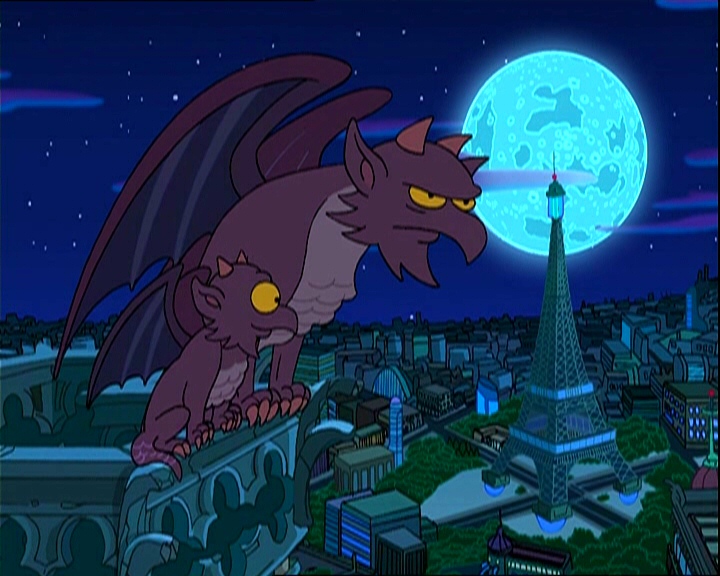
Bazuzu from Futurama

Giant Ants from Them

Giant Spiders from Tarantula

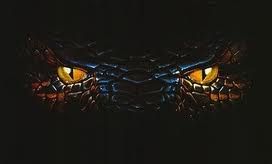
Giant Python from Anaconda

The Kraken

Rats from The Food Of The Gods

Giant trolls from Troll Hunter

Q or Quetzalcoatl the dragon from The Winged Serpant

Friday, May 25, 2012

The first shelving solution

That's an emu egg, in case you wanted to ask. The Bunnikins 'booky' bank was one I was given when I was quite young, under five likely. Same goes for the fluffy thing on a swing which I always loved and never knew just what it was. It swings, that's all I needed.

Half of the pirate section. There's a boat, a rusted toy pistol, three large rocks (the least colourful being the most important, a small jar of gold flecks, a small treasure chest with my grandmother's (never got to meet her) tiny perfume bottle in it and my jewelry container which I made out of clay in a ceramics class (you can only see it in the final shot and the pretty bit is inside - a shell painted on the inside in glaze).

The books for those who are curious.

I made the paired bookends when I was a tike. I was thinking about it and I'd have to guess I was around 10.

That's my painting on the left and Mum's of me as a kid on the right.

Thursday, May 24, 2012

On writing alien foods


Writing alien foods is an exercise in mild horror or body horror writing as well as shock creation. In fact, the best alien foods often resemble the things we'd never eat without desperate cause. Then again, also of the best are foods we've never thought of as they just plain don't exist in any form in the real world.

Writing alien foods isn't only about the actual food though, it is about how it is eaten. This is where body horror can truly come into play.  Misplaced orifices usually make people do the double take but a much subtler form can be the use of different eating utensils. As you know, body horror can be used to create black humour and so different eating utensils can be used to create slapstick comedy.

The reason for this is that alien food is seen to obviously be different from what we eat and given that we eat almost anything that tastes good, morals sometimes taken into account and sometimes not, then what doesn't taste good or is unappealing in appearance is likely to be what an alien would eat. Never mind that there are opportunities to write delicious alien foods, most are written to horrify or amuse.

I guess that does present you, the writer, with an option to break the trend. Surprise us.

Red Dwarf has many good examples of body horror and slapstick comedy with regards to alien foods. There are mutating foods, wrong orifices and odd utensils like anti-matter chopsticks.


So what sorts of things can be used as the base for creating the worst body horror reactions when it comes to alien foods?
  • Excretion based foods from those animals not normally accepted. Also Excretion based foods from our own or the host's bodies.
  • Insect or arachnid based foods.
  • Worm like creatures in place of noodles or stir fries.
  • Emphasise the squishiness - crunchy is one of the most appealing food words so aim for the opposite.
  • Reproductory organs based foods - no matter the creature they're from but the closer to home it gets the more horror is invoked.
  • Unappealing colours and smells - tend towards greys, blacks, off-greens, yellows and off-oranges. Red, blue and green are appealing to the eye for most things but blue can be a bit disconcerting in food. RBG in food should be Red, Brown, Green but I'd also include bright oranges, purples and yellows in the mix.
  • Fungal based foods - neither here nor there it is often seen as the most unappealing of foods by children. This impression generally remains for anything not a mushroom.
  • Rats, mice or anything deemed to be disease infested - alien versions included. To willingly expose oneself to disease or imagined disease will elicit body horror in most.
  • Brains based foods - any will do but the closer to home the more squeamish the audience will become, particularly if the brain is still in the skull (or original casing, whatever you make it out to be).
  • Fetuses and larvae - the eating of any of these will bring about intense body horror in those who don't eat such things already (there are those who eat such things as cooked eggs with almost grown chicks boiled in them as a delicacy or as street food). But pretty much everyone will recoil from the eating of your own species young.
  • Natural drugs such as licking toads and willingly being bitten by snakes will make many draw back in fear as well as horror.
  • Tentacle based foods - unless the tentacle is recognised as one commonly eaten the idea of eating tentacles is quite off-putting.
  • Cannibalism. Need I say more.
  • Reversing the order of the orifices or at least misplacing them.
  • Eating far, far too much.
  • The alien eating us.

How do you create slapstick or humorous moments using alternate eating methods?
  • Rely on the awkwardness created from using utensils not fitting your appendages.
  • Cultural awkwardness of having to be adept without learning - use the class system alongside the above point and you have a tricky situation and slapstick moment blended together. Such moments can make for humour and cringe-worthy moments.
  • Reverse the order and try to teach the alien to use your utensils.
  • Create utensils similar too but not the same enough to those the audience will be familiar with but place them in extraordinary situations.
  • Create utensils extremely different from those the audience will be familiar with.
  • Use antiquated or uncouth methods of eating - straight off the knife or the equivalent of.
  • Use no utensils at all and have the characters face-plant into the food.

Note
Science-based food can appear alien but is born more of chemical formulas, test tubes and an eye towards purity in flavour. Science-based food is a topic for another day.

Wednesday, May 23, 2012

Allergy free rich pumpkin bread recipe


Ingredients
  • cup Nuttlex
  • 1 cup sugar
  • 4 tsp Orgran No Egg whisked with 120mls water until thick
  • 3 cups Orgran All Purpose Flour
  • 2 tsp bi carb soda
  • ½ tsp baking powder
  • 1 ½ tsp salt
  • 1 tsp cinnamon
  • 1 tsp mixed spice
  • 400mls pumpkin puree or the mash of one small butternut pumpkin
  • cup water
  • ¼ cup orange juice
  • cup raisins, soaked until soft
  • 2 tsp orange zest


Method
  • Beat the Nuttlex and sugar together until light and fluffy.
  • Add the Orgran No Egg mixture and beat until combined.
  • In a separate bowl combine the flour, bi carb soda, baking powder, salt, cinnamon and mixed spice.
  • Add the flour mixture to the Nuttlex mixture alternatively with the pumpkin puree, beginning and ending with the flour mixture.
  • Add water and orange juice, mixing well.
  • Stir in the softened raisins and orange rind.
  • Spoon the bread mixture into two greased and floured small loaf pans.
  • Dust with cinnamon or cinnamon sugar (optional).
  • Bake at 180°C for 1 hour and 10 minutes or until a wooden pick inserted in centre comes out clean, making sure to turn the bread at least once during the cooking process.
  • Cool in pan 10 minutes.
  • Remove from the pans and cool completely on wire racks.

The art of makeshift bookshelves

There are many styles of new bookshelves, personally made and of high quality. But this is usually beyond the woodworking skills of most book lovers. Sometimes the cost of standard shelves is even too much, let alone obtaining the tools and materials necessary to make personalised shelves. So here are some of the best and worst solutions that many of us have come up with, some classic and some novel.

One note on makeshift bookshelves: Be careful they won't collapse under the weight of the books or due to unstable stacking. If possible, make sure any bookshelves made from multiple boxes or the like are properly secured and backing is attached.

Personally, I've been known to have classic style shelves and am looking down the barrel of needing such a solution again.

Made from other books - in this case encyclopedias.

Classic style: made from bricks and planks.

Alternate classic: Made from cinder blocks and planks.

Student style: made from crates. There are two main choices of crates, most tending towards the more available blue milk crate than the wooden crate.

Milk crate style.

The large wooden crate style made from spare planks. This particular one is a fancy version, not being made from spare fence palings.

Fancy style: convert the wine shelves or such like to bookshelves.

The bare minimum: Stack books on boxes. There is an option to whitewash the boxes to add a touch more class.

Display cases can be repurposed as book cases.

Storage boxes can be stacked or used singularly.

Magazine racks can be used as bookshelves but mostly for thin books.

Trolleys of most sorts can be used as bookshelves. The advantage of this is that they can be shifted easily whenever needed.

Clothes drawers can be used, either traditionally or like this. 

Repurpose other racks like shoe racks etc.

Tuesday, May 22, 2012

On the question "Have you read?"


How many times have you been asked, "Have you read....?" or even "Have you watched/heard...?" and answered 'No", only to have your answer received with scorn? Did you feel like you've somehow failed to be something, likely intelligent enough or worldly enough?

Well, don't be surprised that you do feel a bit irked and self-doubtful because that's just what they would like you to feel. Why? So they can feel better because they are in the know.

But the even better turn of events is that if you ask just the same question about anything not in mainstream media there is a very high chance that the response to your question will be "No" too, meaning you can in turn get them back with a careful sneer or snobbish look. Done, dusted, game over.

All this can occur because it is actually far more likely that you will hear the answer "No" to any "Have you read...?" question you pose than yes, simply because of the number of books available to read far exceeds the number of books it is possible to read in your lifetime, let alone by the point at which you get asked this question.

How we choose what to read is greatly influenced by the education system and by the mass media but also by the recommendations received by those willing to pose this question in a more friendly manner, meaning they're asking you so they can either have a conversation on the book or recommend it to you because they're just that enthusiastic about it and think you'll enjoy it too. By these methods alone do we ever chose exactly the same books to read en masse. Otherwise, it is all personal choice and given the wide variety of personal interests and immediately available books there isn't as much overlap in reading material as you'd think.


If you send two people into a bookstore and say buy anything at all, topping out at 10 books, it is far more likely that they'll have a completely different set than a completely similar one. And if there are any similarities it is likely only to be 1-2 books in the list. Yet you'd probably find them all worthy of reading for some reason or another.

The great thing about this is the number of enthusiastic recommendations that can occur because of this, something an author or publisher can encourage through a good reputation and a decent personality. Such things just add to the appeal of a fantastic book. Forced viral campaigns don't work so well though, when it comes to many people making choices on reading material. The only thing that could work is peer pressure through this "Have you read...?" question and the surprise or sneer at the answer "No". If you're worried this isn't enough, don't fret, peer pressure can make many, many people do a lot of dangerous, crazy and out of character things so being forced by peer pressure to read a book isn't something most feel the need to protest about.

There is something else that comes from knowing that it is likely a person won't know of a work unless prompted. It is the knowledge that even those who profess to know a great deal about many a written work don't know near as much as either they think, you think or any of us want. Purely because it is utterly impossible for them to know of or read all the necessary works required to be in a position of absolute authority in the literary world. So breathe easy, you aren't as clueless or out of the loop as you thought and there is no-one capable of holding authority over you in the field of literature. They might just hold a bit more experience, that's all. Or they might be a tad pretentious.

This means though, that scorning someone for not having read what you have isn't a very nice thing to do and only makes a fool out of you. No matter whether you're scorning a friend, a teacher, a writer, a reader or anyone really, you have basically gone about it all wrong. The world of literature is there for exploring and sharing openly. Monopolising, aggrandising, sneering, snooty behaviour, self-importance and shouldn't belong but it does anyway.


But I will say this: despite everything you hear, the choice of what to read, how much to read, to follow a trend or not to, to believe the knowledge you gain makes you important or not - all of it - is up to you and you alone. But be careful, your attitude only reflects on you. You aren't solely what you read. You aren't as intelligent as the level of literature you read and memorise but rather something else entirely. The world of literature is there to explore but you aren't the world of literature and never will be. It is a world to explore and add to and it will never be conquered by anyone. Rejoice in that. Have fun!